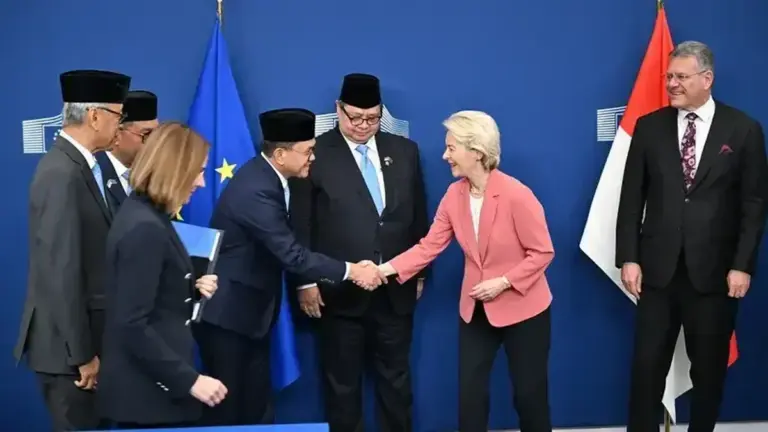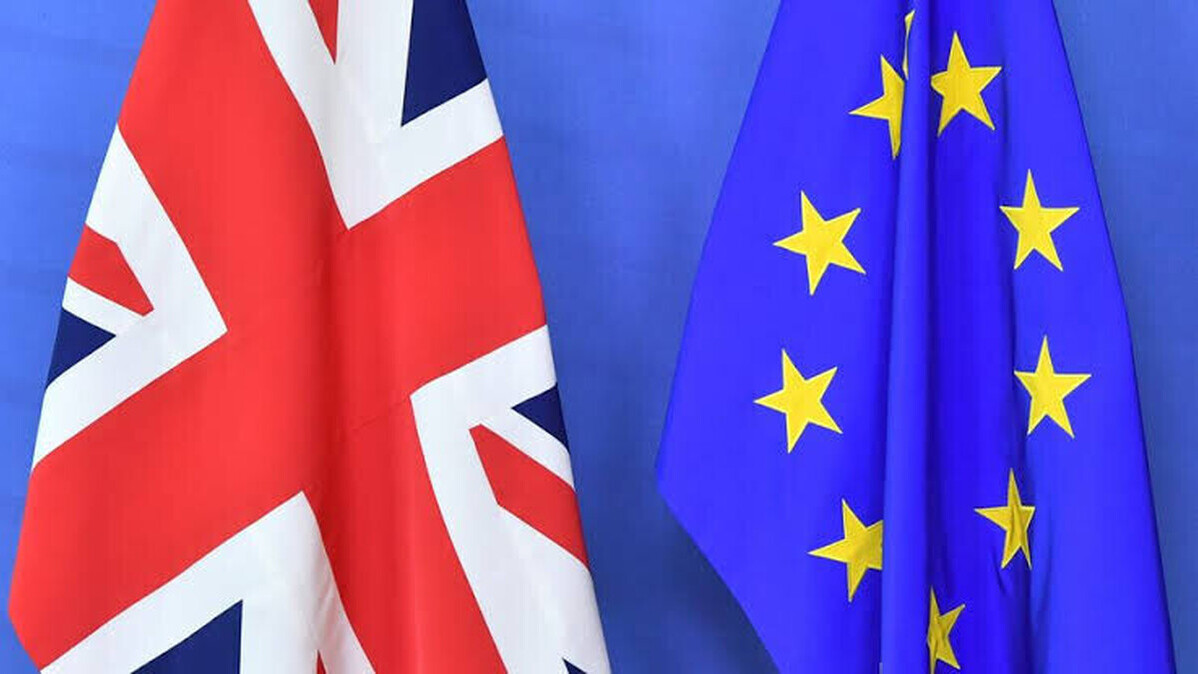
The European Union and the United Kingdom will meet on November 20, 2026, in Brussels for a new summit aimed at deepening their cooperation, more than six years after Brexit. The meeting is intended to allow European leaders and British Prime Minister Andy Burnham to advance several negotiations concerning trade, energy, youth mobility, and security. This meeting takes place in a context of rapprochement between London and the Twenty-Seven, despite persistent disagreements over access conditions to the European market. The British government hopes in particular to conclude agreements likely to reduce the economic obstacles inherited from the UK’s exit from the European Union.
The November 20 meeting was especially anticipated after the postponement of a previous summit planned for June. Discussions had then been extended due to divergences between the two parties on several files. The announcement of this new date confirms their willingness to continue the dialogue initiated at the London summit in May 2025. On that occasion, the European Union and the United Kingdom adopted a joint program aimed at strengthening their cooperation in several strategic sectors. The next meeting is now expected to translate some of these commitments into concrete agreements.
London aims to reduce the economic consequences of Brexit
For Andy Burnham, rapprochement with the European Union constitutes a major economic objective. The British Prime Minister wishes to facilitate exchanges between British companies and their European partners, notably in agriculture, agri-food, and energy sectors. Since Brexit, companies have had to deal with administrative formalities and additional controls, particularly burdensome for food products and perishable goods. London hopes that a sanitary and phytosanitary agreement will simplify part of these procedures and reduce costs borne by exporters.
The British government also advances the argument of growth. According to estimates highlighted by Andy Burnham, the envisaged agreements could ultimately bring up to 10 billion pounds additional per year to the British economy. This amount remains a projection and will depend on the final content of the negotiated texts. British authorities particularly wish to obtain tangible results for companies facing the commercial consequences of leaving the single market. The Prime Minister thus seeks to demonstrate that closer cooperation with Brussels can produce economic benefits without necessarily restoring all the rules that applied before Brexit.
Youth mobility and university fees at the heart of disagreements
One of the main points of friction concerns the movement of young people between the United Kingdom and European Union countries. Brussels wishes to establish a program allowing young Europeans and Britons to stay, work, or study more easily on both sides of the Channel. This proposal is part of the desire to rebuild human exchanges strongly affected by the end of free movement. Negotiators must however agree on access conditions to the scheme, its duration, possible participant caps, and rights granted to beneficiaries.
The issue of university fees constitutes an additional obstacle. Several member states, including France, wish European students to benefit from more favorable financial conditions in British universities. Since Brexit, these students may be subject to international tuition fees significantly higher than those paid by British students. London prefers to handle this file separately, while several European capitals consider it should be part of the overall negotiation balance. This disagreement could complicate the conclusion of an agreement on youth mobility at the November summit.
Energy and climate among negotiation priorities
Discussions must also focus on aligning energy policies. The European Union and the United Kingdom particularly wish to advance on the coordination of their greenhouse gas emission trading systems. An agreement could facilitate exchanges between concerned companies and limit some complications related to carbon pricing mechanisms. This file is particularly important for energy-intensive industries and companies regularly trading between the two economic areas.
Cooperation in the electricity sector is also among the topics examined. The United Kingdom has numerous energy interconnections with European countries and participates in electricity exchanges essential to the balance of certain networks. London and Brussels seek to improve the functioning of these relations while considering their respective regulations. Negotiations also concern the development of renewable energies, notably in the North Sea, as well as supply security. These issues have gained increased importance in a context of geopolitical tensions and persistent energy market volatility.
European security requires strengthened cooperation
Beyond economic issues, the summit must confirm the importance of strategic relations between the United Kingdom and the European Union. Despite its exit from the EU, London remains one of the main European military powers and an essential NATO member. The war in Ukraine has reinforced the need for close coordination among Western partners, notably regarding military aid to Kyiv, sanctions against Russia, and continental security. The security and defense partnership concluded in May 2025 aims to further structure exchanges between British and European authorities.
The fight against hybrid threats, cyberattacks, and foreign interference is also among common concerns. London and Brussels wish to improve their capacity to share information and coordinate certain responses to destabilization risks. Migration issues should also be addressed, notably cooperation against smuggling networks and irregular Channel crossings. These files however require separate discussions, given the respective competences of the Union, its member states, and British authorities.
A rapprochement that does not mean a return to the European Union
Despite the ambitions expressed by Andy Burnham, the question of a possible reintegration of the United Kingdom into the European Union remains politically sensitive. The Prime Minister mentioned the possibility of a deeper rapprochement in the long term, without announcing any official step to reverse Brexit. The government currently favors a gradual approach based on sectoral agreements. This strategy allows seeking economic advantages while avoiding immediately opening a broader institutional debate on the conditions of a possible re-admission.
In Brussels, European officials nevertheless recall that access to single market benefits implies respect for common rules. The Union notably intends to preserve the integrity of its four fundamental freedoms concerning the movement of goods, services, capital, and people. The Twenty-Seven refuse that an external state automatically benefits from all internal market advantages without accepting the corresponding obligations. This position constitutes one of the main limits of negotiations engaged with London. Each advance must therefore be based on a compromise between British economic objectives and European regulatory principles.
An awaited meeting to measure rapprochement progress
The November 20 summit will serve as a test for the new British diplomatic orientation. Andy Burnham wishes to obtain sufficiently significant advances to demonstrate that dialogue with Brussels can concretely improve the country’s economic situation. European officials, for their part, expect precise commitments, notably on youth rights and access conditions to cooperation schemes. Negotiations conducted in the coming weeks will be decisive to establish texts likely to be presented to leaders during the meeting.
Even if not all disputes are resolved by this date, maintaining the summit shows a willingness to stabilize relations between the two partners. The European Union remains an essential commercial outlet for British companies, while the United Kingdom retains an important strategic role for the continent’s economies and security. Six years after the country’s official exit from the Union, discussions now focus on how to sustainably organize this interdependence. The Brussels meeting on November 20 could thus mark a new step in rebuilding relations between London and the Twenty-Seven, provided negotiators manage to overcome remaining disagreements on mobility, trade, and common rules.