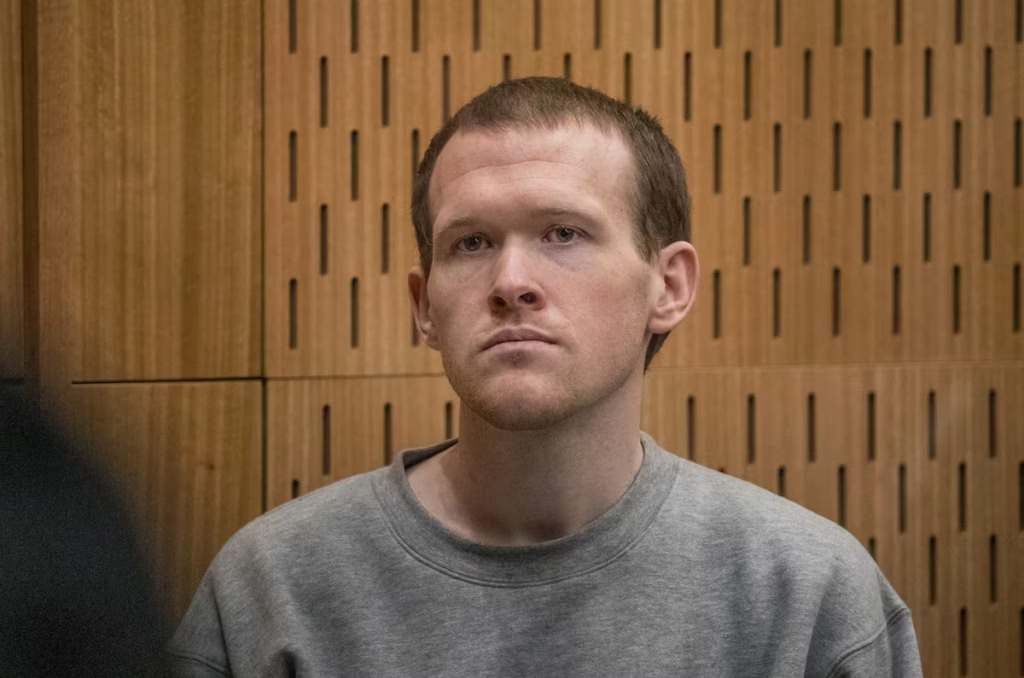
The perpetrator of the shooting that claimed the lives of 51 Muslim worshippers in two Christchurch mosques told a New Zealand court that mental health problems forced him to plead guilty, according to local media. Brenton Tarrant, a white supremacist sentenced to life imprisonment without parole, is now challenging the validity of his confession in ongoing proceedings.
According to his statements, the harsh detention conditions he endured affected his psychological state to the point of making him “irrational” when he admitted guilt. The court must now determine whether he was mentally fit to plead guilty at the hearing preceding his conviction, an examination that could reopen a sensitive aspect of one of the most significant cases in the country’s judicial history.
The attacks, carried out in 2019 at two Christchurch mosques, caused an international shockwave and led New Zealand authorities to quickly tighten firearms legislation. Brenton Tarrant’s conviction was then hailed as a firm response to violent extremism, even though it did not end the pain of the bereaved families.
In the current proceedings, the court will have to evaluate medical and psychological evidence to determine if the accused had full mental capacity at the time of his guilty plea. This step is crucial as it conditions the admissibility of any attempt to challenge the initial conviction.
The victims’ families have expressed frustration at this new judicial phase. For many, the prospect of seeing the case reopened in court revives a trauma never fully healed and fuels the feeling that the procedure gives excessive attention to the perpetrator at the expense of the victims.
Judicial authorities have not indicated when a decision might be made at this stage. Whatever the outcome, this process reignites debate in New Zealand about the consideration of mental health in criminal proceedings, especially in terrorism cases, while reopening the wounds of a tragedy that continues to deeply mark the country.