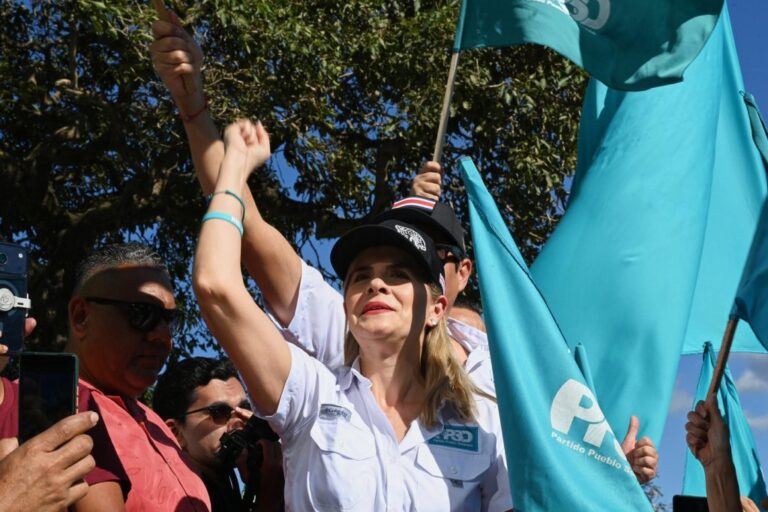
Costa Rican voters go to the polls Sunday to choose between continuing the program of the outgoing conservative and populist president Rodrigo Chaves, or a change led by parties seeking to break with an image seen as elitist and self-centered. The election could mark a turning point for this Central American country long known for its political stability.
The rise in crime in recent years has become a central issue in the campaign. Some voters blame the outgoing president for failing to curb violence, while others believe his combative style is the best response to growing insecurity.
The frontrunner in the election is Laura Fernández, candidate of the Sovereign People’s Party. A former Minister of Planning and then of the Presidency, she promises to continue Rodrigo Chaves’s political line. Polls place her clearly in the lead, but the outcome will depend on her ability to surpass the 40% vote threshold, a necessary condition for a first-round victory; otherwise, a second round would be held on April 5.
Costa Ricans are also electing the 57 deputies of the new Legislative Assembly. The outgoing president’s party is expected to make gains, though it is not assured of obtaining the supermajority it desires, which would notably allow it to influence the appointment of Supreme Court magistrates.
Twenty candidates are running for the presidency, but Laura Fernández is the only one to have regularly surpassed the 10% mark in opinion polls. Behind her, a group of five candidates, including economist Álvaro Ramos of the National Liberation Party and former first lady Claudia Dobles, could compete for a place in the second round if no winner emerges on Sunday.
Elected four years ago on an anti-establishment platform, Rodrigo Chaves captured discontent related to high unemployment and budget imbalances, despite his previous tenure within a government from traditional parties. Since then, his party has multiplied attacks against institutions, notably the judiciary and Parliament, accused of blocking his reforms.
According to Constantino Urcuyo, professor of political science at the University of Costa Rica, this dynamic fits within a broader trend observed elsewhere in the world. For him, the election’s stake is clear: it pits those who want a radical transformation of the political system against those who advocate for gradual reforms within the existing institutional framework.