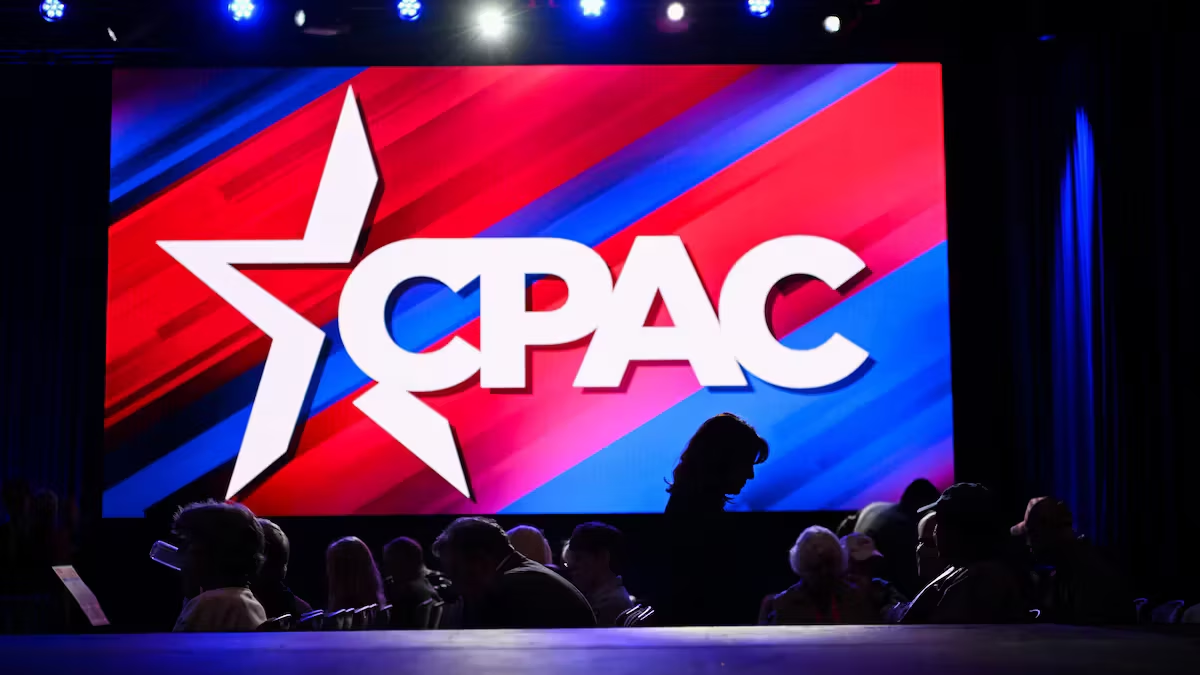
An increasingly marked divide runs through the Republican Party on the issue of support for Israel, as illustrated by the debates at the Conservative Political Action Conference (CPAC), the major annual gathering of American conservatives.
Former elected official Matt Gaetz crystallized tensions by opening his speech with an implicit critique of foreign influence on American politics, a message widely interpreted as targeting Israel. His remarks sparked controversy, breaking with the party’s traditional calls for unity.
This debate highlights a growing generational divide. Many young Republicans are more inclined to question the United States’ historic support for Israel, in a context of war with Iran that revives questions about military commitments abroad.
This development fits into a broader trend of skepticism toward military interventions among part of the new conservative generation. Influential figures like Tucker Carlson have contributed to fueling these questions by mentioning an excessive influence of Israel on American politics — remarks that earned him accusations of stoking antisemitism, which he rejects.
The Israeli question has thus become one of the main points of friction at CPAC, an event that has been a central gathering place for Republican political leaders and activists for decades.
As the midterm elections approach, these divisions could weaken party cohesion. The debate on Israel, mixing geopolitical stakes and sensitive accusations, risks exacerbating internal tensions in an already polarized political context.
While the Republican Party seeks to present a united front, the emergence of these generational divergences highlights an ongoing ideological reshaping likely to influence its political line in the long term.