In New Orleans, Carnival season traditionally means a shower of green, gold, and purple beads thrown from Mardi Gras floats. But these beads, once made of glass and carefully preserved, are now mostly cheap imported plastic, often left abandoned in the streets after the parades.
The problem has become environmental. After severe flooding a few years ago, the city found over 46 tons of beads clogging the drains. This waste also ends up in Lake Pontchartrain, where it can harm wildlife and contribute to microplastic pollution.
In response, some parade organizations, called « krewes, » have decided to take action. The Krewe of Freret took a step by banning plastic beads at its parade last year. This year, they return… but in a new biodegradable form.
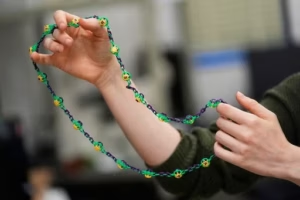
Researchers at Louisiana State University have developed « PlantMe Beads, » 3D-printed necklaces made from a starch-based bioplastic, polylactic acid (PLA). Each bead is a hollow sphere containing okra seeds. Once planted, the seeds promote the material’s decomposition, turning a festive object into a plant resource.
For the 2026 season, about 3,000 necklaces were produced and distributed to three krewes to test public reception. Researchers are already working on versions that degrade faster without needing to be planted.
Beyond technological innovation, the challenge is cultural. Mardi Gras generates about 2.5 million pounds of waste each year. Increasingly, groups are focusing on more durable and useful items—caps, soaps, food—instead of disposable beads.
For organizers, the goal is not only to replace plastic with a less harmful material but to rethink tradition: to throw objects that spectators will want to keep, use, and value. A gradual evolution toward a Carnival that remains festive but is more environmentally respectful.