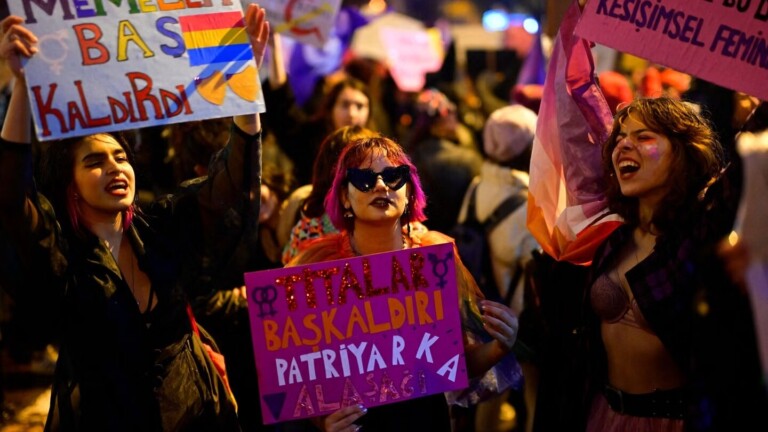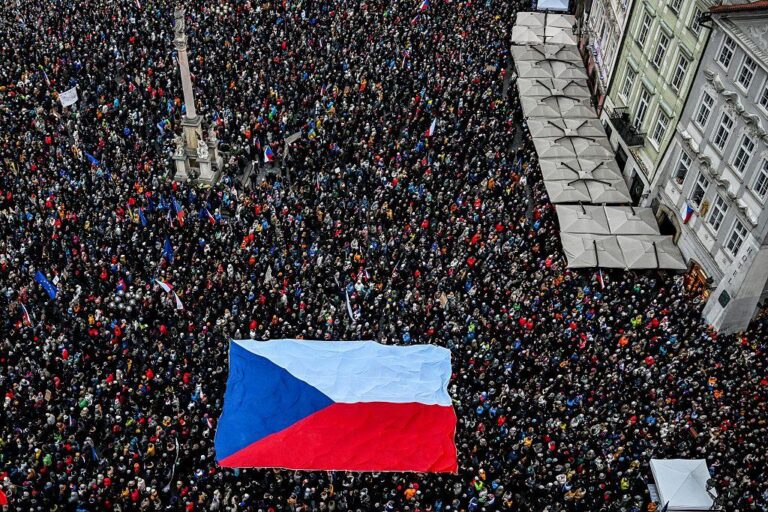
Thousands of protesters gathered across the Czech Republic on Sunday to express their support for President Petr Pavel in his conflict with Foreign Minister Petr Macinka.
According to the NGO Million Moments for Democracy, which organized the mobilizations, rallies took place in nearly 400 municipalities, including the city of Brno. These demonstrations come two weeks after a major mobilization in Prague.
At the heart of the political crisis is the president's refusal to appoint Filip Turek as Minister of the Environment. Turek is affiliated with the Eurosceptic party Motorists for Themselves, led by Macinka. Petr Pavel believes Turek cannot join the government after posting messages deemed racist, homophobic, and sexist on his Facebook account. Turek has apologized for some of the content while denying authorship of other posts.
Petr Macinka accused the head of state of violating the Constitution and threatened consequences if he persisted in blocking the appointment. For his part, the president denounced it as an attempt at political blackmail.
“This is no longer just about the president,” said organizer Mikuláš Minář at a rally. “It’s time to show that we are neither Hungary nor Slovakia and that we will not let oligarchs and extremists confiscate the country’s future.”
The tension arises in an already fragile political context. On December 15, Petr Pavel swore in a new government headed by populist Prime Minister Andrej Babiš , whose ANO movement won the October elections. His coalition includes, among others, the anti-immigration party Freedom and Direct Democracy and Motorists for Themselves.
The new government has adopted a more critical stance towards the European Union and wants to reconsider Czech support for Ukraine. Petr Pavel, a former army general, has instead positioned himself as a staunch defender of Kyiv against the Russian invasion, further widening the gap between the presidency and the executive branch.
This institutional confrontation illustrates the growing tensions within a country now divided between a pro-European orientation embodied by the president and a more sovereignist and Eurosceptic governing coalition.