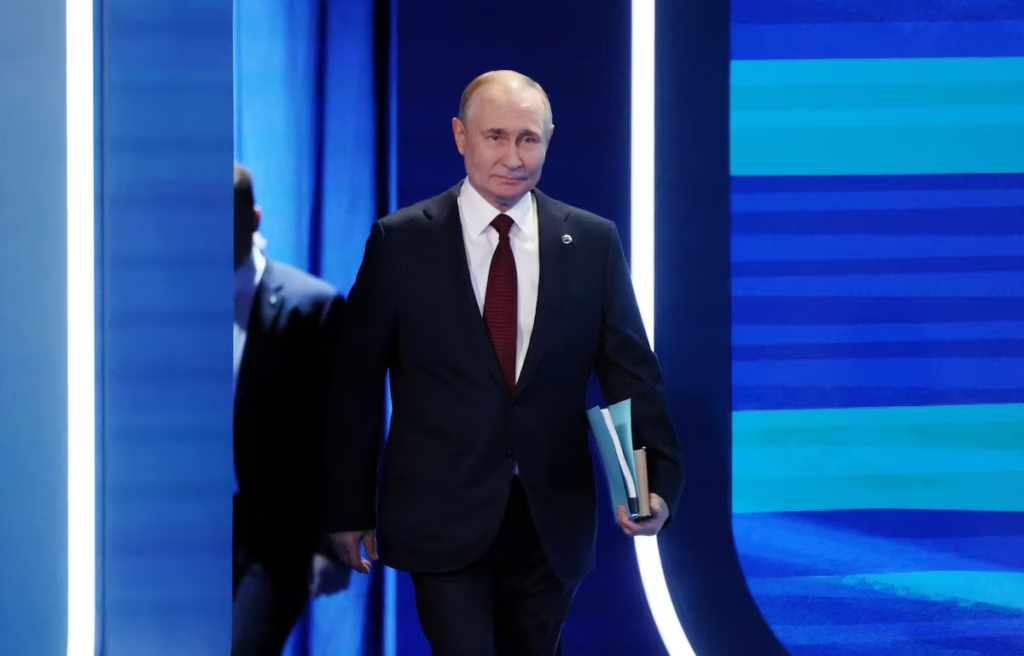
Russian President Vladimir Putin on Thursday rejected the label of "tsar" often used by his detractors, saying he was democratically elected for a limited term and had nothing in common with history's absolute monarchs.
Speaking at a Valdai Club conference in Sochi, southern Russia, a moderator asked him if he saw himself as comparable to Tsar Alexander I, who played a central role in the 19th-century negotiations at the Congress of Vienna. Putin dismissed the comparison, saying: "No, I don't feel that way. Alexander I was an emperor. I was elected by the Russian people for a specific term."
The former KGB officer, who came to power in 1999, is regularly referred to by his opponents as the "new tsar" because of his long reign and the authoritarianism he is accused of. But he is at pains to emphasize that his authority stems from an electoral mandate, not hereditary power.
These remarks come as Putin consolidates his power amid the war in Ukraine and open confrontation with the West. His opponents, for their part, denounce a locked-down system that allows for no real change of leadership, despite regular elections.
By avoiding comparisons with the tsars, Putin is seeking to reinforce his image as a modern leader, while relying on a nationalist and historical rhetoric that continues to appeal to a section of Russian opinion.
What does the article say about Putin responding to critics: "I am not a tsar"?
Russian President Vladimir Putin on Thursday rejected the "tsar" label often used by his critics, saying he was democratically elected.
What are the key reactions?
The article summarizes the reactions and the relevant international context.