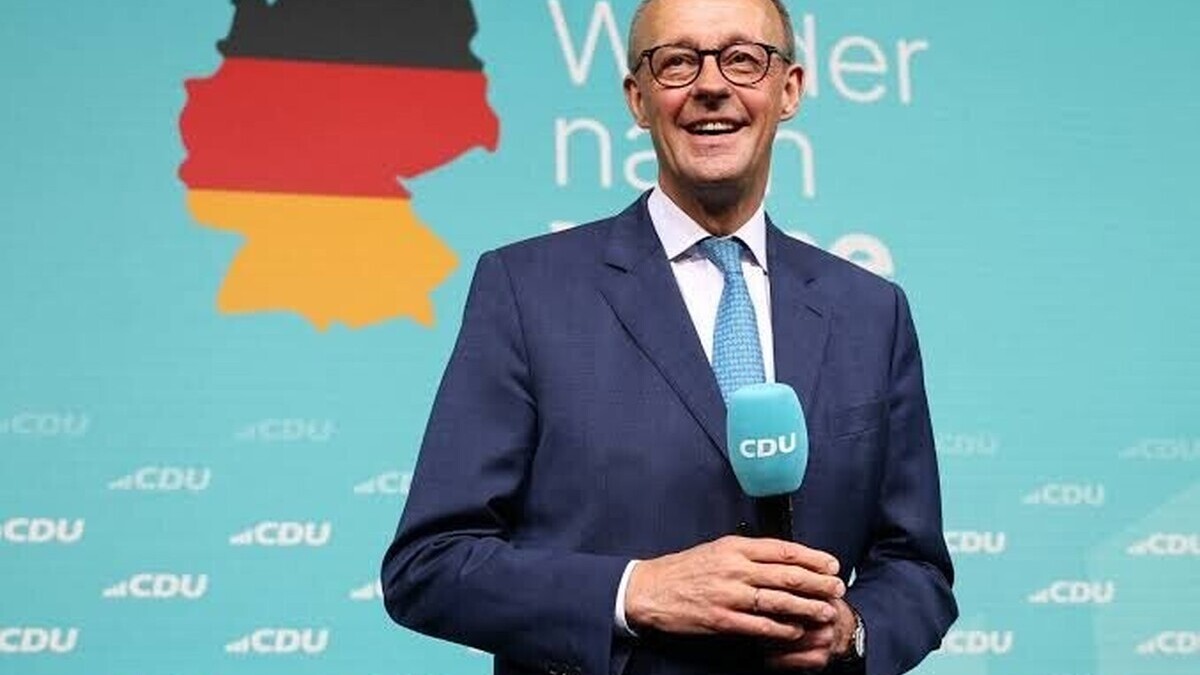
Local elections are being held this Sunday in two German states, Berlin and Mecklenburg-Western Pomerania. Polls predict potentially disastrous results for Chancellor Friedrich Merz 's party , fueling speculation about his continued leadership of the government.
Sixteen months after taking office, Friedrich Merz is facing the most delicate period of his chancellorship. The regional elections held this Sunday in two German states could exacerbate a political crisis that has been brewing for several weeks within his conservative CDU party.
In Berlin, polls show the Christian Democrats in a tight race with Die Linke for first place, with a real risk of losing control of the capital. Even more worrying is Merz, in Mecklenburg-Western Pomerania, where the CDU is struggling to reach the 5% threshold needed to enter the regional parliament , which would be its worst result ever in a local election.
These difficulties come amid a brutal electoral sequence for the conservatives. Two weeks ago, the Alternative for Germany ( AfD) won a landslide victory in Saxony-Anhalt, where the CDU saw its vote share cut in half. The far-right party, some branches of which are classified as extremist by Germany's domestic intelligence services, hopes to repeat this performance in the northeast of the country.
Faced with the rise of the AfD, SPD candidate Manuela Schwesig, the outgoing Minister-President of Mecklenburg-Western Pomerania, is attempting to mobilize voters hostile to the far right. She is running under the slogan "Die Frau gegen Blau," meaning "Woman against Blue," the AfD's emblematic color. Her local popularity contrasts sharply with her party's difficult situation at the national level, forced to govern in an unenthusiastic coalition with the CDU.
The criticisms leveled at Merz converge on several points. His abrupt communication style, exemplified by his statements urging Germans to work more and take fewer sick days, has provoked strong irritation. His rightward shift on immigration issues has failed to win over the AfD electorate, while alienating a portion of the moderate electorate. Martin Rohloff, the CDU candidate in Neubrandenburg, acknowledges that the chancellor "doesn't communicate well" and, when asked about Merz's potential departure, replies that, forced to choose between yes and no, he would say yes.
Chancellor Merz's supporters argue that he inherited serious structural problems: a stalled economy, high energy costs, and persistent tensions surrounding immigration. Eight state premiers voiced their support for Merz earlier this week, stating that trust is regained through "listening and political action, not personal attacks."
Merz himself has stated his intention to continue his term, particularly to implement a set of economic, fiscal, and social reforms expected in Parliament this fall. He has reportedly canceled a planned trip to New York next week and is scheduled to meet with party officials in Berlin on Sunday evening, in what appears to be an attempt at crisis management.
Beyond Germany's borders, the stakes are considerable. A staunch supporter of Ukraine since the beginning of his term, Friedrich Merz's potential downfall would further destabilize a Europe already facing threats from a Russia whose aggression shows no sign of abating.