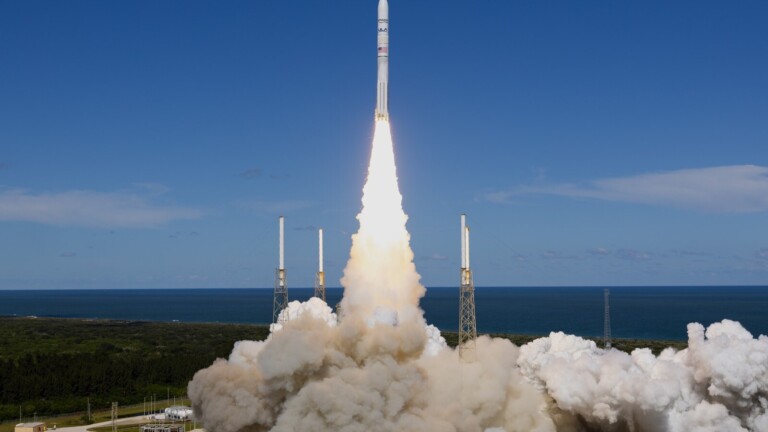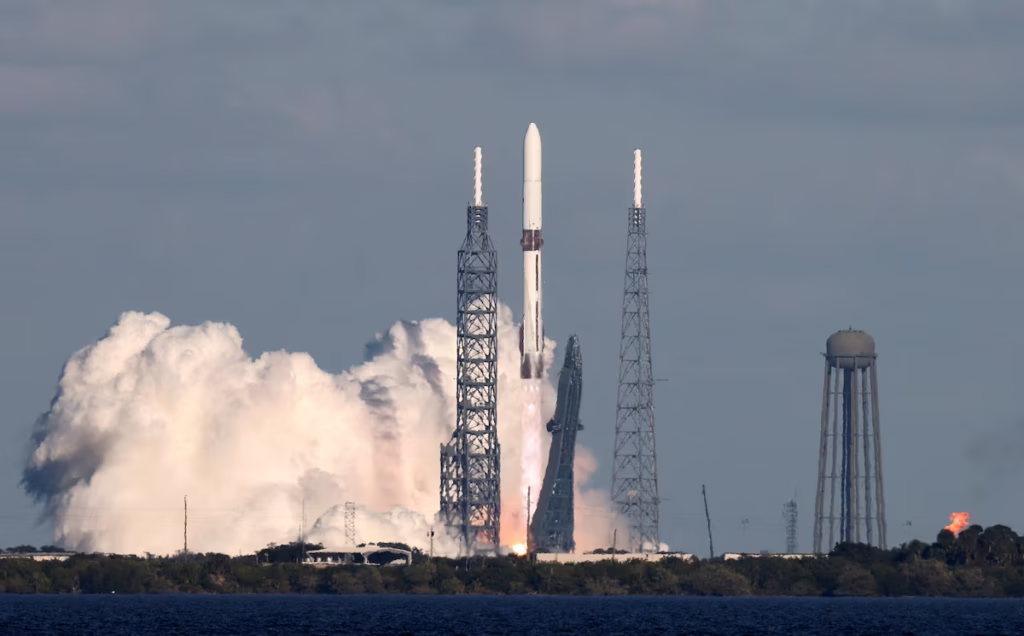
Blue Origin, the space company founded by Jeff Bezos , has taken a major step in its race for space leadership against SpaceX. On November 13, its New Glenn rocket successfully completed its first commercial flight, launching two NASA satellites to Mars and landing its reusable booster on a barge in the Atlantic Ocean.
This is the first operational launch for New Glenn, a powerful two-stage rocket whose capacity now rivals that of Elon Musk 's Falcon Heavy . The successful landing of the first stage, named "Never Tell Me the Odds," marks a technological turning point for Blue Origin, which had failed in its first attempt in January.
The two satellites sent to the Red Planet – named Blue and Gold – are part of NASA's EscaPADE (Escape and Plasma Acceleration and Dynamics Explorers) mission. Their objective is to study the interaction between solar winds and the fragile Martian magnetosphere, in order to better understand the transformation of Mars, once warm and humid, into an arid desert. They are scheduled to arrive in Martian orbit in 2027, followed by an 11-month scientific mission.
Built by Rocket Lab and equipped with instruments from the University of California, Berkeley, the pair of satellites represents a low-cost mission for NASA ($55 million), with $18 million allocated to Blue Origin for the launch. This partnership demonstrates the American space agency's openness to ambitious private companies.
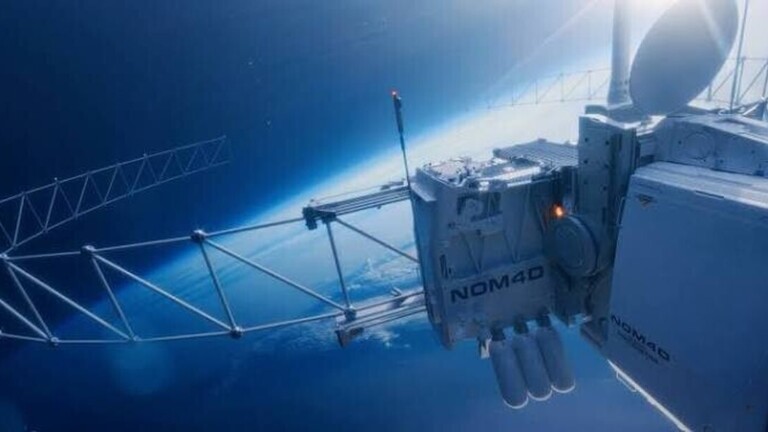
The rocket also carried a secondary payload for Viasat, successfully testing the transmission of telemetry data from space. This success was even praised by Elon Musk, who congratulated Jeff Bezos and his team on X.
New Glenn is poised to become the backbone of future Blue Origin missions, both for commercial launches and NASA's Artemis lunar program. The vehicle, named in honor of astronaut John Glenn, is capable of producing twice the thrust of the Falcon 9 and promises a greater payload capacity than its competitors.
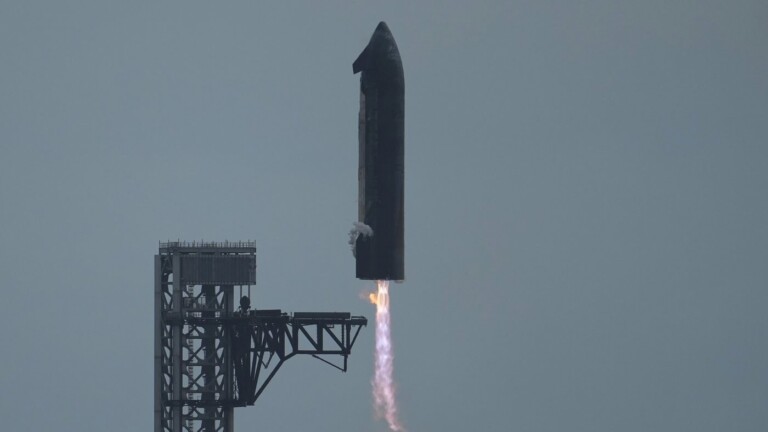
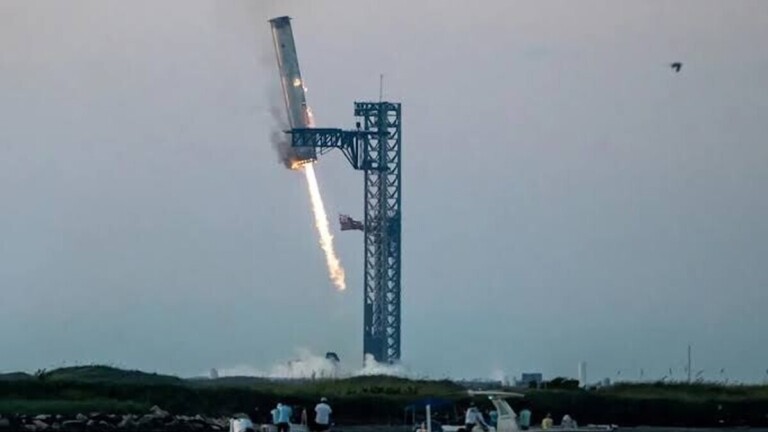
Despite this success, Blue Origin remains far behind SpaceX, whose Falcon rockets have completed nearly 280 missions in two years. But with this successful launch and a project pipeline ranging from a lunar lander to a space station, Bezos's company is now asserting its ambitions in space exploration.