

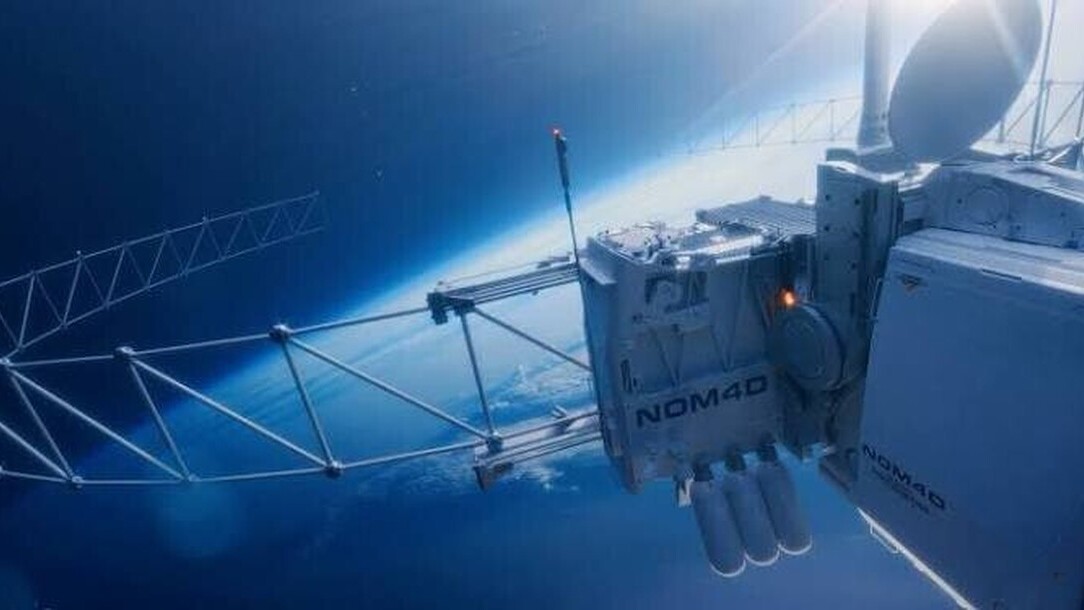
Building directly in space, without the need for an astronaut to intervene: this prospect could transform future space missions. An operation presented as a world first was reportedly carried out by a robot capable of performing construction tasks autonomously. However, this announcement raises a key question: to what extent can autonomy be claimed when a robotic system operates based on pre-programmed instructions?
Assembly of equipment in space has been a major challenge for space agencies for several decades. Until now, the most complex operations have generally required astronaut intervention, remote operation of equipment from Earth, or a combination of both. The development of robots capable of handling, positioning, and assembling components without direct human intervention during the operation could therefore represent a significant advancement. These systems must nevertheless operate in a particularly challenging environment, characterized by the vacuum of space, temperature variations, communication delays, and difficulties related to the apparent absence of gravity in orbit.
The interest in such technology goes far beyond a simple technical demonstration. Future projects for orbital stations, scientific platforms, and lunar infrastructures may require assembling structures too large to be transported fully constructed from Earth. Autonomous robots could then perform certain repetitive or hazardous tasks, reduce the need for extravehicular activities, and limit astronauts’ exposure to space environment risks. In the longer term, they could also participate in satellite maintenance, solar panel installation, or preparing bases intended to host human crews.
A world first, but still a limited experiment
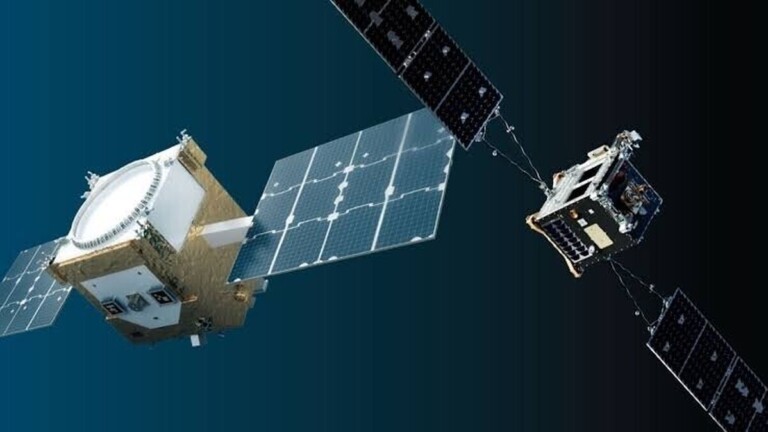
The announcement concerns the ASTRA robot, designed by the California Institute of Technology (Caltech) and funded by DARPA, the U.S. defense research agency. On November 5, 2026, researchers announced that their system had successfully assembled in orbit a section of a structure intended to form a 1.4-meter diameter reflective antenna. The robot picked composite material tubes and junction elements, then assembled them automatically. The operation was carried out without an astronaut or direct human control of the robot’s movements. Ground teams nevertheless continued to supervise the mission and transmit instructions. This is therefore a demonstration of automated assembly, not a system completely independent of any human intervention.
The experiment remains limited: only one section of the antenna was built, not the entire planned structure. Technical difficulties and scheduling constraints prevented completion of the device. This partial success nevertheless constitutes an important step for the NOM4D program, whose ambition is ultimately to enable the construction of space infrastructures several hundred meters in size, or more. The envisaged applications notably concern large communication antennas, telescopes, and solar energy production installations. Before scaling up, engineers will still need to demonstrate the robots’ reliability, their ability to correct anomalies, and the economic interest of in-orbit manufacturing. Space does not yet have truly autonomous construction sites, but this experiment shows that part of their technology is now operational.






Respond to the article
Be the first to comment on this article.