

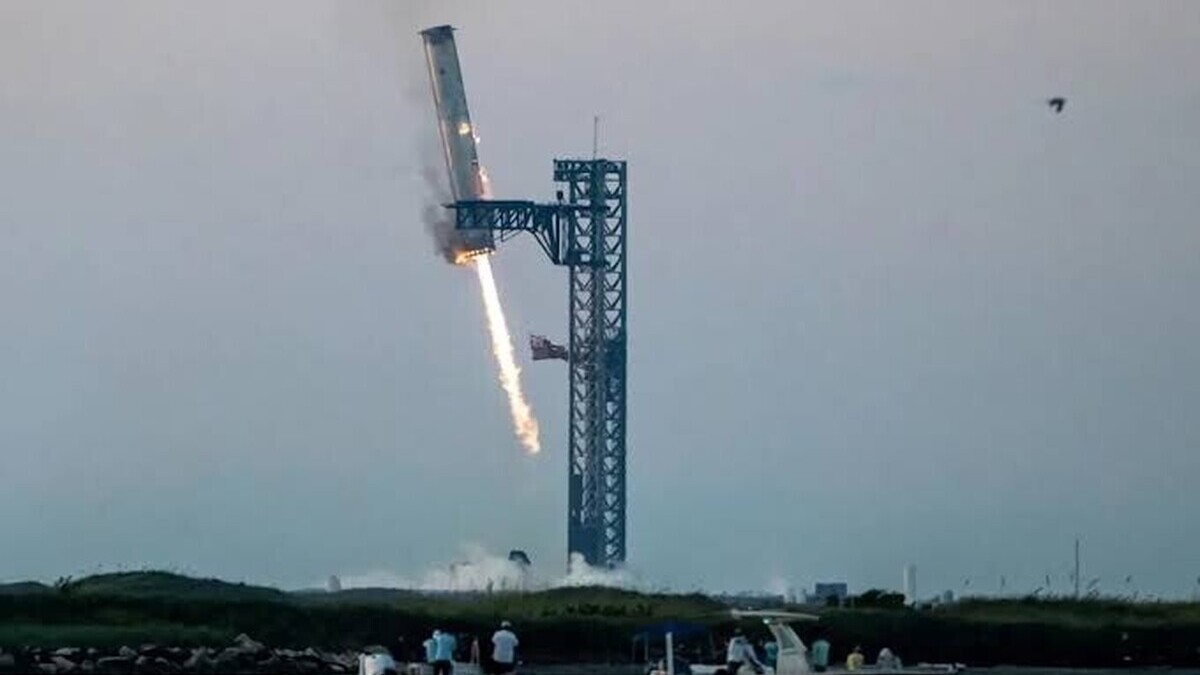
The gigantic Starship rocket is about to perform its second orbital flight, with an unprecedented goal: to bring back both stages of the launcher to their launch pad using the mechanical arms of the launch tower.
This is an attempt never before achieved in the history of astronautics. SpaceX plans to launch Starship this Friday, November 13, from Starbase, the Texas site at Boca Chica, with a launch window opening at 11:45 PM (Paris time) and lasting until 1 AM. The stakes go far beyond a simple liftoff: Elon Musk’s company intends, for the first time, to recover both stages of the same orbital launcher.
The first stage, the Super Heavy, should be caught by the mechanical arms of the launch tower, nicknamed Mechazilla, barely six and a half minutes after liftoff. The second stage, the Starship spacecraft itself, will perform about fourteen orbits around the Earth before returning to be caught at the same location, some 22 hours and 32 minutes later, around 10:17 PM on Saturday, November 14.
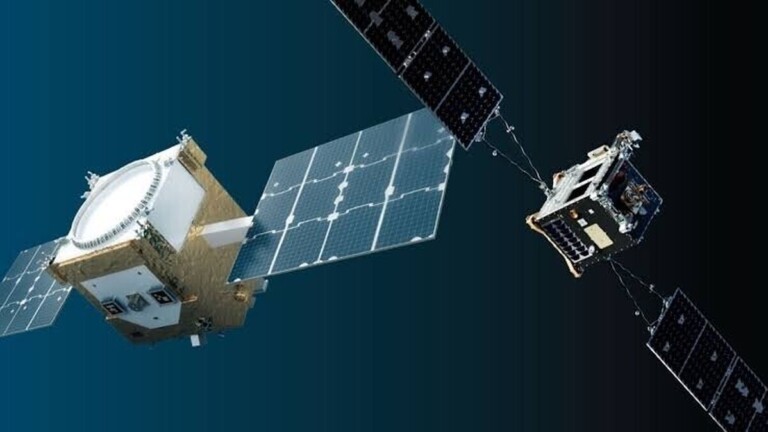
Between these two recoveries, the mission plans to deploy 26 third-generation Starlink satellites at about 275 kilometers altitude. The total flight duration, exceeding 22 hours, sharply contrasts with the first orbital flight on September 28, cut short to three hours due to a Raptor engine failure.
SpaceX has already succeeded three times in recovering the Super Heavy first stage using this mechanical arm system. But Booster 22, which will be used on this flight, is a V3 version that the company has never attempted to catch this way. As for the second stage, no recovery by Mechazilla has ever been successfully carried out. If both operations succeed, SpaceX would become the first company to fully recover an orbital launch system, paving the way for complete and rapid reuse of its launchers.




Respond to the article
Be the first to comment on this article.