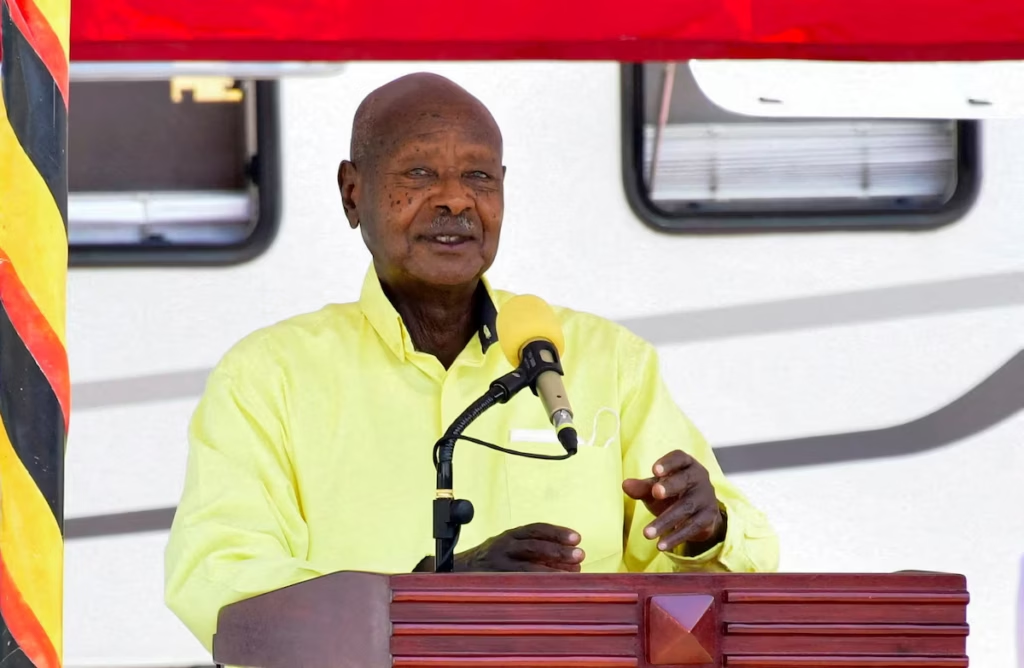
Ugandan President Yoweri Museveni is expected, barring a major surprise, to extend his nearly forty-year rule following the presidential election scheduled for Thursday, in a climate marked by campaign violence and growing questions about his succession.
Aged 81, the former rebel leader who came to power in 1986 is running for a seventh term against seven opponents. He claims that an additional four years are necessary to preserve the relative peace and stability of this East African country, home to 46 million people. His main rival is pop star turned political figure Bobi Wine, 43, who received 35% of the vote in the 2021 election and mobilizes a youth facing unemployment and corruption.
Museveni has amended the Constitution twice to remove age and term limits. According to many analysts, his tight control over institutions greatly reduces the chances of a political transition. Nevertheless, the election represents an important test, four years after the United States judged the previous election neither free nor fair.
Regionally, Uganda remains a key security actor, with troops deployed in Somalia, South Sudan, the Democratic Republic of Congo, and Equatorial Guinea. Economically, growth, historically driven by coffee, tourism, and agro-industry, is expected to accelerate with the anticipated start of oil production operated by TotalEnergies and the Chinese group CNOOC.
The question of succession is, however, increasingly openly part of the debate. Many see in Muhoozi Kainerugaba, the president’s son and influential military leader, a potential heir, although Museveni denies any dynastic preparation. Very active on social media, Kainerugaba has publicly expressed his ambition, without unanimous support within the ruling party, the National Resistance Movement (NRM), where other figures are already positioning themselves.
As in previous elections, the campaign has been marked by violence. Security forces have repeatedly dispersed opposition gatherings using tear gas and live ammunition, causing at least one death and hundreds of arrests. The government justifies these actions by the need to respond to activities deemed illegal.
In a tense regional context, marked by recent electoral violence in Tanzania and deadly protests in neighboring Kenya, some observers do not rule out a risk of contagion. Meanwhile, Bobi Wine presents the election as a protest vote against what he calls a “dictatorship,” promising to tackle corruption head-on.
Opposite him, Museveni retains support from part of the population, notably for his role in regional stability and hosting millions of refugees, as well as for his pragmatic relations with Western partners. The election outcome is expected to confirm his political longevity, while leaving open the increasingly pressing question of the post-Museveni era.