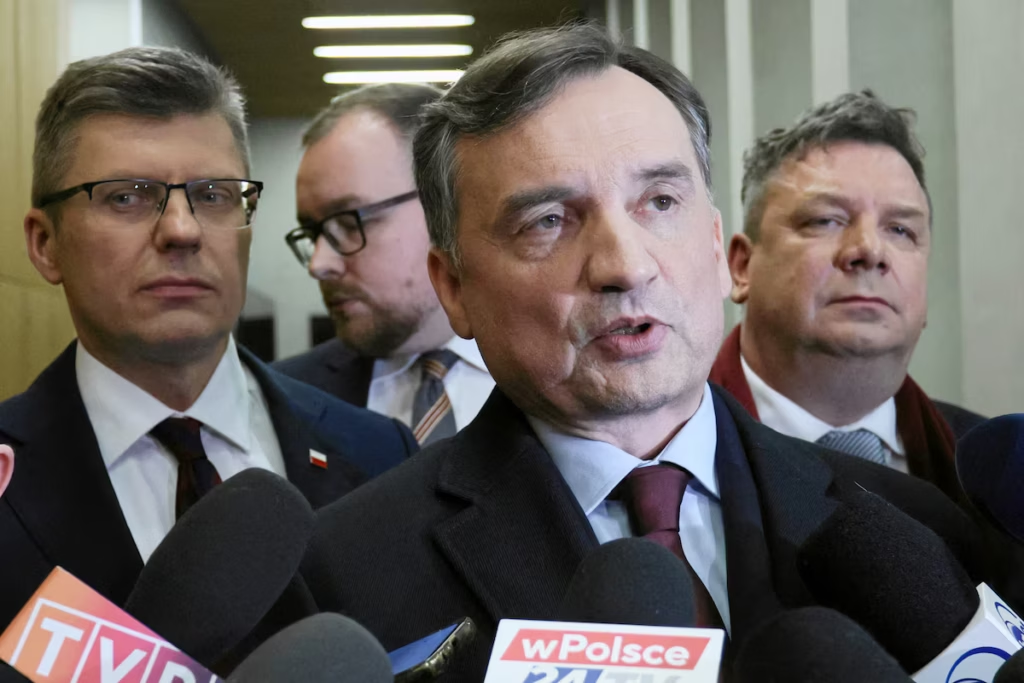
Hungary has granted political asylum to Zbigniew Ziobro, former Polish Minister of Justice and figure of the nationalist Law and Justice party (PiS), a decision that deepens the diplomatic and political rift between Budapest and Warsaw.
Architect of the judicial reforms implemented when PiS was in power, Ziobro faces charges in Poland for abuse of power and embezzlement of public funds. Polish authorities accuse him notably of having used funds intended for victim aid to finance the acquisition of the Pegasus spyware, which allegedly was used to monitor political opponents. He denies these accusations and claims to be the target of a political « witch hunt. »
The asylum granted by Hungary comes amid high tensions between the two countries. Longtime allies within the European Union, Hungary led by Viktor Orban and Poland governed by PiS have seen their relations deteriorate after the 2023 victory of a pro-European executive in Warsaw, led by Donald Tusk. Since then, Budapest has accused the new Polish government of persecuting its political opponents.
Ziobro confirmed on social media that he accepted the asylum offered by Hungary, citing « political repression » in Poland, and specified that he also filed a request for his wife. In Warsaw, this announcement caused outrage: government officials accused the former minister of fleeing justice and denounced an infringement on European cooperation.
The Hungarian foreign minister confirmed that Budapest had accepted certain asylum requests from Poland, without naming individuals, stating that Polish citizens were victims of political persecution. The Polish government categorically rejects this version, asserting that the prosecutions comply with the rule of law and target alleged corruption offenses.
This case reignites already intense tensions between the two capitals, following a precedent in 2024 when Hungary granted asylum to another former Polish PiS official, also prosecuted for embezzlement. It highlights the persistent divisions within the European Union regarding the rule of law, judicial independence, and the political use of judicial procedures.