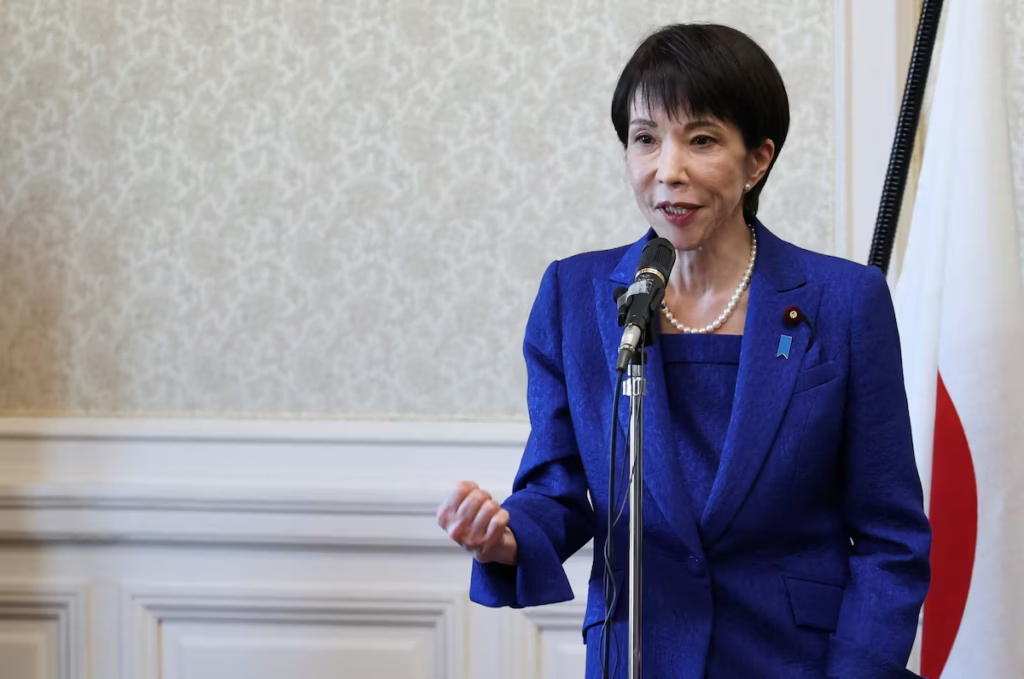
Prime Minister Sanae Takaichi's party is headed for a landslide victory in the snap parliamentary elections scheduled for February 8, according to a poll published by the Asahi Shimbun newspaper. This result would increase the likelihood of continued policies of high public spending and tax cuts, with potential consequences for the country's finances.
According to this opinion poll, the Liberal Democratic Party (LDP), led by Sanae Takaichi, would easily surpass the absolute majority of 233 out of 465 seats in the lower house of the Japanese Parliament. The ruling party would thus improve upon its current representation of 198 seats. With its coalition partner, the Japan Innovation Party (Ishin), the governing alliance could reach approximately 300 seats.
Such a victory would consolidate Sanae Takaichi's authority within the LDP and give her a clear mandate to implement her expansionary fiscal policy. However, this prospect revives concerns about the sustainability of Japanese public finances, in a country where debt already far exceeds gross domestic product.
Financial markets appear to have already priced in this scenario. Yields on Japanese government bonds rose on Monday as investors anticipated increased spending and further tax cuts. "A landslide victory for the LDP would further consolidate Takaichi's grip on power," said Keisuke Tsuruta, senior bond strategist at Mitsubishi UFJ Morgan Stanley Securities, citing the possibility of a consumption tax cut as a specific example.
Conversely, the main opposition party, the centrist Reform Alliance, is reportedly in serious trouble and could lose up to half of its current 167 seats, according to Asahi. While the ruling coalition currently holds only a slim majority in the lower house and remains a minority in the upper house, this election could significantly alter the institutional landscape.
The Prime Minister dissolved Parliament last month to trigger these snap elections and secure a mandate for her economic stimulus strategy. This move already rattled markets in January, following her pledge to suspend an 8% food tariff for two years, reviving concerns about Japan's fiscal discipline, given that its public debt is more than twice the size of its economy.