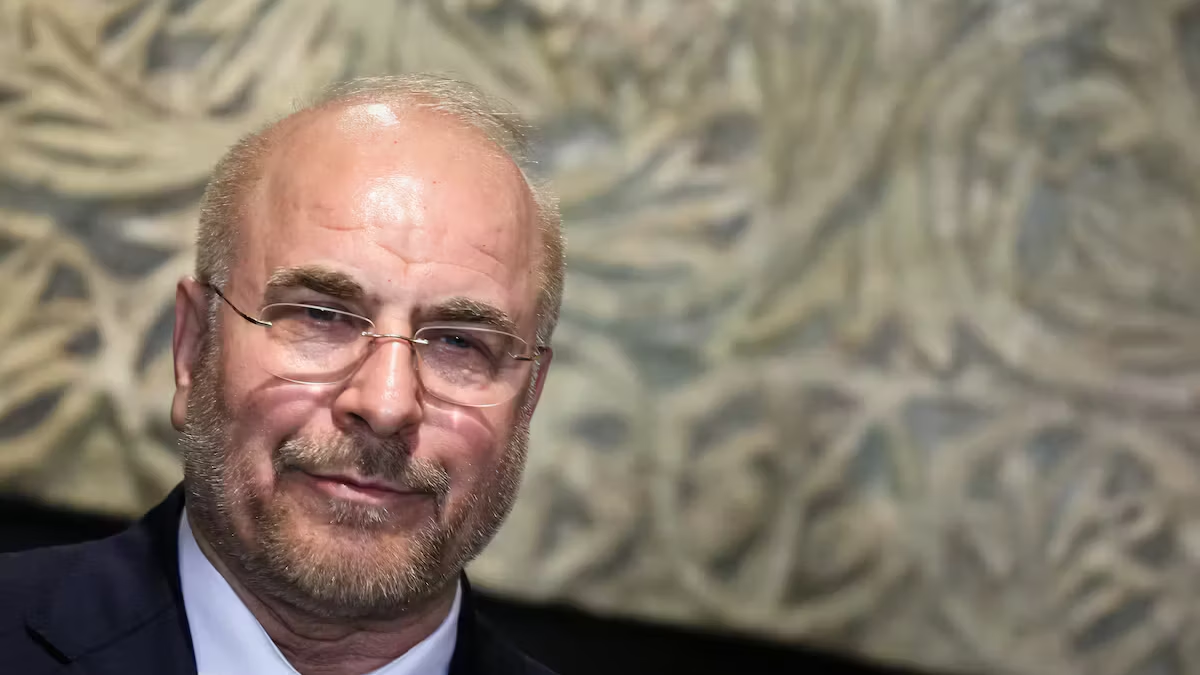
Central figure of Iranian power, Mohammad Baqer Qalibaf establishes himself as an essential player in negotiations aimed at consolidating and extending the recently concluded truce between Iran and the United States. While military tensions have targeted the highest officials of the Islamic Republic, his political and strategic role has strengthened.
President of the Iranian Parliament and former commander of the Revolutionary Guards, Qalibaf is described by observers as an official with firm positions but capable of adopting a pragmatic approach when circumstances require it. This dual stance could prove decisive in a particularly fragile diplomatic context.
According to Pakistani sources, he is expected to travel to Islamabad alongside Iranian Foreign Minister Abbas Araqchi to participate directly in discussions with the United States. Pakistan plays a mediating role in these exchanges, notably calling for a relaxation of measures targeting Iranian officials.
Qalibaf’s rise to the forefront comes after a series of Israeli and American strikes targeting regime figures, which have deeply reshuffled the cards within the Iranian political apparatus. In this context, Tehran seeks to secure the gains of the truce while consolidating its position in potential long-term negotiations.
Despite several unsuccessful attempts to access the presidency of the Republic, Qalibaf maintains major influence within the Iranian political system. His direct involvement in discussions could signal Tehran’s desire to have greater weight in negotiations and to obtain lasting guarantees.
As talks promise to be complex, Mohammad Baqer Qalibaf’s role will be closely watched, both for his ability to defend Iranian interests and for his room to maneuver in seeking a compromise with Washington.