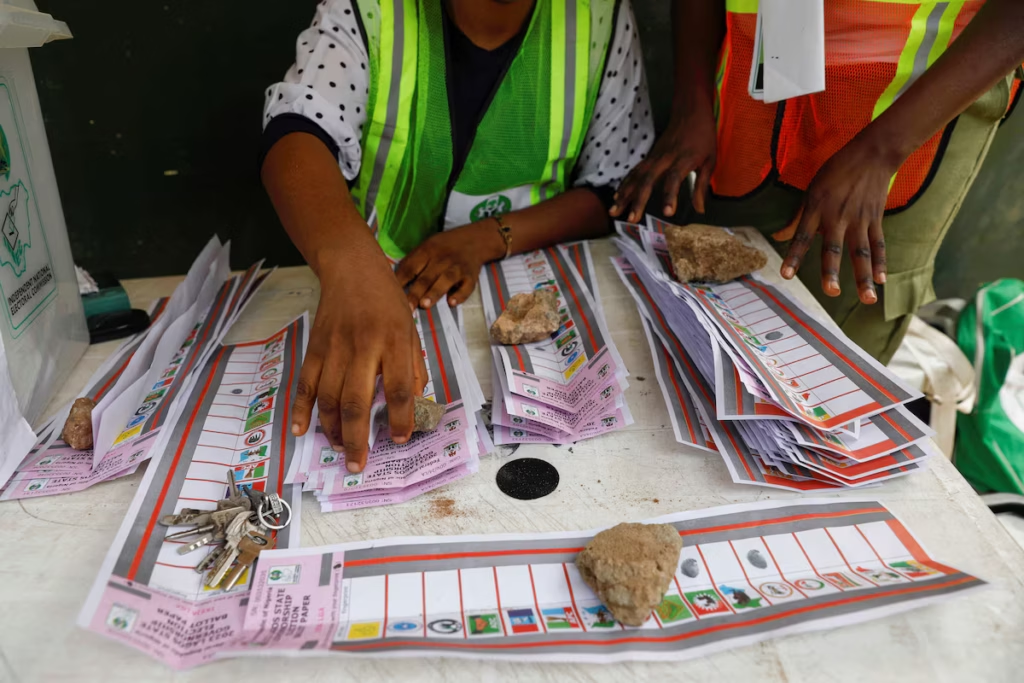
The Nigerian Senate approved on Tuesday a provision requiring the electronic real-time transmission of election results, reversing a previous rejection following a wave of protests from unions, civil society organizations, and lawyers denouncing risks of fraud and manipulation.
Last week, senators had voted against the obligation to immediately upload results after counting, a measure long supported by pro-reform groups as a key way to limit interference during manual vote tallying. This reversal marks a notable change under public pressure.
The initial decision sparked strong outrage, leading activists and opposition officials to protest on Monday in front of the Parliament in Abuja. Protesters demanded that the upper chamber align with the House of Representatives of Nigeria, which had already validated the electronic transmission of results.
Elections in Nigeria are regularly marred by accusations of vote buying, violence, and malfunctions during vote aggregation. These controversies have led courts in recent years to play an increasing role in arbitrating disputed elections, fueling distrust in the electoral process.
Reform supporters believe that real-time transmission to the electoral commission, the Independent National Electoral Commission, will reduce opportunities for result tampering between polling stations and compilation centers.
This Senate vote paves the way for legislative harmonization ahead of upcoming major elections. It is seen by many observers as a symbolic victory for advocates of electoral transparency, although its concrete implementation and effectiveness will remain closely monitored.