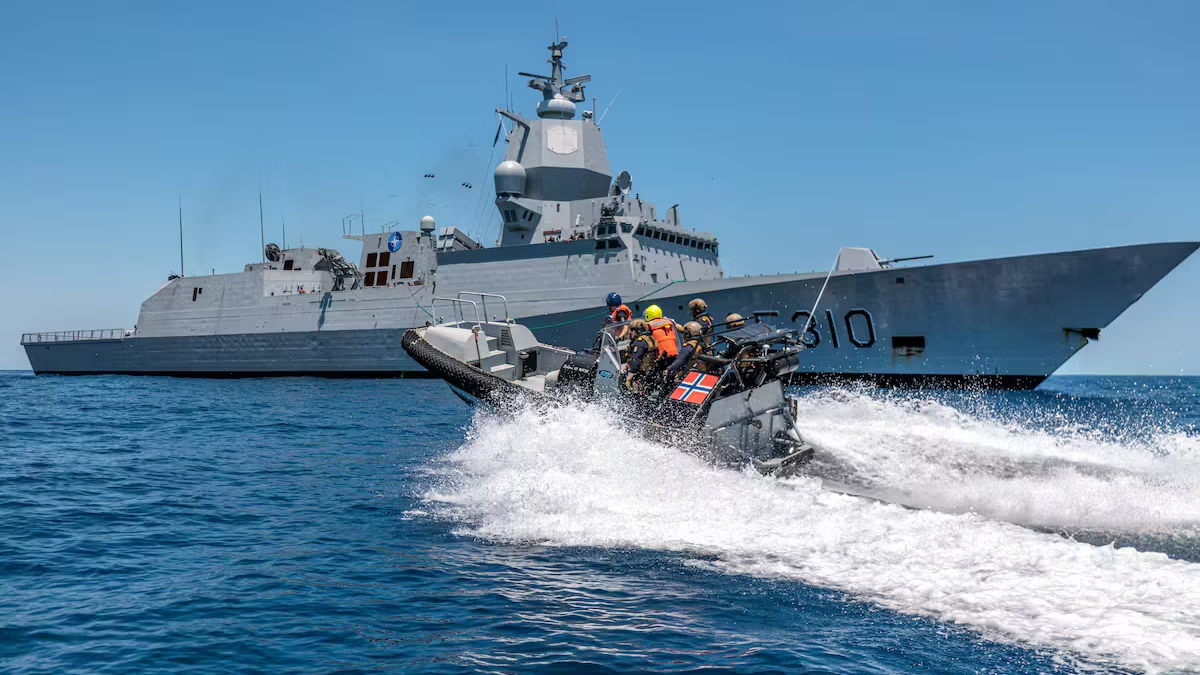
NATO forces continue their military exercises off the coast of North Carolina, illustrating the Alliance’s determination to maintain operational cooperation despite political uncertainties surrounding transatlantic relations under the administration of Donald Trump. These maneuvers notably bring together American units and several allied navies as part of training aimed at strengthening their coordination.
The exercises mainly focus on anti-submarine warfare and boarding operations, two missions considered essential for maritime security. During one training, Norwegian Lieutenant Thomas Johannsen and his crew were preparing to simulate the interception of a ship when a radio message from a nearby vessel, unrelated to their mission, disrupted communications due to the high military activity in the area.
These maneuvers come as US Secretary of Defense Pete Hegseth has launched a six-month strategic review at the Pentagon. This reassessment could lead to a reduction of the US military presence in Europe, a prospect that raises questions among many of Washington’s allies about the future US commitment within the Alliance.
According to several experts, initiatives aimed at reducing NATO’s dependence on US military capabilities could also change the nature of cooperation among allies. Ultimately, this evolution could result in fewer joint exercises organized with US forces.
Despite these uncertainties, the exercises currently conducted off the US coast demonstrate NATO members’ determination to preserve their interoperability and ability to conduct joint operations. For military officials, maintaining regular training remains a key element to ensure forces’ readiness in the face of current security challenges.