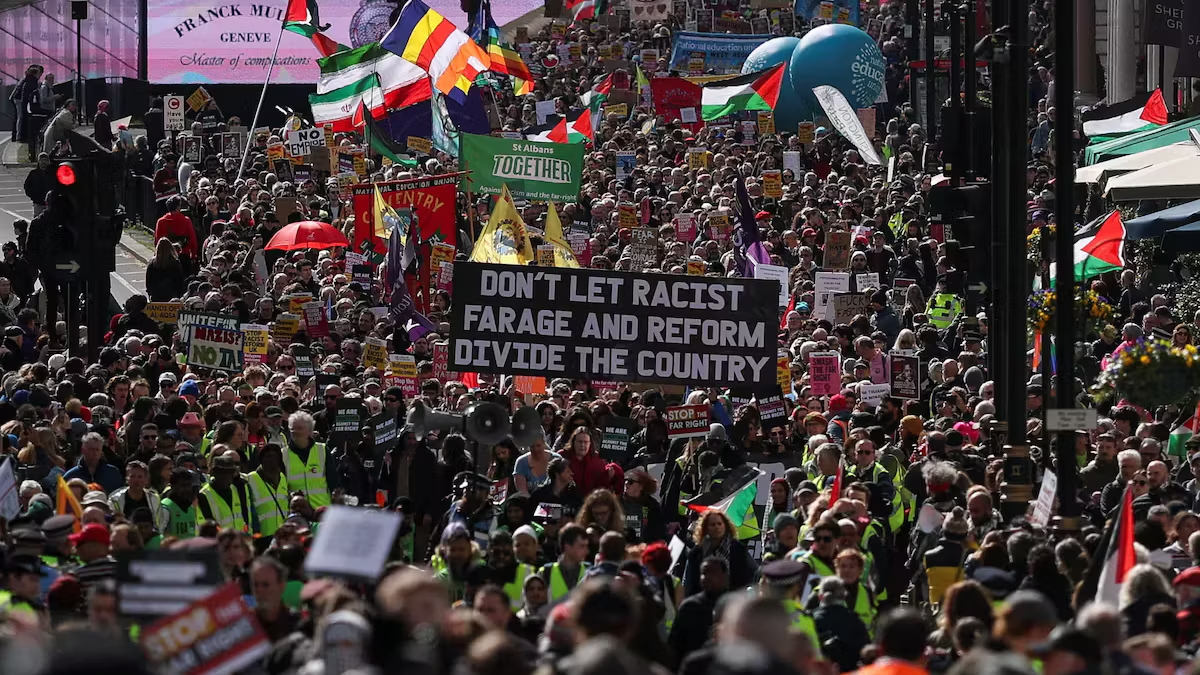
Tens of thousands of people marched through central London on Saturday to protest the rise of the political right, in a demonstration dubbed the "March to Stop the Far Right." This protest, one of the largest in recent years in the British capital, brought together a broad coalition of trade unions and associations.
Organized by the Alliance Together, the demonstration drew approximately 30,000 participants, according to a police official. The march proceeded from Park Lane to Trafalgar Square, in the heart of the city, in an atmosphere that was both determined and well-organized.
The protesters expressed their opposition to the Reform UK party, led by Nigel Farage, which organizers say is currently leading in the polls. This political context is fueling concerns among some members of civil society about the rise of conservative and nationalist ideas.
Organized by unions and citizens' groups, the demonstration aimed to denounce what participants considered a rise in political extremism. Slogans and placards emphasized the defense of democratic values, inclusion, and social rights.
This mobilization comes amid a tense political climate in the United Kingdom, where electoral dynamics are rapidly evolving. The growing popularity of certain right-wing parties is generating mixed reactions among the public.
While the demonstration proceeded without major incident, it illustrates the intensity of the political debate in the country. Between street protests and the realignment of political forces, the United Kingdom is experiencing a period of intense ideological tension.
This mobilization could send a strong signal to political leaders, as decisive elections approach, while the polarization of public debate appears to be intensifying.