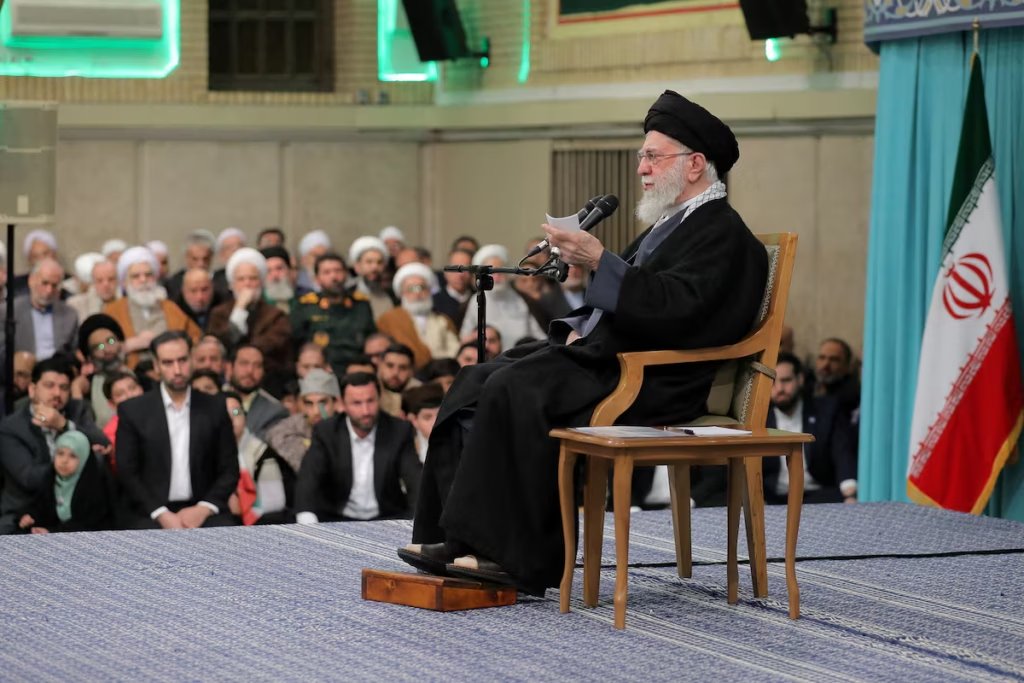
The Iranian Supreme Leader, Ali Khamenei, accused American President Donald Trump on Saturday of being responsible for weeks of protests in Iran which, according to human rights organizations, have caused more than 3,000 deaths.
Speaking at a meeting in Tehran, Khamenei called the American president a “criminal,” accusing him of being behind the human losses, destruction, and what he described as a defamation campaign against the Iranian nation. The protests began on December 28 amid economic difficulties before turning into a broader movement calling for the end of the clerical regime.
Donald Trump has repeatedly threatened to intervene, notably by promising “very firm measures” if Iranian authorities carried out executions of protesters. On Friday, however, he thanked Iranian leaders on social media, stating they had abandoned mass hangings, which Tehran denied, assuring that no such plan existed.
In a statement seemingly responding directly to these remarks, Khamenei said Iran would not seek war, while warning that “national and international criminals” would not go unpunished. He also accused the United States and Israel of orchestrating the violence, mentioning fires, destruction of public property, and thousands of deaths.
According to the American organization Human Rights Activists News Agency, more than 3,090 people have reportedly been killed since the start of the unrest, the vast majority being protesters, and more than 22,000 arrests have been recorded. Iranian authorities, for their part, have warned that those arrested will be severely punished, some being accused of “waging war against God,” a charge punishable by death under Iranian law.
Access to information remains heavily restricted in the country. After a brief easing, a new internet shutdown was reported by the monitoring organization NetBlocks, which indicates that connectivity remains largely interrupted as the blackout enters its tenth day.
Iranian state media also announced the arrest of thousands of people described as “rioters” or “terrorists,” among whom several individuals were described as leaders linked to opposition networks abroad. Some of these arrests were reportedly carried out following intelligence operations, according to authorities.
Reuters specifies that it is unable to independently verify the human toll or the exact extent of the repression. According to testimonies and official sources, the repression has nevertheless largely stifled the protest movement, despite ongoing tensions and a still unstable situation in several regions of the country.