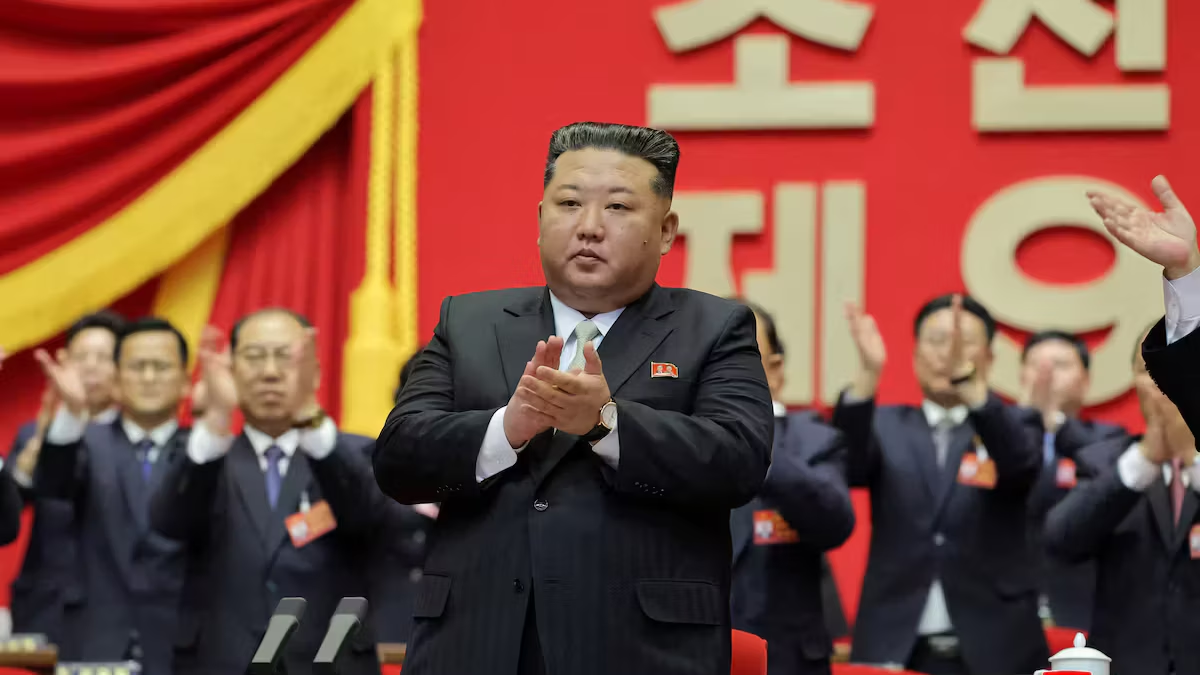
North Korean leader Kim Jong-un has been reappointed as chairman of the State Affairs Commission, the country’s highest office, following the first session of the new Supreme People’s Assembly, according to the official KCNA agency.
This reappointment continues the leadership of the North Korean leader, who was recently re-elected as general secretary of the Workers’ Party of Korea at its congress. The Assembly, which generally endorses party decisions, must now translate these directions into a legislative framework.
The parliamentary session notably addresses amendments to the constitution as well as the implementation of the new five-year economic plan announced in February.
Observers’ attention also focuses on a possible constitutional revision aiming to formalize the doctrine of the “two hostile states,” marking a break with the historic policy of peaceful reunification with South Korea.
This strategic shift reflects a hardening of inter-Korean relations, with Pyongyang now officially considering Seoul an adversary.
Furthermore, the notable absence of Kim Yo Jong, the leader’s influential sister, from the list of members of the State Affairs Commission raises questions. South Korean authorities have indicated they are analyzing this development, although experts believe it does not necessarily indicate a loss of influence within the regime.
In this context, Kim Jong-un’s reappointment confirms the apparent stability of North Korean power, while highlighting an increasingly firm political orientation both domestically and regionally.