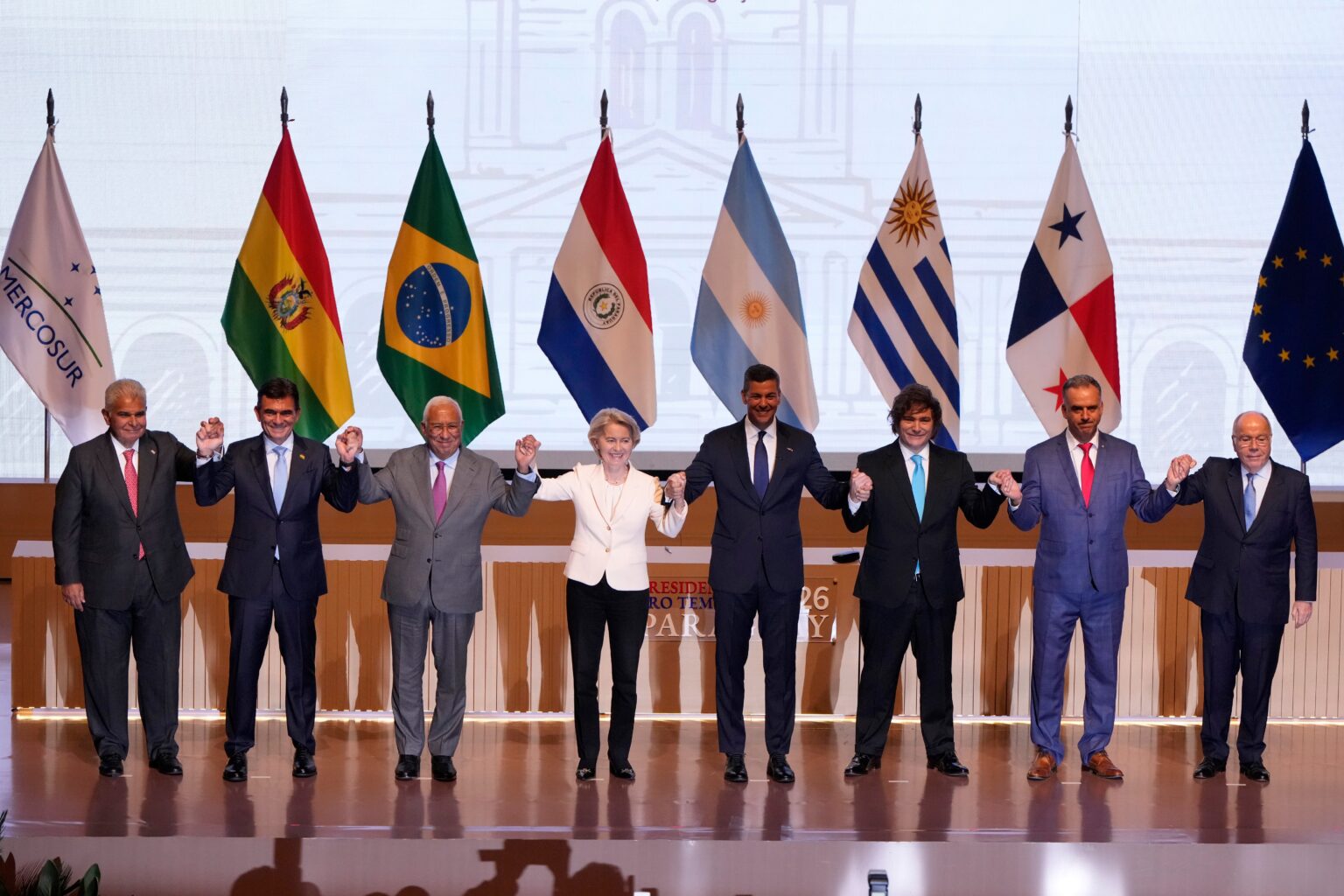
The European Union and the Mercosur bloc, comprising several South American countries, officially signed on Saturday a historic free trade agreement, ending more than a quarter-century of arduous negotiations aimed at strengthening trade ties amid rising protectionism and global trade tensions.
The signing ceremony, held in the Paraguayan capital of Asunción, represents a major geopolitical victory for the EU at a time of American tariffs and rapidly growing Chinese exports, consolidating the bloc’s presence in a resource-rich region increasingly contested by Washington and Beijing.
This agreement also sends a clear message: South America wishes to maintain diversified trade and diplomatic relations, even as U.S. President Donald Trump proclaims dominance over the Western Hemisphere.
“The geopolitical importance of this agreement cannot be overstated”
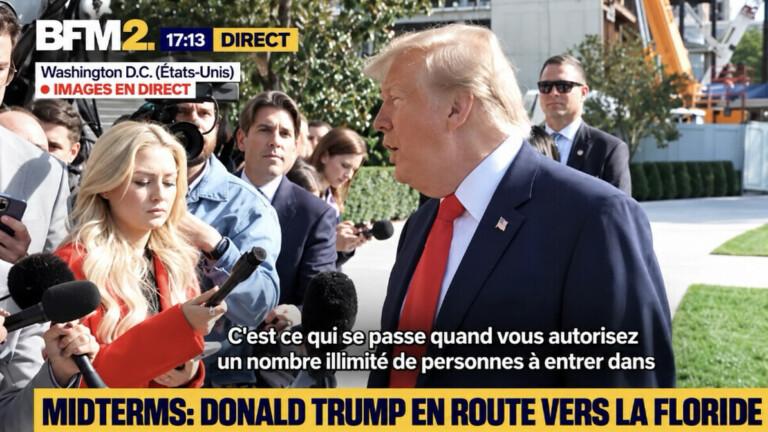
Ursula von der Leyen, President of the European Commission, the EU’s executive body, stated that “the geopolitical importance of this agreement cannot be overstated” as skepticism about the benefits of free trade resurges. As the ceremony began, Trump announced the imposition of 10% tariffs on eight European countries due to their opposition to U.S. control over Greenland.
“We choose fair trade over tariffs. We choose a long-term productive partnership over isolation”, von der Leyen affirmed during the ceremony, attended by the presidents of Mercosur member countries Argentina, Uruguay, and Paraguay, as well as the Foreign Minister of the bloc’s largest economy, Brazil.
Driven by South American countries known for livestock farming and European industrial sectors seeking new markets for their cars and machinery, the agreement creates one of the world’s largest free trade zones and makes shopping cheaper for over 700 million consumers.
The agreement now must be ratified
After decades of delay, this politically sensitive agreement still needs to pass one final step: ratification by the European Parliament.
Powerful protectionist lobbies on both sides of the Atlantic, especially European farmers fearing possible unfair competition from cheap South American agricultural imports, have long sought to block the agreement. Tractor drivers have blocked streets in protest across the continent in recent weeks and could still slow its implementation.
Although the agreement eliminates more than 90% of tariffs on goods and services traded between European and Mercosur markets, some tariffs will be gradually reduced over 10 to 15 years, and key agricultural products, such as beef, will be subject to strict quotas to reassure European farmers.
These limits, along with safeguard measures and generous EU subsidies to financially struggling farmers, enabled Italy’s agricultural power to take the step earlier this month.
France Still Opposed
France, however, remains opposed to the agreement, with President Emmanuel Macron fearing that farmers’ frustration with the EU could push more voters toward the far right in the 2027 presidential election.
“Everything will depend on the political appetite of the European Parliament”, said João Paulo Cavalcanti, a Brazilian lawyer specializing in international trade. “This could clearly pose an obstacle to the agreement’s adoption.”