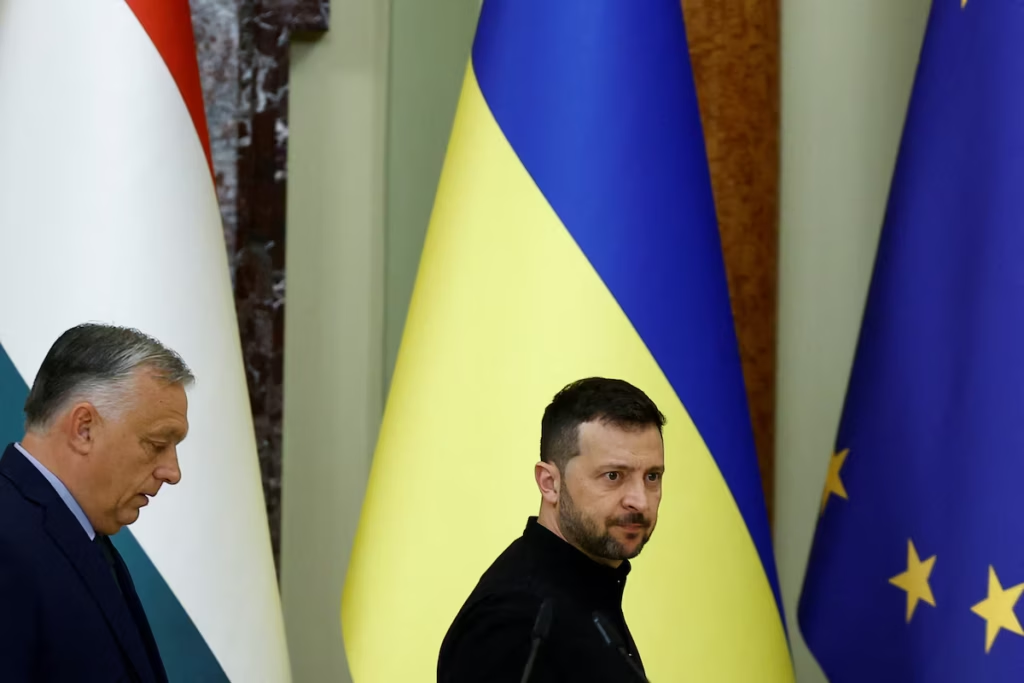
Hungary announced Monday the blocking of twelve Ukrainian news websites, a move taken in response to Kyiv's decision earlier this month to restrict access to several portals considered pro-Russian. This escalation heightens tensions between the two neighboring countries, already strained since the start of the Russian invasion of Ukraine.
In early September, Ukraine banned several websites accused of disseminating pro-Russian content, including eight Hungarian-language portals, including the media outlet origo.hu, which is close to Viktor Orban's government. This decision was taken at the request of the Ukrainian security services.
"A sovereign country must respond proportionately to a completely unjustified attack," said Gergely Gulyas, Prime Minister Orban's chief of staff, in a Facebook post. He said Budapest had no choice but to retaliate against Kyiv's action.
Among the sites now inaccessible in Hungary is European Pravda, an influential Ukrainian media outlet that closely follows Ukraine's accession negotiations with the European Union and has been particularly critical of Hungary for its attempts to slow down the process.
According to Budapest, Ukraine targeted Hungarian portals because of their opposition to sanctions against Russia, Western military aid to Kyiv, and their criticism of the European Union and NATO, which they consider ineffective and divided.
This exchange of retaliatory measures illustrates the deterioration of bilateral relations between Budapest and Kyiv, amid persistent disagreements over the war in Ukraine, Hungary's role within the EU and the rights of the Hungarian minority in Transcarpathia.
What does the article about Hungary blocking twelve Ukrainian news websites in retaliation against Kyiv say?
Hungary announced on Monday the blocking of twelve Ukrainian news websites, a measure taken in response to Kyiv's decision earlier this month to
What are the key reactions?
The article summarizes the reactions and the relevant international context.