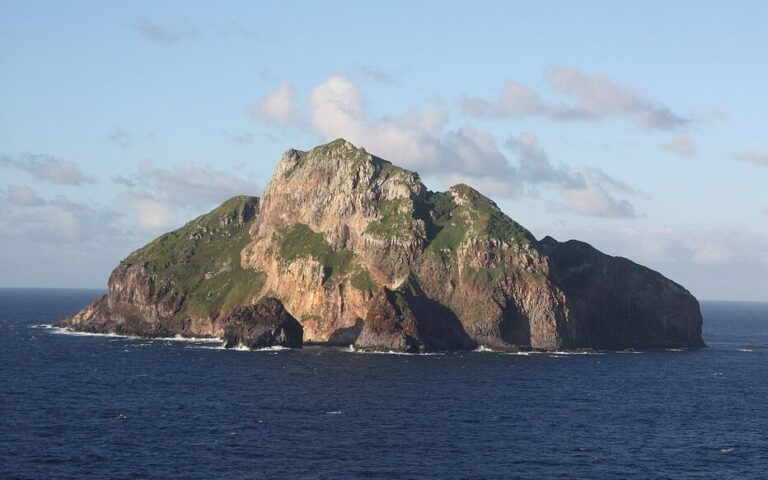
Diplomatic exchanges have resumed between France and Vanuatu regarding the uninhabited islets of Hunter and Matthew, located east of New Caledonia. These discussions, which began in late 2025, have revived accusations of "territorial cession" made by several French political figures. At this stage, no official initiative confirms a plan to transfer sovereignty, according to diplomatic sources.
These two volcanic rocks, difficult to access and devoid of permanent population, nevertheless represent a major strategic asset. Their annexation allows France to claim nearly 350,000 km² of exclusive economic zone, a maritime area rich in fishing resources and potentially mineral resources, in a region of the Pacific that has become geopolitically sensitive.
An old dispute framed by international law
French sovereignty over Hunter and Matthew Islands, asserted since the beginning of the 20th century, has been contested by Vanuatu since its independence in 1980. In accordance with the United Nations Convention on the Law of the Sea, the states concerned are obligated to engage in dialogue and cooperation when a maritime dispute arises, without any requirement to reach a final agreement. The ongoing discussions fall within this legal framework and focus in particular on the management of the disputed maritime areas.
The French government maintains that no territorial relinquishment has been considered. Such a decision would also entail a cumbersome institutional procedure involving Parliament. Paris favors a regional cooperation approach, particularly in fishing and scientific research, while reaffirming its sovereignty over these islets. Further meetings between the two countries are planned for 2026.