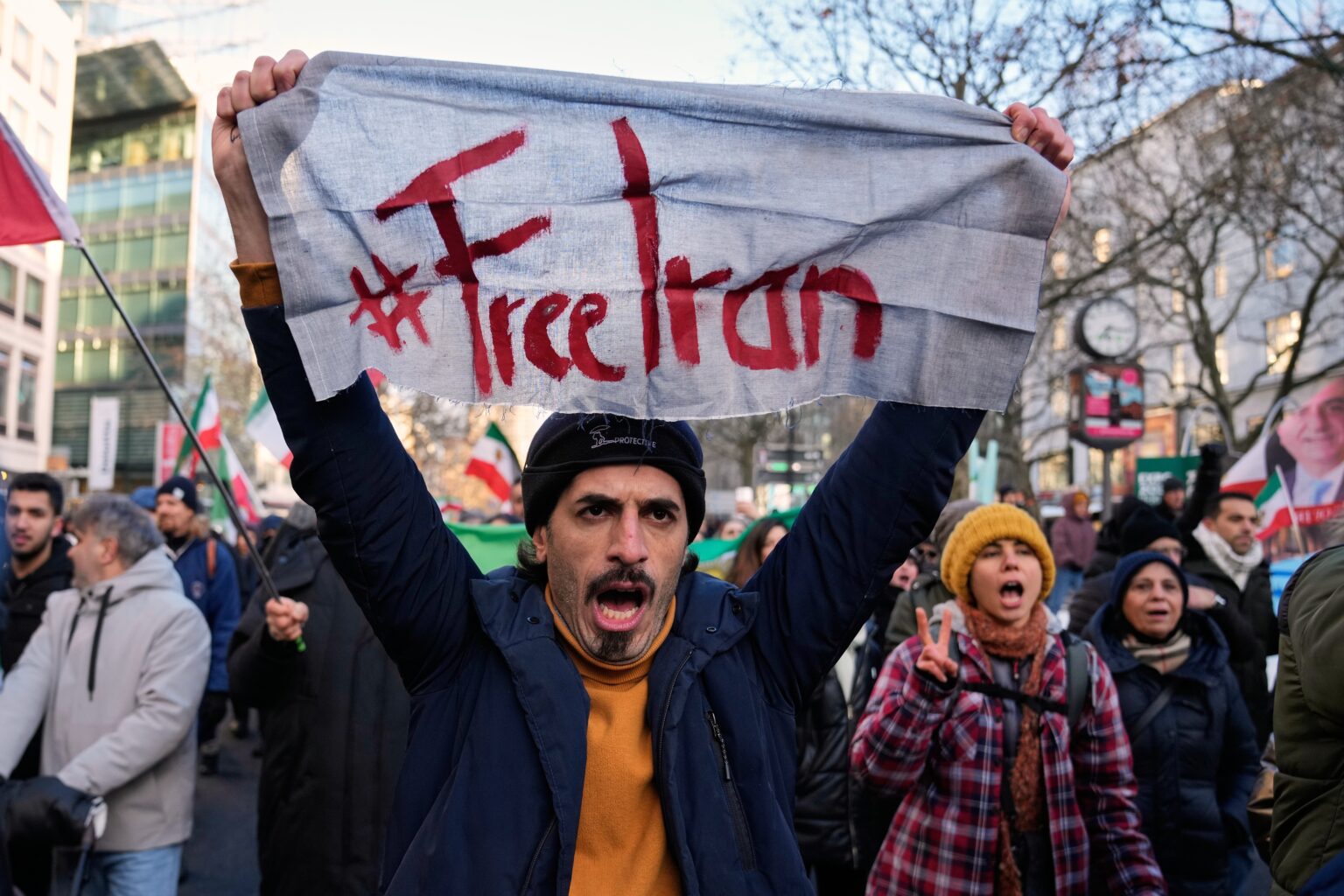
National protests challenging the Iranian theocracy have seen demonstrators flood the streets of the capital and the country’s second-largest city through Sunday, surpassing two weeks, as violence surrounding the protests has resulted in at least 116 deaths, according to activists.
With internet cut off in Iran and telephone lines disrupted, it has become more difficult to assess the protests from abroad. But the death toll in the protests has risen, while 2,600 others have been arrested, according to the US-based Human Rights Activists News Agency.
Furthermore, the Iranian parliament speaker warned that the US military and Israel would be “legitimate targets” if the United States struck the Islamic Republic, as threatened by President Donald Trump. Qalibaf issued this threat as parliamentarians rushed to the podium in the Iranian parliament shouting: “Death to America!”
Abroad, there are fears that this information blackout may encourage ultraconservative factions within Iranian security services to launch a bloody crackdown, despite Trump’s warnings that he is ready to strike the Islamic Republic to protect peaceful protesters.
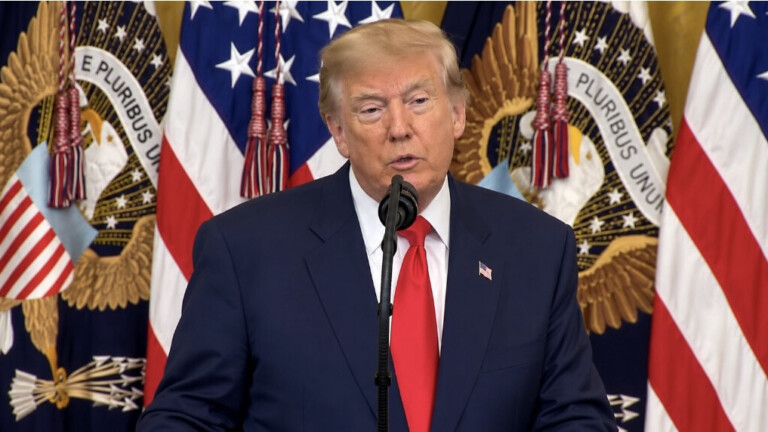
Trump expressed support for the protesters, stating on social media that “Iran is looking at FREEDOM, perhaps like never before. The United States is ready to help!!!” The New York Times and the Wall Street Journal, citing anonymous US officials, reported Saturday night that Trump had received military options to strike Iran but had not made a final decision.
The State Department separately warned: “Don’t play with President Trump. When he says he will do something, he means it.”
Gatherings at Parliament
Iranian state television broadcast the parliamentary session live. Qalibaf, an ultraconservative who has previously run for president, delivered a speech praising the police and the Islamic Revolutionary Guard Corps, notably its Basij volunteer unit, for “holding firm” during the protests.
“The Iranian people must know that we will deal with them in the harshest way and punish those arrested,” Qalibaf said.
He then directly threatened Israel, “the occupied territory” as he called it, and the US military, possibly with a preemptive strike.
“In case of an attack against Iran, both the occupied territory and all US military centers, bases, and ships in the region will be our legitimate targets,” Qalibaf said. “We do not consider ourselves limited to reacting after action and will act based on any objective sign of threat.”
It remains uncertain how serious Iran is about the possibility of launching a strike, especially after seeing its air defenses destroyed during the 12-day war in June with Israel. Any war decision would depend on the 86-year-old Iranian Supreme Leader, Ayatollah Ali Khamenei.
The US military stated in the Middle East that it is “positioned with forces covering the full range of combat capabilities to defend our forces, partners, allies, and US interests.” Iran had targeted US forces at Al Udeid Air Base in Qatar in June, while the US Navy’s 5th Fleet is based in the island kingdom of Bahrain.
Israel, for its part, is “closely monitoring” the situation between the US and Iran, an Israeli official said anonymously. Israeli Prime Minister Benjamin Netanyahu discussed Iran with US Secretary of State Marco Rubio, the official added.
Protests in Tehran and Mashhad
Online videos sent from Iran, likely via Starlink satellites, allegedly showed protesters gathered in the Punak neighborhood, north of Tehran. It appeared authorities had closed streets, with protesters holding up their lit phones. Others were striking metal objects while fireworks exploded.
Other footage showed protesters peacefully marching down a street, while others honked their car horns.
“The pattern of protests in the capital has largely taken the form of dispersed, short-lived, and fluid gatherings, an approach shaped in response to the strong presence of security forces and increased pressure on the ground,” said Human Rights Activists News Agency. “At the same time, reports were received regarding surveillance drones flying overhead and movements of security forces around protest sites, indicating ongoing surveillance and security control.”
In Mashhad, Iran’s second city about 725 kilometers northeast of Tehran, images allegedly showed protesters clashing with security forces. Burning debris and trash containers blocked the road. Mashhad houses the Imam Reza shrine, the most sacred in Shiism, which gives protests in this city great significance for the country’s theocracy.
Protests also appeared to be taking place in Kerman, 800 kilometers southeast of Tehran.
Sunday morning, Iranian state television adopted the protesters’ strategy, showing its correspondents in the streets of several cities to display calm areas with the date on screen. Tehran and Mashhad were not included. They also showed pro-government protests in Qom and Qazvin.
Khamenei hinted that a crackdown would follow despite US warnings. Tehran intensified its threats Saturday, with Iranian Attorney General Mohammad Movahedi Azad warning that anyone participating in protests would be considered an “enemy of God,” a crime punishable by death. The statement, broadcast by Iranian state television, specified that even those “helping rioters” would be prosecuted.
More Protests Planned for Sunday
The Iranian theocracy cut access to the internet and international calls Thursday, while allowing some state and semi-official media to publish. The Qatari network Al Jazeera, state-funded, broadcast live from Iran, appearing to be the only major foreign media able to operate.
The former exiled Iranian crown prince, Reza Pahlavi, who had called for protests Thursday and Friday, asked in his latest message for protesters to take to the streets Saturday and Sunday. He urged protesters to wave the old Iranian lion and sun flag and other national symbols used during the Shah’s era to “claim public spaces as your own.”
Pahlavi’s support for Israel, and the support he received from Israel, has drawn criticism in the past, notably after the 12-day war. In some protests, demonstrators chanted support for the Shah, but it is unclear if this is support for Pahlavi himself or a desire to return to the era before the 1979 Islamic Revolution.
The protests began on December 28 due to the collapse of the Iranian rial, which trades at over 1.4 million to 1 USD, while the country’s economy is strangled by international sanctions, partly related to its nuclear program. The protests have intensified and become a direct challenge to the Iranian theocracy.