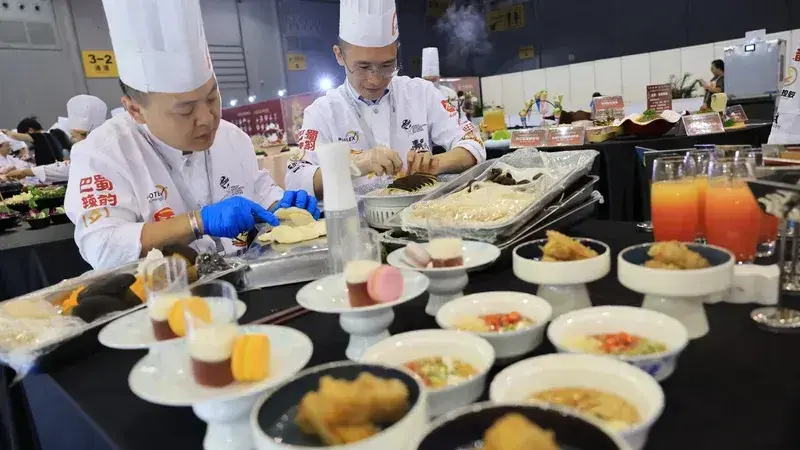
Chinese gastronomy and the musical traditions related to the Arabic oud are about to receive major international recognition. These two practices are among the candidates for inscription on the Intangible Cultural Heritage of Humanity list, which will be examined during the next UNESCO session. Held from November 30 to December 5, 2026, in Xiamen, China, this meeting will evaluate several dozen cultural traditions from around the world. Beyond their artistic and gastronomic influence, these candidacies reflect the states’ desire to preserve know-how passed down from generation to generation and sometimes threatened by transformations in contemporary societies.
The Chinese candidacy does not concern a specific dish but encompasses all knowledge and practices associated with the preparation, tasting, and sharing of food. It notably includes cutting techniques, steaming, fermentation, and the use of traditional utensils such as the wok and chopsticks. Family meals, banquets, and celebrations also hold a central place in the dossier presented by Beijing. Chinese cuisine is based on great regional diversity, with specialties whose ingredients, seasonings, and preparation methods vary considerably according to provinces. In its candidacy, China particularly highlights a conception of food based on the balance between flavors, seasons, and natural resources. This culinary tradition notably places special importance on the harmony among five fundamental tastes: sour, sweet, bitter, spicy, and salty.
The proposed inscription would allow Chinese cuisine to join several gastronomic traditions already recognized by UNESCO. The French gastronomic meal, inscribed in 2010, is notably on this list, as are traditional Mexican cuisine, Japanese washoku, and the art of the Neapolitan pizzaiolo. However, intangible heritage recognition does not aim to rank the world’s best cuisines. It seeks to identify living cultural practices, their know-how, and the mechanisms enabling their transmission to future generations. The Chinese approach thus highlights the role of families, cooks, artisans, and local communities in preserving food traditions. It could also enhance the international visibility of a gastronomic heritage already very present in restaurants and eating habits in many countries.
Sixteen Arab Countries United to Recognize Oud Traditions
The candidacy dedicated to the oud has a particularly symbolic dimension, as it is jointly supported by sixteen Arab countries. This plucked string instrument, recognizable by its rounded body and short neck, holds an important place in the musical traditions of the Middle East and North Africa. Its history dates back several centuries, and its use has gradually spread across many repertoires, from classical Arabic music to popular songs and contemporary compositions. The oud accompanies concerts as well as certain family ceremonies, weddings, and cultural gatherings. Its manufacture relies on specific artisanal techniques, notably in the choice of wood types, assembly of the resonator body, and string tuning. The candidacy thus aims to preserve not only the musical practice but also the knowledge of artisans and teachers who contribute to its transmission.
The Xiamen session will also examine several other traditions from different world regions. Countries from Central Asia and the Caucasus notably wish to have their traditional felt-making techniques recognized, while Ukraine, Poland, and Lithuania jointly present their Christmas Eve traditions. Several African states hope to obtain a first inscription, including Lesotho for its traditional mokorotlo hat, South Sudan for the yigga funeral rite, Eswatini for its marula festival, and Tanzania for its singeli music. Barbados also advocates for the recognition of road tennis, a sport born in a context of social exclusion during the colonial period. UNESCO currently lists 849 elements across its various recognition and safeguarding mechanisms for intangible cultural heritage. The decisions expected in early December will determine which new practices will officially join this list and benefit from increased international visibility.