

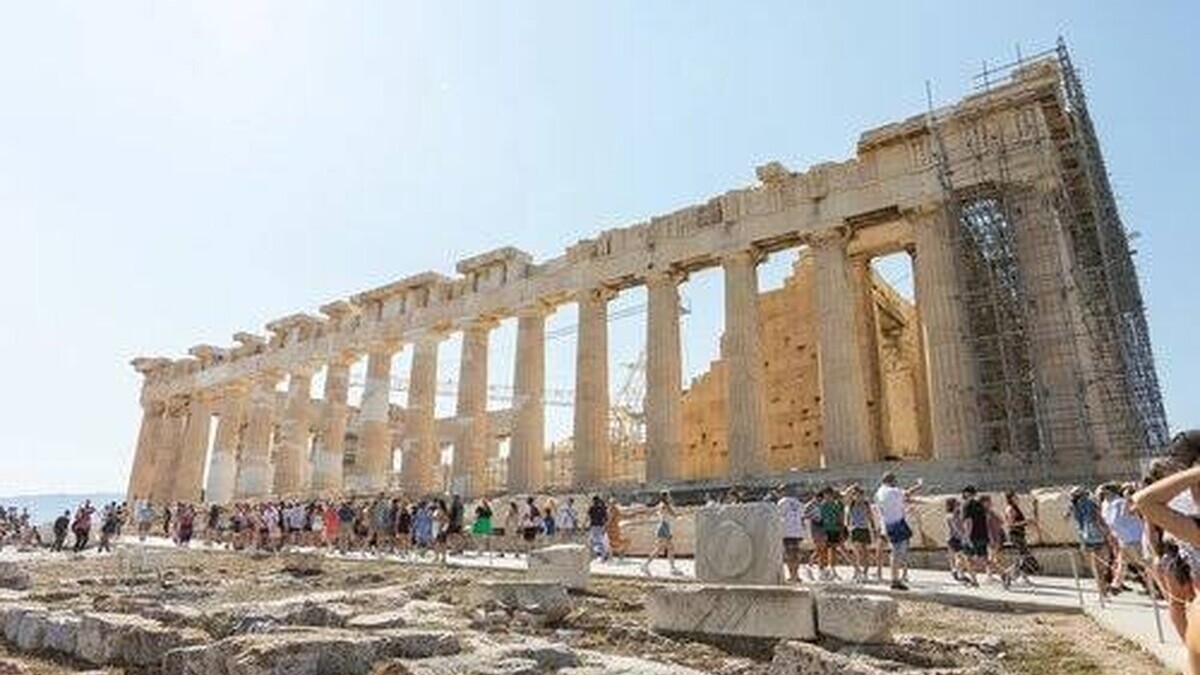
Greece is reconnecting with a part of its cultural history by reopening the ancient Acropolis Museum in Athens . Located on the sacred rock, in the immediate vicinity of the Parthenon, this historic institution is returning to its role as a museum after several years of closure. This reopening breathes new life into an iconic site of Greek archaeological heritage.
Built in the 19th century, the old museum had long housed archaeological discoveries made on the Acropolis. It had gradually revealed its limitations in the face of the size of the collections and modern conservation requirements. The opening of the new Acropolis Museum in 2009 marked the transfer of a large part of its collections to a contemporary building located below the ancient site.
A new chapter for Greek heritage
The reopening of this establishment is part of an effort to promote the historical and architectural heritage of Athens. Its exceptional location, in the heart of one of the world's most famous archaeological sites, gives it a special significance. Visitors will thus be able to rediscover a building intimately linked to the history of the excavations and the preservation of the remains of ancient Greece.
This revival also comes in a context marked by Athens' persistent demands for the return of the Parthenon sculptures housed in the British Museum in London . For several decades, Greek authorities have advocated for the reunification of these works. More broadly, the reopening of the ancient museum reflects the country's commitment to preserving and transmitting a cultural heritage that occupies a central place in the history of civilizations.








Respond to the article
Be the first to comment on this article.