

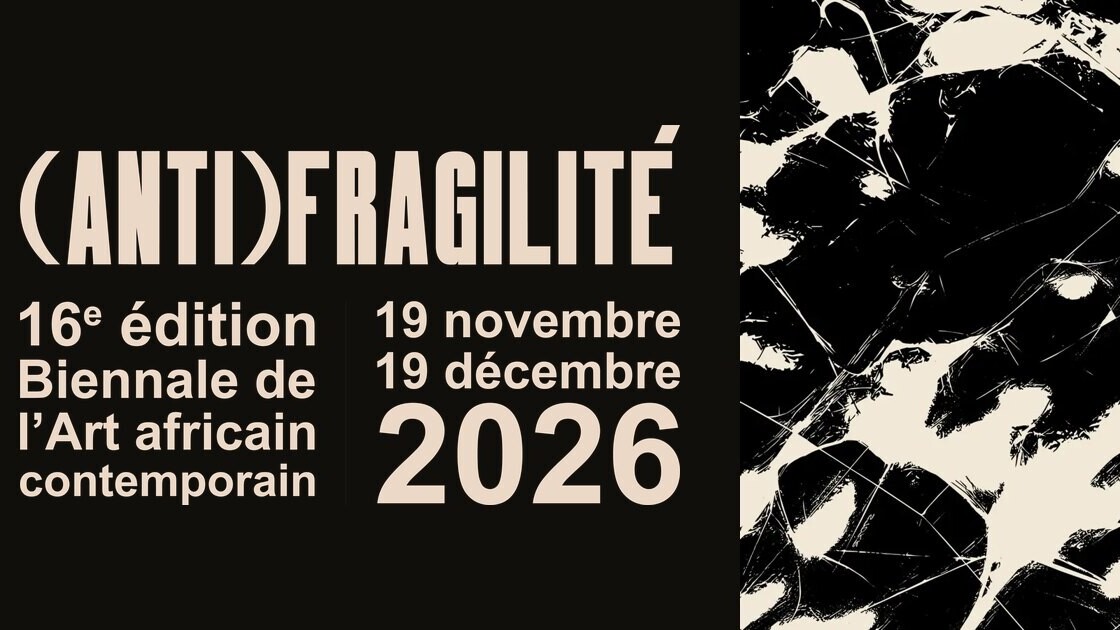
In an international context marked by conflicts and geopolitical tensions, the 16th Dakar Biennale seeks to make artistic creation a space for reflection, resistance, and dialogue. The event, dedicated to African contemporary art, highlights artists’ ability to transform the world’s fragilities into new forms of expression. A major cultural event for Senegal and the international art scene.
Dakar once again aims to assert its place among the great capitals of contemporary art. For its 16th edition, the Biennale of African contemporary art takes place during a period marked by wars, diplomatic tensions, and economic uncertainties. Artists are invited to explore the upheavals of their time while offering unique perspectives on African societies and their relations with the rest of the world.
The ambition of this edition is based on a strong idea: fragility is not only a weakness but can also become a source of creation. Individual experiences, social ruptures, and collective memories thus nourish works capable of questioning power relations, identities, and contemporary transformations. Art appears as a means to make visible realities sometimes absent from major international debates.
Dakar, a historic capital of African creation
Created in 1990, the Dakar Biennale has gradually established itself as one of the main events dedicated to African contemporary art. It helps to promote artists from the continent and its diasporas while fostering exchanges with international professionals. Its development reflects the importance given to culture in Senegal’s influence.
The event also fits into a longer cultural history. From the early years of independence, President Léopold Sédar Senghor advocated an ambitious policy to promote the arts and creation. The World Festival of Black Arts organized in Dakar in 1966 notably contributed to this desire to make Senegal a meeting place between cultures.
Art as a response to international tensions
In a world described as “conflictual,” the works presented can offer another reading of contemporary crises. Migration issues, colonial legacies, economic inequalities, and environmental upheavals are all subjects likely to inspire artists. Their work allows these realities to be approached differently than through political or institutional discourse alone.
However, African contemporary creation is not limited to representing the continent’s difficulties. It also explores innovations, imaginaries, urban transformations, and new cultural identities. The Biennale thus helps to overcome a reductive vision of Africa by showcasing the diversity of artistic approaches and individual experiences.
A cultural and economic challenge for Senegal
Beyond exhibitions, the Biennale represents a development lever for Senegal’s artistic ecosystem. It attracts gallery owners, collectors, critics, and visitors while offering international visibility to creators. Professional meetings can foster new collaborations and contribute to the circulation of works.
The event also benefits several local activities, notably hospitality, catering, and cultural services. But its most lasting impact could lie in strengthening artistic institutions and supporting young talents. The question of access to culture for residents remains essential in this regard.
Turning fragility into creative strength
The message carried by this 16th edition goes beyond Senegal’s borders. It invites considering artistic creation as a capacity to invent new perspectives in the face of crises. In an unstable international environment, artists can help preserve memory, question certainties, and open spaces for dialogue.
For Dakar, the challenge is also to consolidate its role as an international platform for African art. By bringing together different artistic approaches around a reflection on contemporary fragilities, the Biennale affirms that culture can be an instrument for understanding the world. An ambition that gives this new edition an artistic, social, and diplomatic scope.


Respond to the article
Be the first to comment on this article.