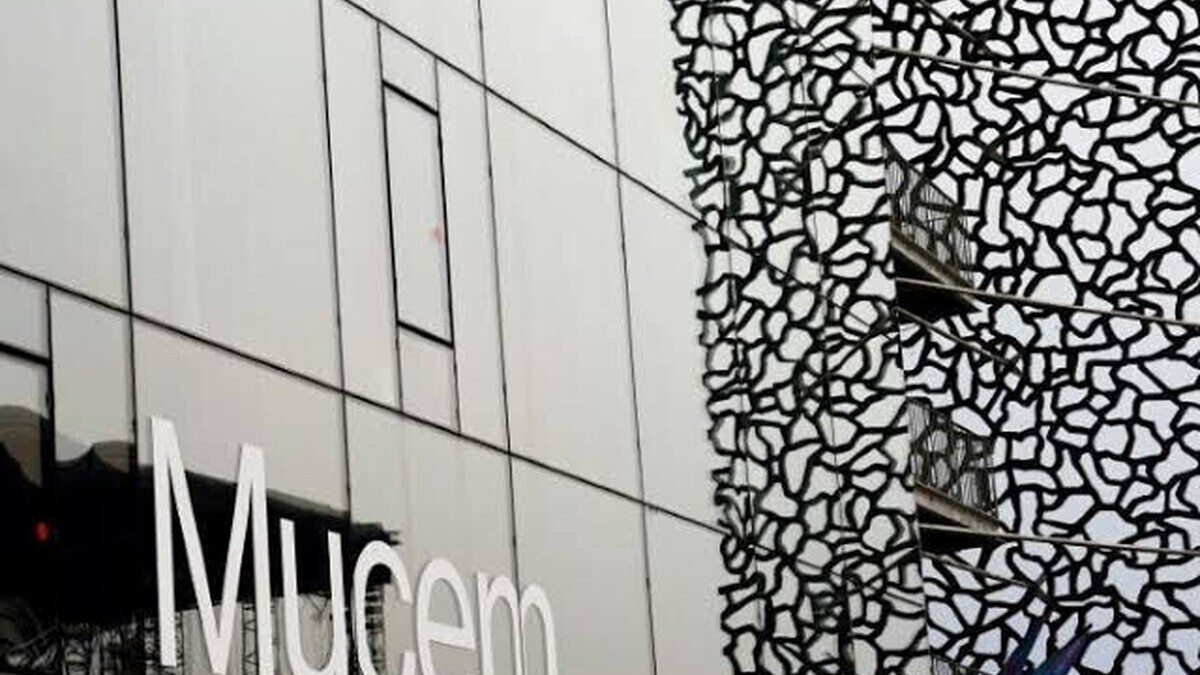
The institutional crisis shaking the Museum of European and Mediterranean Civilisations (Mucem) in Marseille is escalating. On Friday, November 27, the Provence-Alpes-Côte d’Azur region and the Bouches-du-Rhône department confirmed they would not participate in the museum’s next board meeting scheduled for December 4. This decision aligns with that of the city of Marseille, already involved in a protest movement. At the heart of the tensions is the return to the presidency of Pierre-Olivier Costa, who faces accusations of moral and sexual harassment which he firmly denies.
For several months, Mucem has been going through a particularly difficult period socially and institutionally. Pierre-Olivier Costa, former chief of staff to Brigitte Macron appointed president of the museum in November 2022, was suspended from his duties as a precautionary measure on July 1, 2026. This decision came amid reports concerning working conditions within the institution. The Ministry of Culture notably referred the matter to the General Inspectorate of Cultural Affairs to conduct an administrative investigation into the museum’s social climate. Simultaneously, a criminal investigation into accusations of moral and sexual harassment was opened following a report made by the ministry. At the end of his four-month suspension, Pierre-Olivier Costa resumed his duties in early November, without this decision easing internal tensions.
The president’s return quickly sparked new reactions among staff representatives and institutional partners of the museum. As early as November 9, the city of Marseille announced it would suspend its participation in the board pending measures to restore a more peaceful social climate. The Provence-Alpes-Côte d’Azur region and the Bouches-du-Rhône department have now adopted a similar stance. Both authorities explain they are awaiting official clarifications from the Ministry of Culture regarding the conditions of Pierre-Olivier Costa’s return and the follow-up to the administrative investigations. The region notably cites the lack of satisfactory responses to its inquiries, while the department wishes to have precise information before resuming its participation in governance bodies.
The Ministry of Culture under pressure amid staff mobilization
This institutional protest is accompanied by growing mobilization of trade unions. The Mucem inter-union, which includes CGT, FSU, and Sud Culture, has filed a strike notice starting November 29. Staff representatives demand the departure of Pierre-Olivier Costa as well as the publication of the conclusions of the investigation conducted by the General Inspectorate of Cultural Affairs. According to the unions, staff also expect guarantees regarding their protection and working conditions. A labor inspection investigation is also set to begin on December 1. For his part, Pierre-Olivier Costa rejects the accusations against him and asserts his innocence. Ongoing investigations will need to establish the facts and any responsibilities, respecting the rights of all persons concerned.
Beyond the conflict surrounding his presidency, this crisis threatens to undermine the operation of one of Marseille’s most emblematic cultural institutions in the long term. Inaugurated in 2013 during Marseille-Provence, European Capital of Culture, Mucem welcomes hundreds of thousands of visitors annually and plays an important role in the city’s cultural and tourist influence. Its operation notably relies on cooperation between the State, local authorities, and museum teams. The temporary withdrawal of representatives from three authorities from the upcoming board meeting thus constitutes a particularly strong political signal. While not necessarily indicating an immediate halt to activities or funding, this situation complicates relations among public partners. The Ministry of Culture now finds itself at the center of expectations, as unions demand swift decisions to resolve a crisis that could affect the organization of upcoming exhibitions and the institution’s stability.