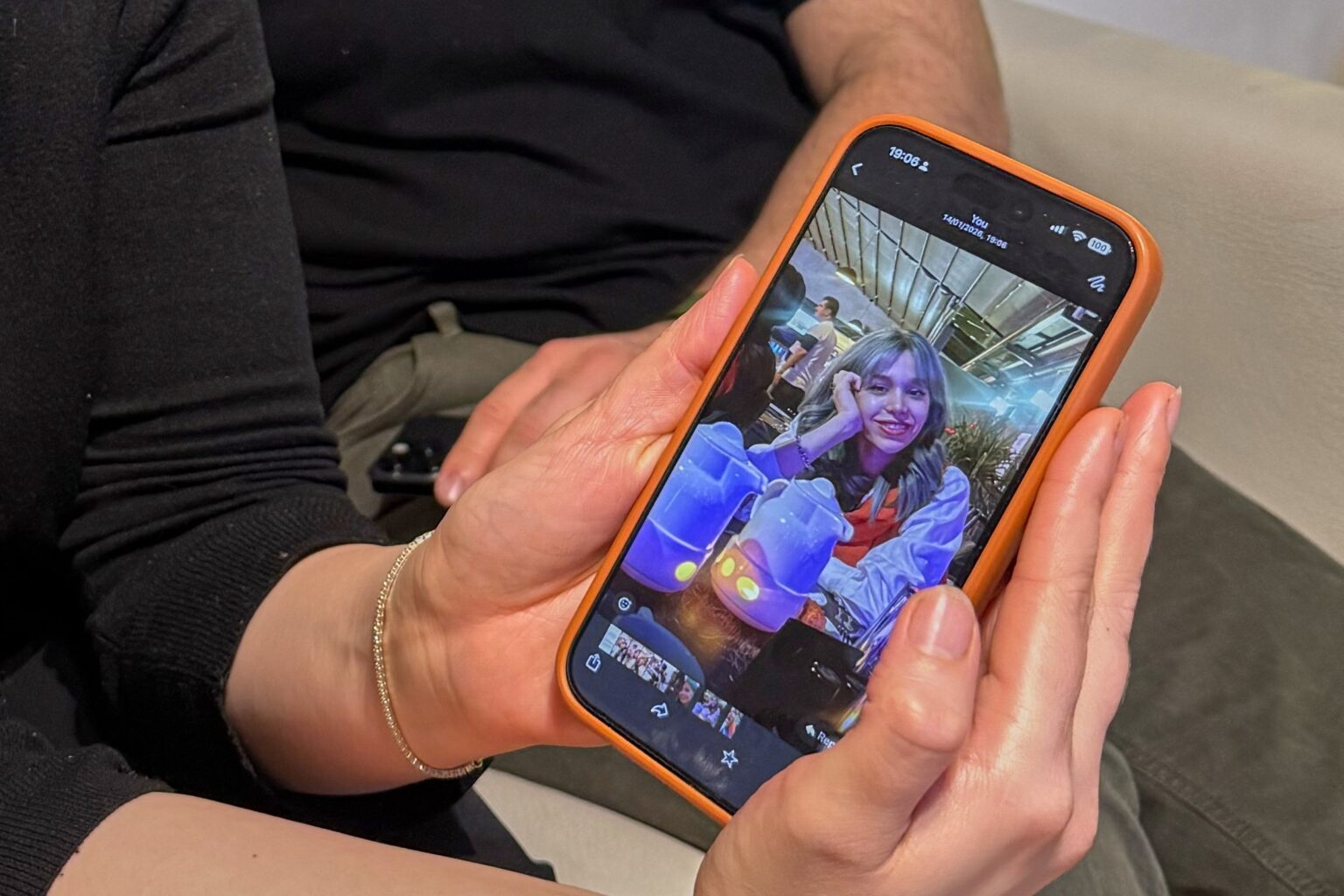
Robina Aminian, a Kurdish fashion student in Tehran, was killed by a close-range bullet fired by Iranian security forces, directly at the back of her head.
Her death, which occurred during nationwide protests against the Iranian theocracy, was only the beginning of a long ordeal for her family. After the tragedy, Robina’s mother had to search through piles of bloodied corpses to find her daughter’s body. Fearing the authorities who might have demanded payment to release the body, the family was forced to hastily bury it in an unmarked grave by the roadside.
This tragedy highlights the nightmare experienced by many families in Iran, faced with the loss of their loved ones and the inability to mourn with dignity.
A stolen life
More than a week after her death, Aminian’s family still has not been able to hold a funeral for the young woman. “She wanted a bright future for herself”, says her uncle, Nezar Minoei, from Oslo. “But unfortunately, that future was stolen from her.”
Unclear circumstances
Few details are known about the exact circumstances of her death. After the tragedy, her mother contacted relatives abroad to share what she had learned from Robina’s friends who were present at the scene of the killing.
A human rights organization based in Oslo, Iran Human Rights, confirmed that there were shootings on the night of January 8 around the campus of the Shariati Technical and Vocational College for Girls.
With communications severely restricted in Iran, it is impossible to independently verify the family’s account or the condition of Aminian’s body. The Iranian government has provided no official figures on the number of victims of the protests.
The friends’ alert
All that the family living abroad knows comes from a brief call that Aminian’s mother, Amina Norei, was able to make on January 10 to her relatives in Oslo.
She had received a call two days earlier from Robina’s friends, who explained that her daughter had been shot by security forces as they were leaving the campus at nightfall and had joined a protest. A bullet hit the back of her head.
Videos and survivor testimonies, verified by the Associated Press, show the widespread use of rifles and shotguns to disperse protesters across the country.
Robina was not an activist and was not involved in politics.
A desperate search
Aminian’s mother was in Kermanshah, nearly 460 km from Tehran, when she learned of her daughter’s death. She rushed to Tehran in the middle of the night and began searching through body bags one by one. “She looked at so many beautiful faces, trying to find her daughter”, says Hali Norei, Robina’s aunt. “What is unbearable is imagining what my sister felt while searching for her child.”
Many Iranian families endure the same ordeal, searching overcrowded morgues where bodies pile up in trucks or warehouses, according to Amnesty International.
An escape to bury Robina
When her mother found Robina, she was joined by her husband and children. Fearing that authorities would block their passage and demand money to retrieve the body, the family was forced to leave the city and bury Robina in a roadside grave. The body is still believed to be there, in an unmarked grave.
According to the Center for Human Rights in Iran, intelligence forces have already been accused of demanding money from families to return protesters’ bodies, a practice intended to intimidate relatives and prevent public mourning.
An impossible mourning
Aminian’s mother recounted that the seven-hour journey to Kermanshah was a torment: she and her eldest daughter held the body on the back seat, their clothes stained with blood and tears. Upon arrival, their home was surrounded by security forces.
Since then, the family has received no news of Amina Norei or other relatives in Iran.