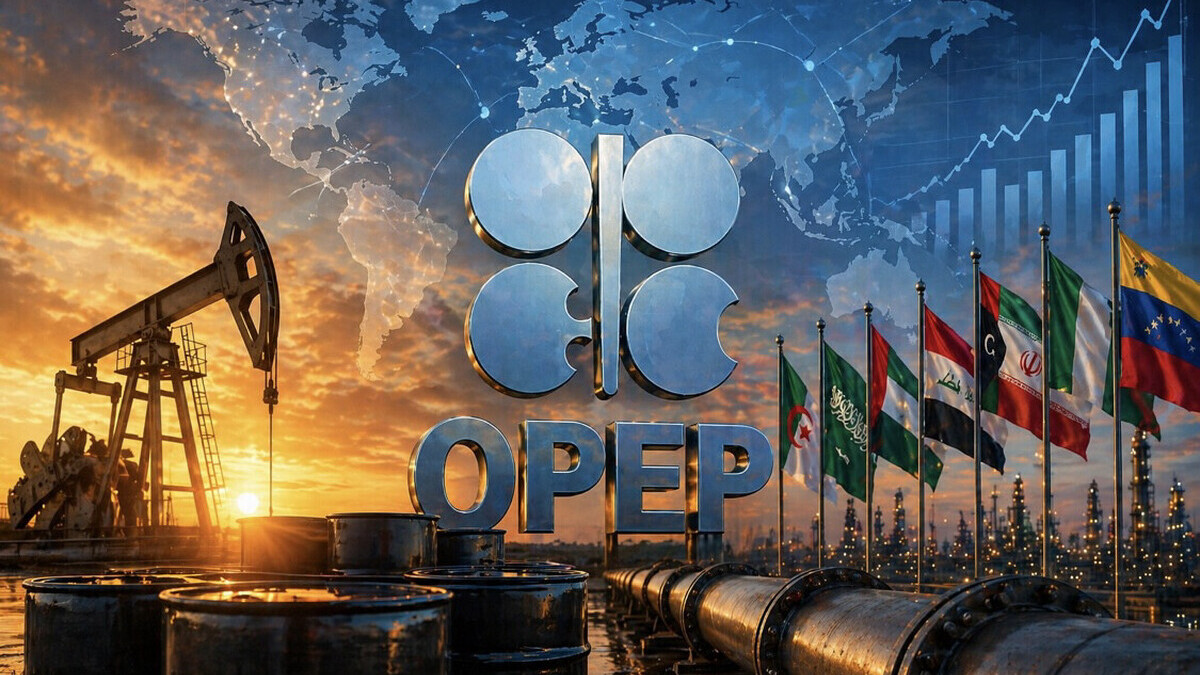
Abu Dhabi announced this Tuesday its withdrawal from OPEC and the OPEC+ alliance, effective May 1. A historic decision that ends nearly six decades of Emirati presence within the oil cartel and could reshuffle the cards of the global energy market.
This decision marks a historic break. The Emirates had been part of OPEC since 1967, initially through the emirate of Abu Dhabi, before continuing their participation after the creation of the United Arab Emirates federation in 1971. Their departure removes from the organization one of its most important producers and one of the few countries with significant capacity to increase production.
A decision motivated by the desire to produce more
Officially, Abu Dhabi states it wants to adopt a more flexible policy, adapted to the evolution of global demand and its own investments in the energy sector. The Emirati statement emphasizes the country’s desire to remain a “reliable” and “responsible” supplier, while gradually putting more production on the market aligned with demand.
In clear terms, the Emirates want to regain control over their oil strategy. In recent years, the country had already expressed frustrations with the production quotas set within OPEC+, which it considered too restrictive given its massive investments in increasing its capacities. This desire to produce and sell more oil was one of the underlying tensions between Abu Dhabi and the cartel.
A blow to OPEC and Saudi Arabia
The departure of the United Arab Emirates constitutes a political and economic setback for OPEC, but also for Saudi Arabia, the de facto leader of the organization. Reuters reports that the decision was made without prior consultation with Riyadh or other group members, according to Emirati Energy Minister Suhail Mohamed al-Mazrouei.
This exit comes as relations between Abu Dhabi and Riyadh have gradually strained over several economic and geopolitical issues. The two Gulf powers remain partners on many fronts, but they have also become competitors in investment, logistics, regional influence, and now energy policy.
For OPEC, the stakes are considerable. The organization has long relied on its members’ ability to coordinate production to influence global oil prices. The withdrawal of a player like the Emirates weakens this mechanism, especially in a context where the cartel’s power is already challenged by the rise of other producers, notably the United States.
An already tense market
The energy context is extremely tense. The global oil market is disrupted by the war in Iran and navigation difficulties in the Strait of Hormuz, a strategic passage through which a major share of global oil and liquefied natural gas transits. Due to this situation, Gulf producers’ exports are already heavily constrained.
In the short term, the Emirates’ departure could therefore have a limited impact on prices, precisely because export capacities remain hindered by the regional crisis. The Emirati Energy Minister himself estimated that the decision would not have an immediate massive effect on the market due to the disruptions around the Strait of Hormuz.
But in the medium and long term, the consequences could be profound. Outside the OPEC+ framework, Abu Dhabi will be able to more freely adjust its production, conclude more flexible agreements with its clients, and strengthen its position with major energy consumers, notably in Asia.
A geopolitical as well as energy turning point
This decision also reflects the Emirates’ desire to assert themselves as an autonomous power in the Gulf. By leaving OPEC, Abu Dhabi sends a clear signal: its energy policy will now be dictated primarily by its national interests, not by the internal balances of the cartel.
The move could also be seen as a diplomatic victory for the United States, whose several administrations have regularly criticized OPEC for its influence on oil prices. Reuters highlights that Donald Trump long accused the organization of artificially maintaining high prices.
The climate paradox of the Emirates
The departure from OPEC also occurs as the Emirates try to project the image of a country committed to the energy transition. The country hosted COP28 in 2023 and invests in renewable energies, civil nuclear, and low-carbon technologies. But it simultaneously pursues a strategy of expanding its oil capacity.
This dual positioning shows the dilemma of several Gulf monarchies: preparing for the post-oil era while maximizing hydrocarbon revenues as long as global demand remains high. For Abu Dhabi, leaving OPEC would precisely allow better exploitation of this strategic window.
Sources citées dans l’article Reuters