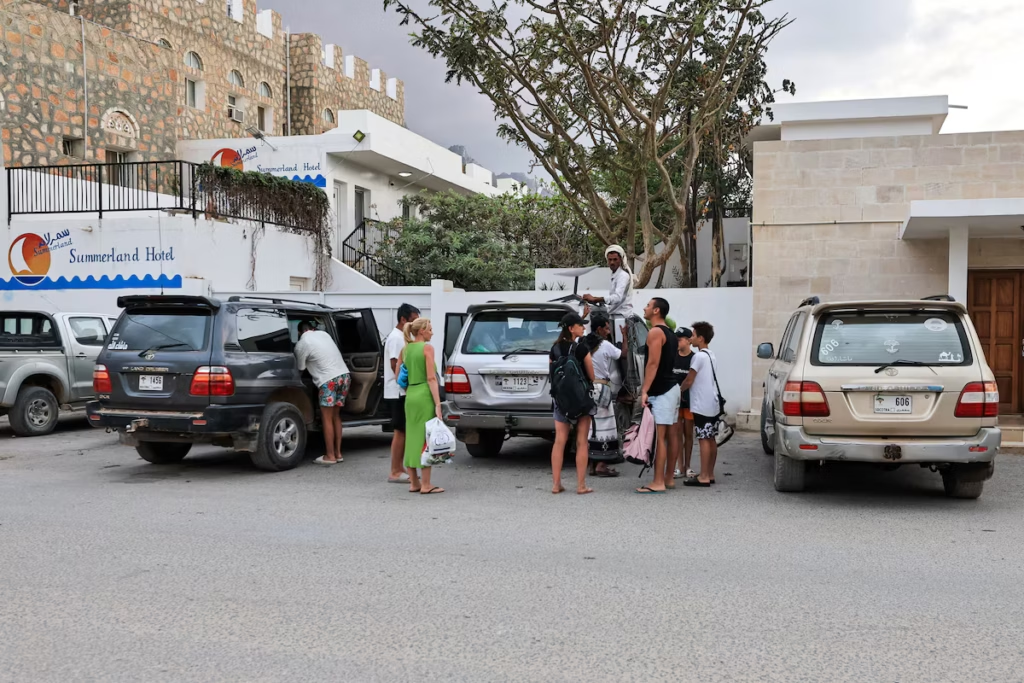
Around 600 tourists are stranded on the remote island of Socotra following the sudden suspension of air traffic, a direct consequence of a growing dispute between Saudi Arabia and the United Arab Emirates over the Yemeni conflict. The closure of the main airport has prevented visitors, mostly arriving via Abu Dhabi, from leaving the archipelago.
According to several eyewitness accounts gathered on site, travelers lack clear information and now fear running out of cash, as electronic payments are nonexistent on the island. Some are considering evacuation via Jeddah, Saudi Arabia, indicating that logistical control of Socotra has recently changed hands.
Located more than 300 kilometers from Yemen’s coast, Socotra had until now remained relatively untouched by the civil war ravaging the mainland. Known for its pristine beaches and unique biodiversity, notably the famous dragon’s blood tree, the island has in recent years become a niche tourist destination.
Since 2018, however, Socotra has been under the influence of the United Arab Emirates, which deployed troops and invested heavily in infrastructure, including the airport. This presence was part of a regional strategy to strengthen control over maritime routes around the Bab el-Mandeb Strait, a key axis of global trade.
This dominance is now weakened by the rift between Riyadh and Abu Dhabi in Yemen. Saudi Arabia supports the internationally recognized Yemeni government, while the Emirates back the Southern Transitional Council, a separatist movement still controlling the island. According to airport sources, the airport is no longer under Emirati control and remains closed.
On site, the situation is becoming concerning for tourists, some of whom say they were not informed of the geopolitical risks when booking their stay. While the island remains calm for now, uncertainty over the resumption of flights and the evolution of the regional power balance raises the risk that this long-preserved haven may in turn be caught up in the tensions of the Yemeni conflict.