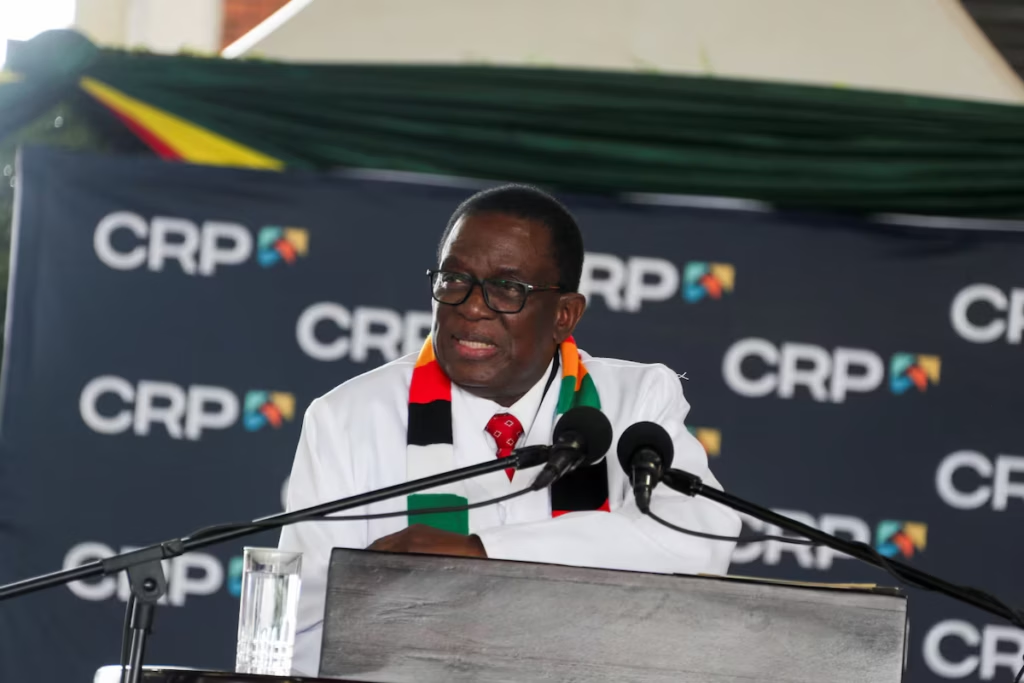
The Zimbabwean government has approved a bill to amend the Constitution to extend the length of presidential terms, a reform that would allow President Emmerson Mnangagwa to remain in power until 2030.
According to the text approved by the cabinet, the presidential term would increase from five to seven years. This change would pave the way for an extension of the current term of the head of state, who came to power in 2017 after the removal of Robert Mugabe and was re-elected in the 2023 election.
The bill also provides for a major change in the method of electing the president. Instead of a direct universal suffrage, the head of state would now be elected by Parliament, a provision that has already sparked strong criticism from the opposition and civil society.
Opponents of the reform believe it would further weaken the country’s democratic institutions and reduce voters’ ability to directly choose their leader. Civil rights organizations have, in the past, denounced constitutional reforms perceived as tailor-made to maintain those in power.
The government, for its part, defends these changes by citing the need to ensure political stability and continuity of economic policies, in a country facing high inflation, a persistent monetary crisis, and international sanctions.
The bill still needs to be submitted to Parliament, where the ruling party has a sufficient majority to pass the text, before any possible promulgation.