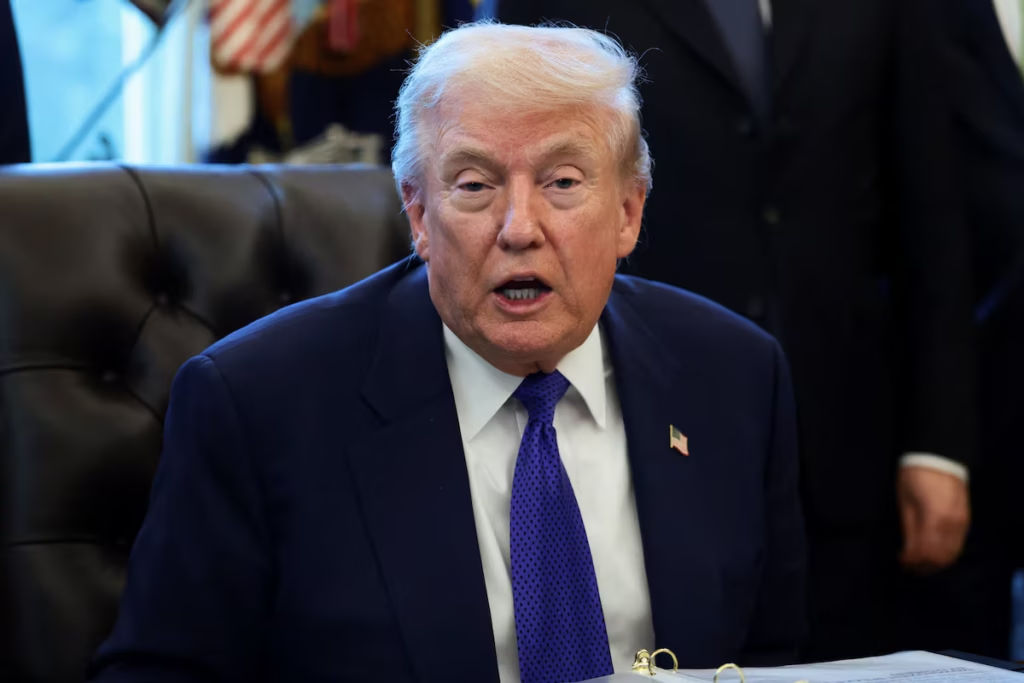
US President Donald Trump signed an order on Friday authorizing tariffs of up to 25% against countries continuing trade with Iran, increasing Washington’s economic pressure on Tehran.
According to the White House, this measure aims to deter Iran’s trading partners from maintaining or expanding their economic relations with the Islamic Republic, as the US seeks to curb its financial and strategic capabilities. The order provides that these tariffs may be applied selectively, depending on the nature and extent of the trade involved.
This decision comes amid tense diplomatic context, despite the opening this week of new indirect talks between US and Iranian officials. Washington continues to demand that discussions go beyond the Iranian nuclear program and include ballistic missiles and Tehran’s support for armed groups in the region.
The Trump administration states that this order is part of a broader « maximum pressure » strategy, combining financial sanctions, trade restrictions, and military shows of force, while leaving open the possibility of a diplomatic solution if Iran makes concessions deemed sufficient by the US.
Several European allies and Iran’s trading partners are closely monitoring this measure’s development, which could have significant impacts on global energy and industrial trade. At this stage, no specific timetable for implementing the tariffs has been announced.
Tehran has not officially responded immediately but has regularly condemned US sanctions as « illegal » and contrary to international law, stating they severely hinder its economy and penalize the civilian population.