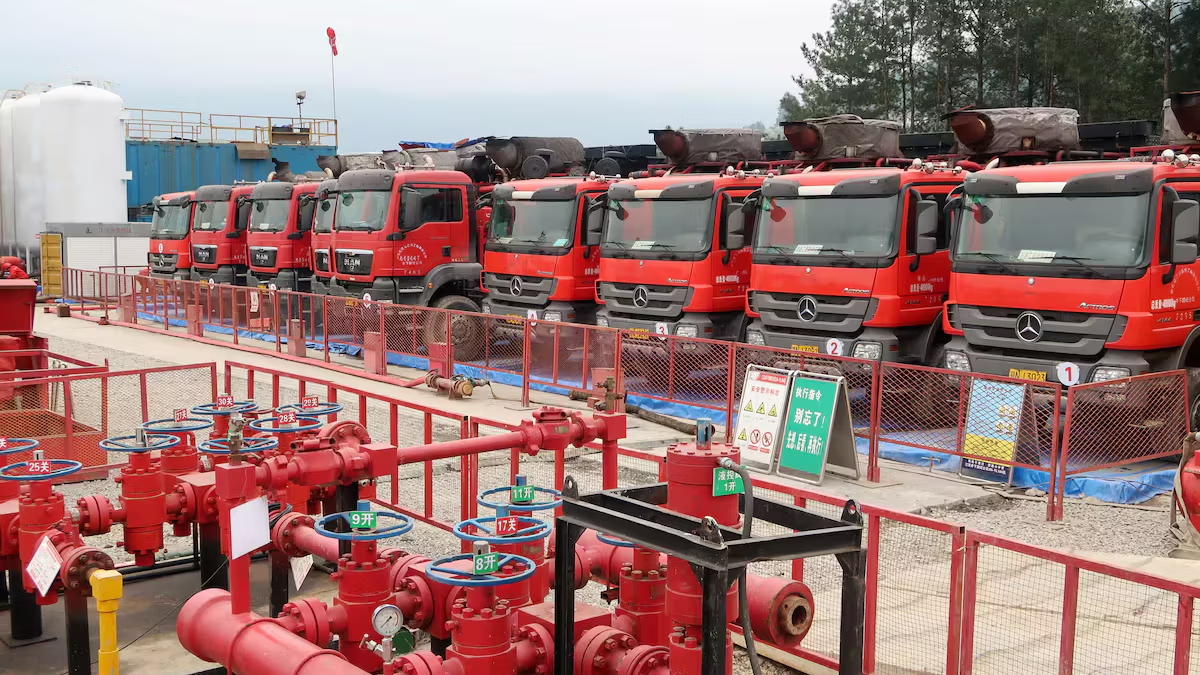
China, the world’s largest oil importer, has raised its domestic production to a record level in recent years but now faces economic and technical limits that hinder any further increase.
This increase was made possible by an intensive strategy carried out over seven years, combining increased exploitation of aging fields, offshore development, and the rise of shale oil. These efforts allowed reaching a peak of about 4.32 million barrels per day last year.
However, according to analysts, this momentum is reaching saturation. Offshore production growth is beginning to slow, while exploiting unconventional resources, such as shale, proves more costly and complex on a large scale.
Experts now estimate that Chinese production should stabilize around 4 million barrels per day over the next decade, a level considered strategic to guarantee the essential needs of industry and defense.
Beijing’s energy plan for the 2026-2030 period confirms this direction, focusing more on stability than on further expansion of domestic production.
Despite these efforts, China will remain heavily dependent on oil imports, which reached more than 11.5 million barrels per day last year. This structural dependence persists even as demand growth slows due to transport electrification and economic slowdown.
In this context, domestic production plays the role of an energy « safety net, » without allowing the country to significantly reduce its exposure to international markets.