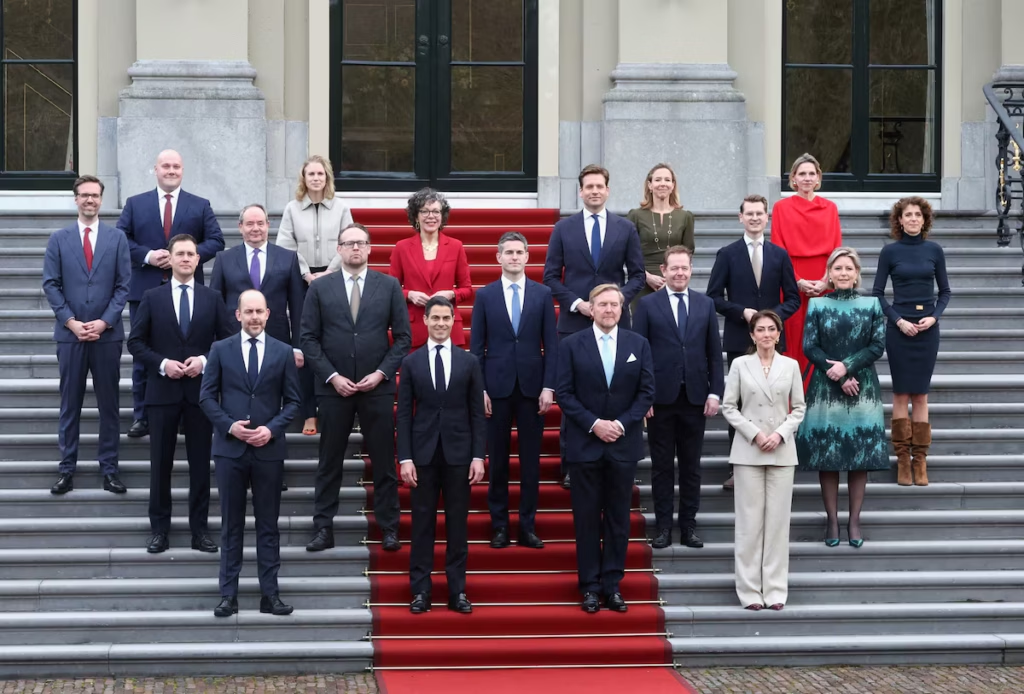
Rob Jetten officially became on Monday the youngest Prime Minister in the history of the Netherlands, at 38 years old, after his government was confirmed by King Willem-Alexander at the Huis ten Bosch palace in The Hague. The leader of the progressive and pro-European party D66 won a surprise electoral victory in October, promising to turn the page on a previous government marked by divisions and dominated by nationalist Geert Wilders.
The new head of government, Rob Jetten, however takes the reins of a center-right minority coalition, composed of D66, the conservative Christian Democrats, and the VVD. This alliance does not hold a majority in both chambers of Parliament, which will force it to seek occasional support from the opposition to pass its bills.
Among the stated priorities is a historic increase in defense spending, in a context of persistent geopolitical tensions in Europe. The government intends to strengthen the country’s military capabilities, but these ambitions already face criticism from opposition parties contesting the proposed budget cuts intended to finance this effort.
The political balance promises to be delicate in the European Union’s fifth-largest economy, where parliamentary compromises are essential. The first budget negotiations will be a crucial test for the coalition’s solidity and Jetten’s ability to turn his optimistic rhetoric into concrete government action.
While his victory marked a generational and political renewal, the stability of his executive will now depend on his ability to build majorities on a case-by-case basis, in a fragmented political landscape under strong pressure on defense, public finance, and European policy issues.