Pakistan’s defense industry has been attracting growing interest since its aircraft, drones, and missiles were engaged in clashes with India last year, earning them the sought-after label of “combat-tested” equipment. According to several Pakistani sources, this operational recognition has triggered commercial discussions with many countries seeking alternatives to traditional Western suppliers.
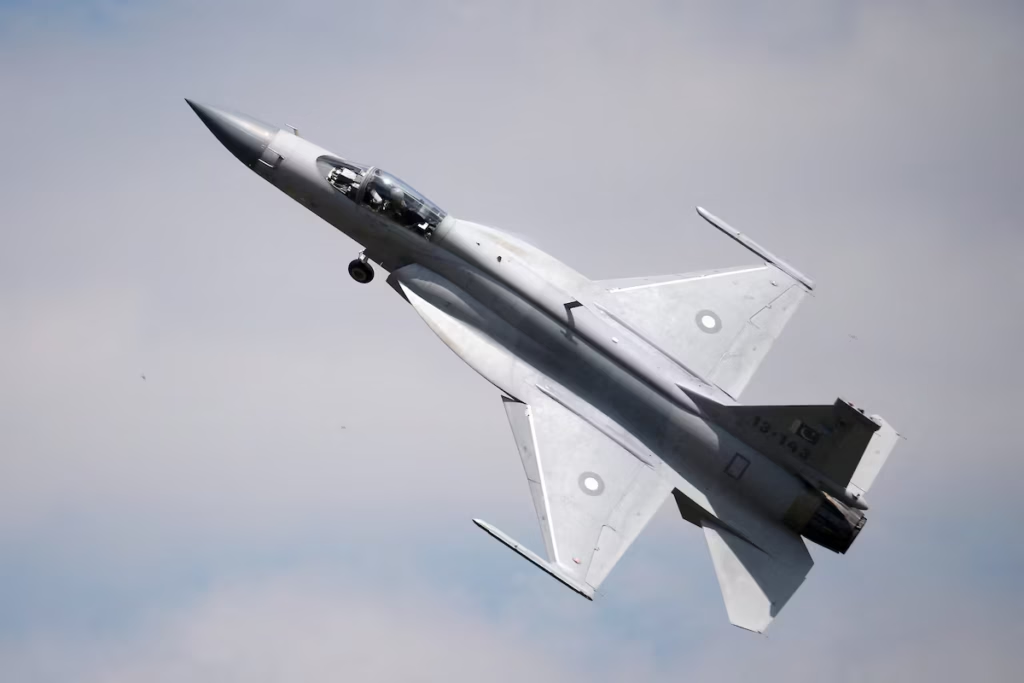
Islamabad is currently in talks with 13 states for arms sales, with six to eight deals reportedly at an advanced stage. Negotiations notably involve the JF-17 fighter jets developed with China, as well as training aircraft, drones, and various weapons systems. The Pakistani Ministry of Defense has not provided specific details, but the Minister of Defense Production confirmed the interest shown by several countries.
Analysts believe that disruptions in global supply chains, exacerbated by the war in Ukraine and conflicts in the Middle East, have pushed many states to explore new options. Pakistani equipment appears as a viable solution after its use in a major aerial combat against India in May, where the Pakistani Air Force deployed JF-17s alongside more advanced Chinese aircraft.
The main argument highlighted by Islamabad remains cost. A JF-17 is estimated between 30 and 40 million dollars, significantly less than comparable aircraft manufactured in the United States or Europe. While some Western platforms are technologically more advanced, their price can exceed that of Pakistani planes by several times, appealing to countries with more limited military budgets.
Among potential buyers are, according to sources close to the negotiations, countries in Africa and the Middle East such as Sudan, Saudi Arabia, Indonesia, Morocco, Ethiopia, and Nigeria, as well as authorities in eastern Libya. Discussions are also underway with Bangladesh and Iraq. Most of these states have Muslim majorities, a factor that has historically facilitated security cooperation with Pakistan.
The country’s industrial capacity remains a key issue. Retired military officials state that aircraft production could double by 2027 thanks to the expansion of existing facilities. Support from China, a central partner in the JF-17 program, will be decisive, although Beijing could oppose certain sales to areas subject to international embargoes.
Finally, the growth of a Pakistani private defense sector, notably in drones, strengthens this dynamic. Local companies already produce hundreds of units annually, mainly for the national army, but with growing export potential. It remains to be seen how many of these discussions will result in signed contracts, in a geopolitical context marked by strong rivalries and diplomatic pressures.