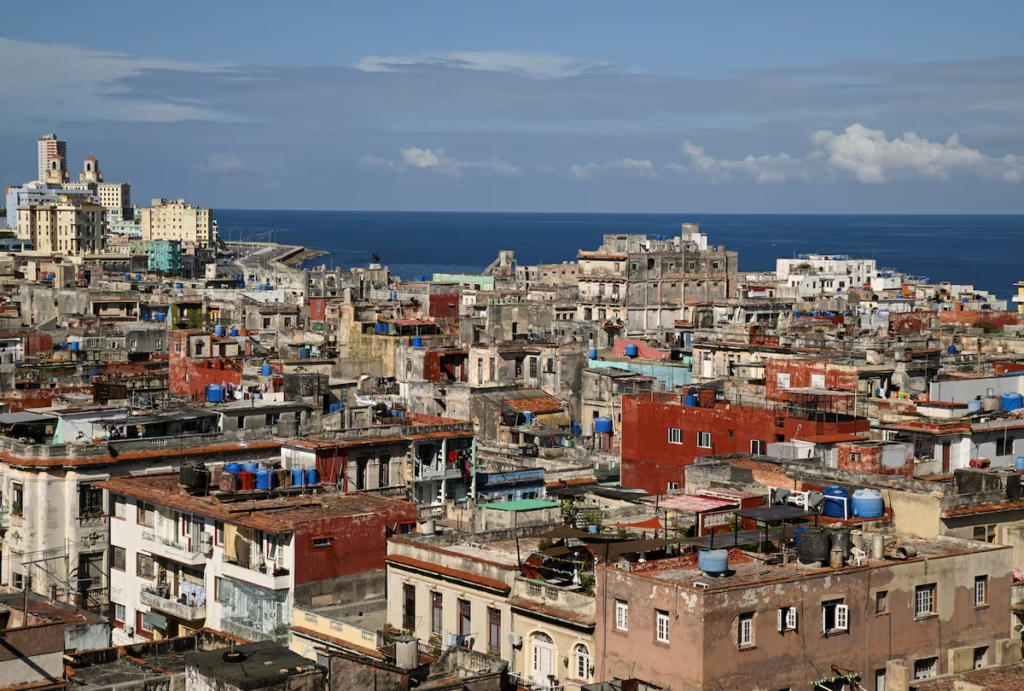
Cubans are preparing for a further deterioration of their living conditions following the announcement by American President Donald Trump to end Venezuelan oil supplies to the island. This decision raises the prospect of a near-siege scenario for Cuba, already facing recurring power outages and severe shortages of fuel, food, and medicine.
According to shipping data and internal documents from the Venezuelan state oil company PDVSA, Venezuela has not delivered crude oil or fuels to Cuba for about a month. Shipments had begun to decline even before the recent American intervention in Venezuela, due to a tightening of the U.S. blockade. The last cargo destined for Cuban refineries left the Venezuelan port of José in mid-December, carrying approximately 600,000 barrels of crude.
In 2025, Venezuela was still the island’s main supplier, with about 26,500 barrels per day, nearly one-third of Cuba’s daily needs. Mexico was far behind, with around 5,000 barrels per day. For several experts, the prolonged halt of these deliveries could have dramatic consequences. “I see absolutely no hope for Cuba in the coming months without Venezuelan oil,” said Jorge Piñón, an energy researcher at the University of Texas at Austin.
Donald Trump has never hidden his hope that pressure on Venezuela could also weaken the Cuban government. In recent days, he has intensified his statements toward Havana, urging the Cuban government to reach an agreement with Washington “before it’s too late.” This prospect deeply worries the population, already exhausted by years of economic crisis.
On the island, uncertainty prevails. Many Cubans wonder how long President Miguel Díaz-Canel and the communist government can hold out against such a brutal reduction in oil imports. “It’s very stressful because we don’t know what decisions will be made, neither in Havana nor in Washington,” says Víctor Romero, a 75-year-old retiree living in the capital.
Díaz-Canel, for his part, has taken a firm stance, stating that Cuba will not yield to American threats and is ready to “defend the homeland” at all costs. In rural areas, the situation is already critical: transportation is provided by horse-drawn carriages or bicycles, electricity is intermittent, and internet access is limited. Lacking gas or electricity, some residents now cook with charcoal.
Cuba’s options appear limited. No public information is available on the state of the country’s oil reserves, and few allies seem willing to risk American retaliation. A Mexican tanker recently delivered a modest fuel shipment to Havana, but this aid remains very insufficient for a country of nearly 10 million inhabitants. “The hardest part is the uncertainty,” summarizes a businesswoman from the capital. “Not knowing what will happen.”