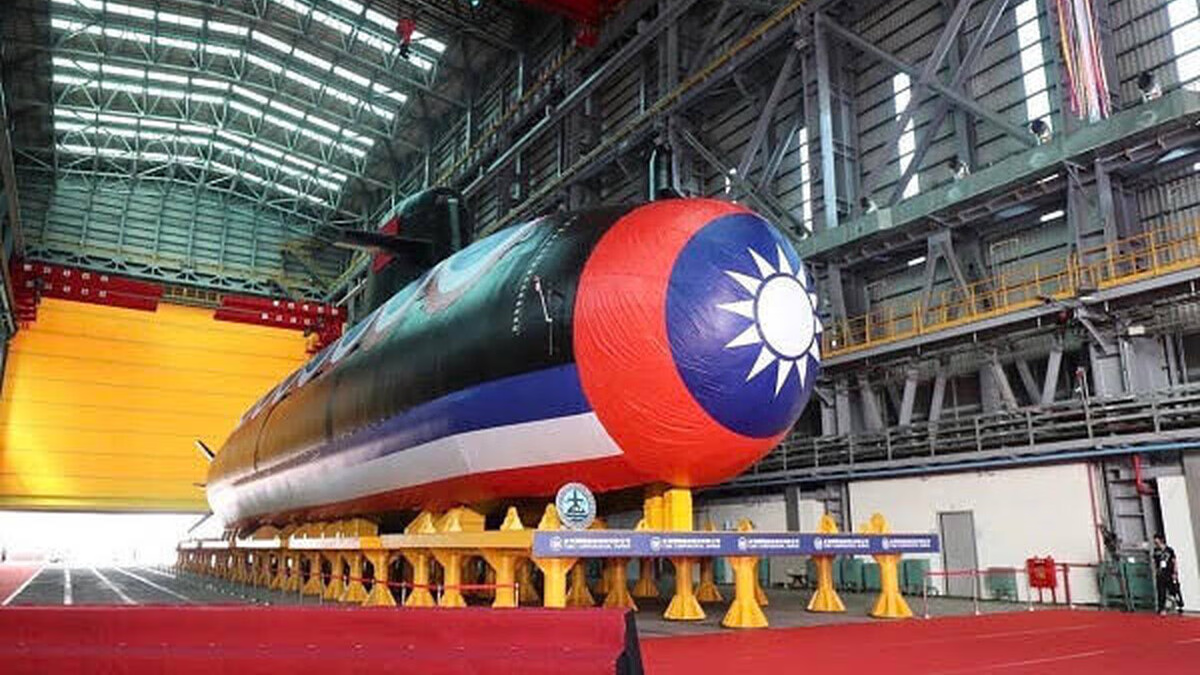
Faced with growing military pressure from Beijing, Taiwan intends to significantly strengthen its defense capabilities. Taiwanese President Lai Ching-te announced on Saturday, October 10, 2026, that his government would continue increasing military spending to prevent a possible conflict with China. In a speech delivered in Taipei on the occasion of the national holiday, the head of state defended a deterrence strategy aimed at protecting the island’s 23 million inhabitants. For 2027, his government plans a record defense budget of 1,100 billion new Taiwan dollars, approximately 34.5 billion US dollars. This amount represents more than 3% of the gross domestic product, while tensions in the Taiwan Strait remain particularly high.
Before political leaders, military officials, and several foreign delegations gathered in front of the presidential palace, Lai Ching-te explained the rationale behind this policy. “Our goal, by increasing investments in national defense, is not to provoke but rather to prevent a war,” he declared. The president considers military preparedness an essential condition for maintaining peace. According to him, dialogue with Beijing can only be constructive if Taiwan has the necessary means to defend its interests. He also stated that his government neither seeks to impose regional dominance nor provoke confrontation but aims to prevent any change to the status quo by force.
A record military budget in response to Beijing’s pressure
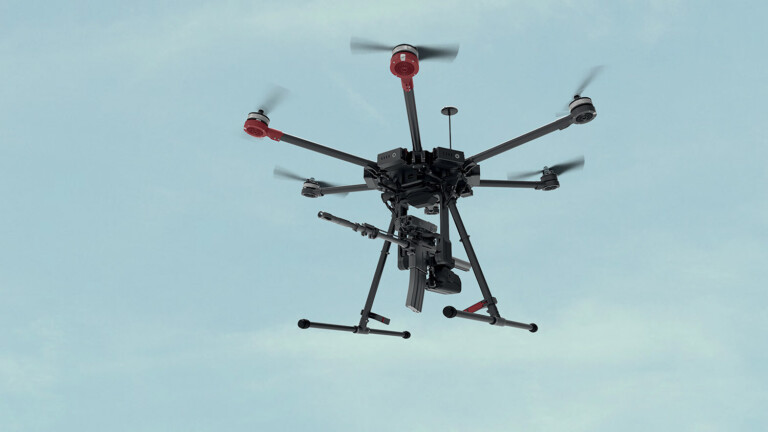
The increase in military spending is part of a trend that has been underway for several years. Successive Taiwanese governments have progressively strengthened their investments in defense equipment, military infrastructure, and modernization of the armed forces. This approach notably responds to the evolving capabilities of the Chinese army, whose naval, air, and ballistic means have considerably advanced. Taiwan seeks to develop a defense capable of complicating any military operation against its territory. Priority is notably given to missile systems, air defense, drones, and technologies that allow monitoring of Chinese forces’ movements around the island.
China considers Taiwan part of its territory and has never renounced the use of force to achieve reunification. Beijing regularly multiplies military exercises near the island, mobilizing combat aircraft, warships, and other surveillance means. Taiwanese authorities also denounce so-called “gray zone” activities, which include military, economic, or informational pressures conducted without directly triggering an armed conflict. In the twenty-four hours preceding the presidential speech, the Taiwanese Ministry of Defense again reported Chinese military activity around the island. For Taipei, these operations seek to exert permanent pressure on its reaction capabilities and its population.
The United States remains an essential military partner
Taiwan’s defense strategy also relies on its relations with the United States. Washington is the island’s main supplier of military equipment and maintains close security cooperation with Taipei despite the absence of official diplomatic relations. American authorities have supported Taiwan’s ability to ensure its own defense for several decades, in accordance with the framework set by their national legislation. This relationship remains sensitive, however, as China considers American arms sales interference in its internal affairs. Lai Ching-te’s government wishes to show Washington that it assumes an increasing share of the financial effort necessary for its security.
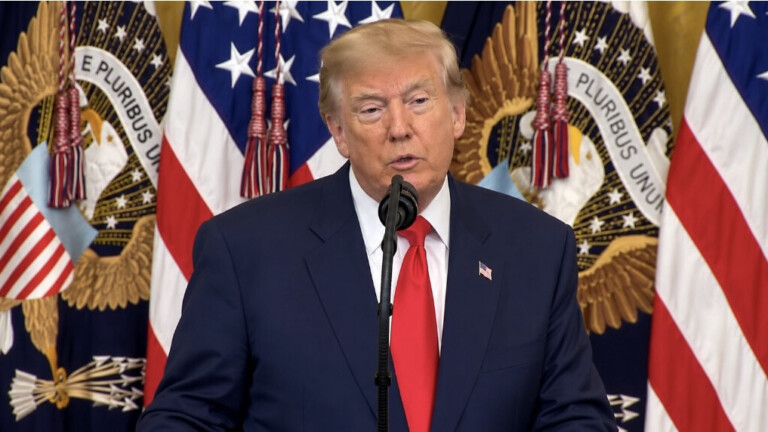
Former U.S. President Donald Trump regularly called on Taiwan to invest more in its defense, considering that the island should contribute more strongly to the costs of its protection. The new budget announced by Taipei partly responds to this concern, even if Taiwanese officials primarily present this increase as a national strategic necessity. In his speech, Lai Ching-te welcomed exchanges between Washington and Beijing aimed at reducing the risks of confrontation. However, he insisted on the need to respect the rights and interests of Taiwan’s inhabitants. For the Taiwanese president, discussions between the two powers must not lead to decisions imposed on the island without considering its population and institutions.
A deterrence strategy to preserve peace in the strait
Beyond the military issue, Lai Ching-te devoted part of his intervention to defending Taiwan’s democratic system. He recalled that his government favors peaceful exchanges while refusing any form of political subordination. This position reflects the deep divergences between Taipei and Beijing regarding the island’s future. Taiwan has its own institutions, elected government, and armed forces for several decades, while the People’s Republic of China claims sovereignty. Chinese authorities consider Lai Ching-te a leader favorable to independence, an accusation he rejects by affirming his desire to preserve the current situation.
Tensions in the Taiwan Strait also constitute a major issue for the global economy. The island occupies a central place in the production of advanced semiconductors, essential to many industrial sectors, notably automotive, telecommunications, and artificial intelligence. A military confrontation would therefore have consequences far beyond East Asia, disrupting trade and international supply chains. By increasing its defense budget, the Taiwanese government seeks to raise the potential cost of a Chinese military operation and reduce the risk of recourse to force. This strategy is based on a deterrence principle, but its effectiveness will also depend on the evolution of relations between Beijing, Taipei, and Washington. For Lai Ching-te, military strengthening must thus allow Taiwan to preserve its freedom while maintaining the possibility of peaceful dialogue.