

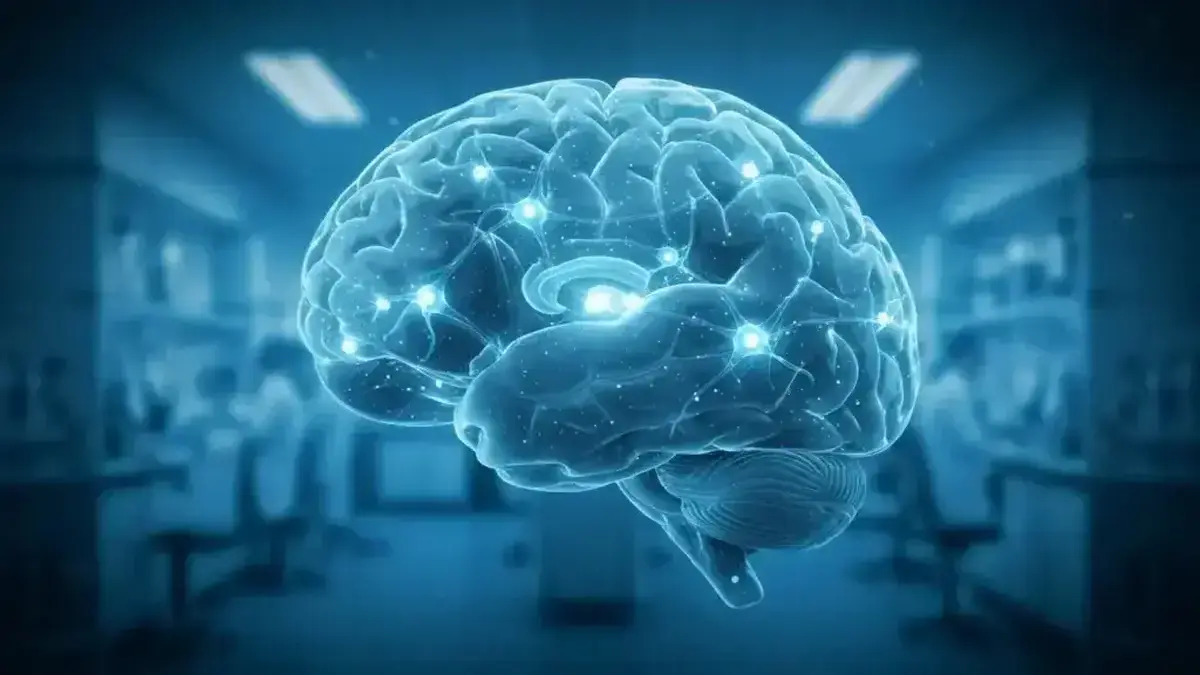
It weighs approximately 1,4 kilograms, contains nearly 86 billion neurons, and controls all our thoughts, emotions, and movements. Yet, despite the spectacular advances in neuroscience, the human brain remains one of the most mysterious organs in the body. From the birth of consciousness to the mechanisms of memory, including dreams and the unsuspected capabilities of our minds, researchers continue to explore a territory where many enigmas remain unsolved.
The human brain represents barely 2% of our body weight, yet it consumes approximately 20% of the energy used by the body at rest. Behind this considerable expenditure lies an organization of extraordinary complexity. Billions of neurons communicate through electrical and chemical signals, forming networks capable of processing information from our senses, coordinating our movements, and constructing our perception of the world. Every second, a multitude of processes unfold without our conscious awareness, from regulating our breathing to interpreting the faces we encounter.
Despite advances in brain imaging and artificial intelligence, scientists still lack a complete understanding of how this organ functions. They can identify certain regions involved in language, memory, or emotions, but explaining how all these activities produce coherent thought remains a major challenge. The brain does not function like a machine composed of independent compartments: its different regions collaborate constantly, and a single function can mobilize several networks. This dynamic organization makes its study particularly difficult.
Consciousness, the greatest enigma of neuroscience
How can electrical and chemical activity give rise to the sensation of existence? This question is one of the most fascinating problems in brain research. Scientists can observe changes in brain activity when a person looks at an image, feels pain, or makes a decision. They can also study changes associated with sleep, anesthesia, or certain brain injuries. However, they still cannot precisely explain why these physical processes are accompanied by a subjective experience, this intimate feeling of being oneself and perceiving the world.
Several theories attempt to solve this mystery. Some propose that consciousness arises when information becomes accessible to numerous brain networks, while others emphasize how information is integrated within the nervous system. These hypotheses are the subject of scientific experiments and debates, but none currently constitutes a universally accepted explanation. The question even extends beyond neuroscience, as it also concerns philosophy, psychology, and computer science. Understanding consciousness could transform our knowledge of the human mind, as well as our approach to altered states of consciousness.
Why is our memory so powerful yet so fragile?
We are capable of recognizing a face seen years ago, remembering a childhood scent, or learning a foreign language. Yet, we can also forget an important appointment or be unable to recall a familiar name. Memory relies on several brain systems involved in encoding, consolidating, and retrieving information. The hippocampus, in particular, plays a crucial role in the formation of many autobiographical memories, while other regions contribute to their preservation and reactivation. Unlike a hard drive, the brain doesn't simply store immutable copies of our experiences.
Each time we recall an event, our brain can reconstruct certain details from incomplete information. This is why our memories can evolve, become intertwined, or be influenced by accounts heard after the fact. Researchers are also studying why some emotional events remain particularly vivid in our memory, while others fade quickly. Sleep plays an important role in consolidating learning, but the precise mechanisms by which memories are selected, strengthened, or weakened are not yet fully understood. This fragility explains, in particular, why human memory cannot be considered a perfectly faithful record of the past.
Dreams: Why does our brain invent stories during the night?
Each night, our brain goes through several sleep cycles during which its activity transforms. The most elaborate dreams are frequently associated with REM sleep, a phase during which certain brain regions exhibit intense activity while the body's muscles are largely inactive. In this particular state, we can experience extraordinary adventures, find missing persons, or navigate impossible situations. These experiences sometimes seem perfectly real until the moment we wake up. Neuroscientists know that dreams involve mechanisms related to emotions, memory, and perception, but their exact function remains a subject of debate.
Several hypotheses suggest that dreams play a role in processing emotions, consolidating memories, or simulating situations important for our adaptation. Other researchers believe they may partly result from the brain's interpretation of spontaneous activity occurring during sleep. However, none of these explanations fully accounts for all dream experiences. Lucid dreams, in which a person becomes aware that they are dreaming and can sometimes influence the scenario, constitute another fascinating area of research. They demonstrate that certain forms of self-awareness can emerge during sleep, although not all the mechanisms involved are understood.
Can the brain repair and transform itself throughout life?
For a long time, scientists believed that the adult brain had relatively limited capacity for transformation. Research has since demonstrated the importance of neuroplasticity, that is, the nervous system's ability to modify the organization and function of its connections. When a person learns to play an instrument, takes up a new activity, or acquires a skill, certain neural circuits are strengthened or reorganized. This plasticity also occurs after some brain injuries, when preserved networks can help partially compensate for impaired functions.
These capacities are, however, neither unlimited nor identical in all individuals. Recovery after a stroke depends in particular on the location and severity of the lesions, the patient's age, and the rehabilitation process. Furthermore, the question of the production of new neurons in certain regions of the adult brain, notably the hippocampus, continues to be the subject of scientific debate. Researchers are seeking to understand how to promote repair mechanisms and improve treatments for neurodegenerative diseases. Progress in this area offers significant prospects, but it does not mean that the brain is capable of spontaneously regenerating all of its damaged structures.
Does our brain make decisions before we are even aware of them?
We generally feel that we make our decisions voluntarily and thoughtfully. Yet, some experiments have shown that changes in brain activity can precede the moment a person reports having consciously decided to perform a simple action. These observations have fueled a fascinating debate about free will and the true role of consciousness in our choices. They suggest that part of the preparation for our actions takes place outside of our conscious perception. The brain constantly uses information, habits, and past experiences to guide our behavior, sometimes even before we can explain the reasons for our decisions.
These results, however, do not demonstrate that all our decisions are predetermined or that free will is an illusion. Experiments often focus on very simple actions, such as pressing a button, which do not necessarily reflect the complexity of a moral, professional, or personal choice. Scientists are also studying how emotions, expectations, and cognitive biases influence our judgment. Understanding these mechanisms could lead to improved decision-making, as well as better identification of situations in which our brains lead us to misinterpret information.
Artificial intelligence: will we one day be able to fully understand the brain?
New technologies now offer exploratory capabilities that would have seemed unimaginable a few decades ago. Brain imaging, recordings of neuronal activity, and artificial intelligence tools allow us to study increasingly complex networks. Scientific teams are particularly focused on mapping the connections between neurons, a field known as connectomics. In 2024, researchers published a remarkably detailed map of the brain of an adult fly, comprising approximately 140,000 neurons and tens of millions of connections. This achievement represents a major breakthrough, but it also illustrates the magnitude of the challenge posed by the human brain, whose complexity is incomparably greater.
Research is also progressing in the field of brain-computer interfaces, capable of translating certain brain signals into computer commands. These devices could, in particular, help paralyzed individuals communicate or control equipment. However, decoding certain motor intentions is not the same as freely reading an individual's thoughts, and current technologies remain limited to specific tasks. The human brain therefore retains a great deal of mystery. The coming decades will likely allow us to better understand its networks, its diseases, and its adaptive capacities. But one question remains: will we one day discover how billions of nerve cells manage to produce this extraordinary experience we call thought?








Respond to the article
Be the first to comment on this article.