

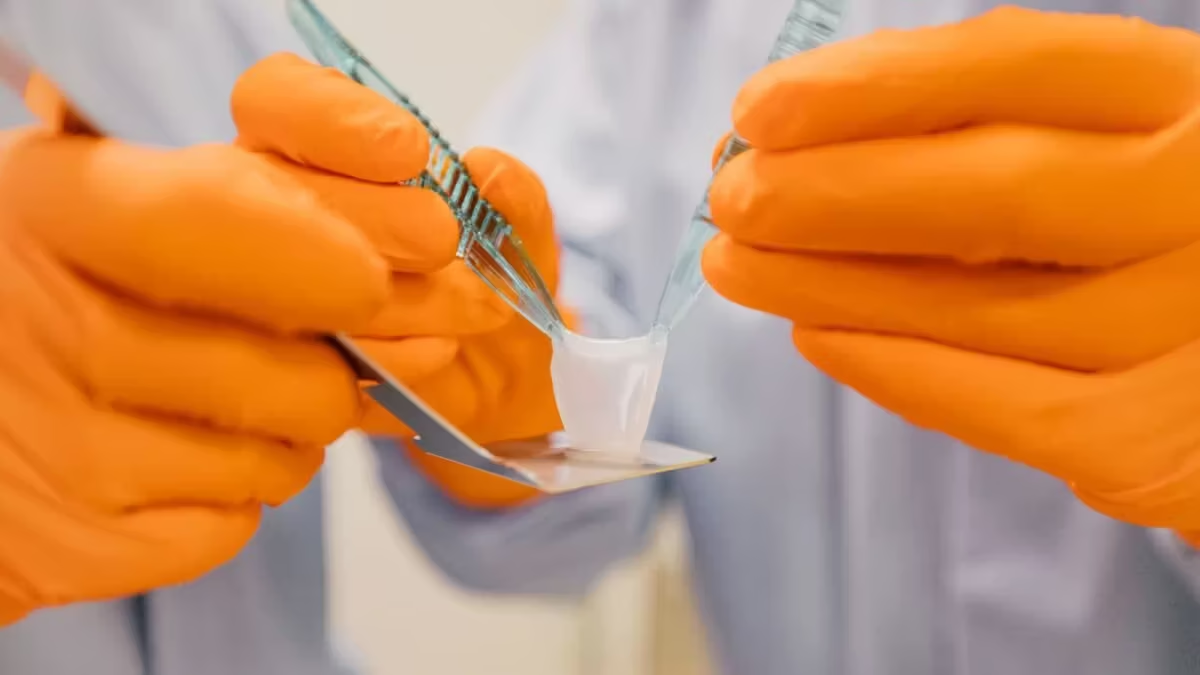
The French Genesis project has just reached a major milestone in regenerative medicine. After five years of research, the URGO group and its scientific partners announced on November 20, 2026, that they had developed in the laboratory a living artificial skin that can be preserved by freezing and is designed for transplantation. The first patient trials are planned for 2030.
This innovation is the result of a collaboration between several French research and industry players, including URGO, the CNRS, Claude Bernard Lyon 1 University, the Stem Cell Research Center, the French Blood Establishment, and Dassault Systèmes. Supported by the France 2030 program, the consortium has been working since 2021 on the design of a skin substitute capable of meeting the needs of patients suffering from severe skin lesions.
Today, the treatment of severe burns relies heavily on skin grafts, which require harvesting healthy skin from another part of the body. This method can necessitate multiple surgical procedures, prolong hospital stays, and cause additional pain. With Genesis, researchers aim to provide pre-made, living skin readily available to medical teams, thereby reducing the need for skin grafts taken from patients.
The first clinical trials are expected in 2030.
The unique feature of this artificial skin lies in its ability to be cryopreserved, meaning it can be kept at very low temperatures before use. This characteristic could facilitate its production and storage, two essential conditions for large-scale hospital use. The consortium presents this achievement as a world first, while emphasizing that several steps remain before potential commercialization.
Researchers must now continue preclinical evaluations and prepare studies to demonstrate the device's safety and efficacy in humans. The first patient trials are targeted for 2030, subject to scientific results and regulatory approvals. The transition from laboratory success to routine medical application is indeed a lengthy process, particularly for living tissue intended for implantation.
An innovation that could transform burn treatment
If the next steps confirm the results obtained, this technology could change the treatment of severe burns and also open up new possibilities for certain complex wounds. The availability of artificial skin ready for grafting would represent a significant advance for specialized services, which are often faced with situations where the amount of healthy skin available from the patient is insufficient.
The Genesis project also illustrates France's ambitions in biotechnology and regenerative medicine. Its progress will be highlighted at the Choose France summit on November 23, 2026. For the scientific teams, the goal now is to transform this experimental success into an accessible therapeutic solution, while demonstrating its real benefits for patients.




Respond to the article
Be the first to comment on this article.