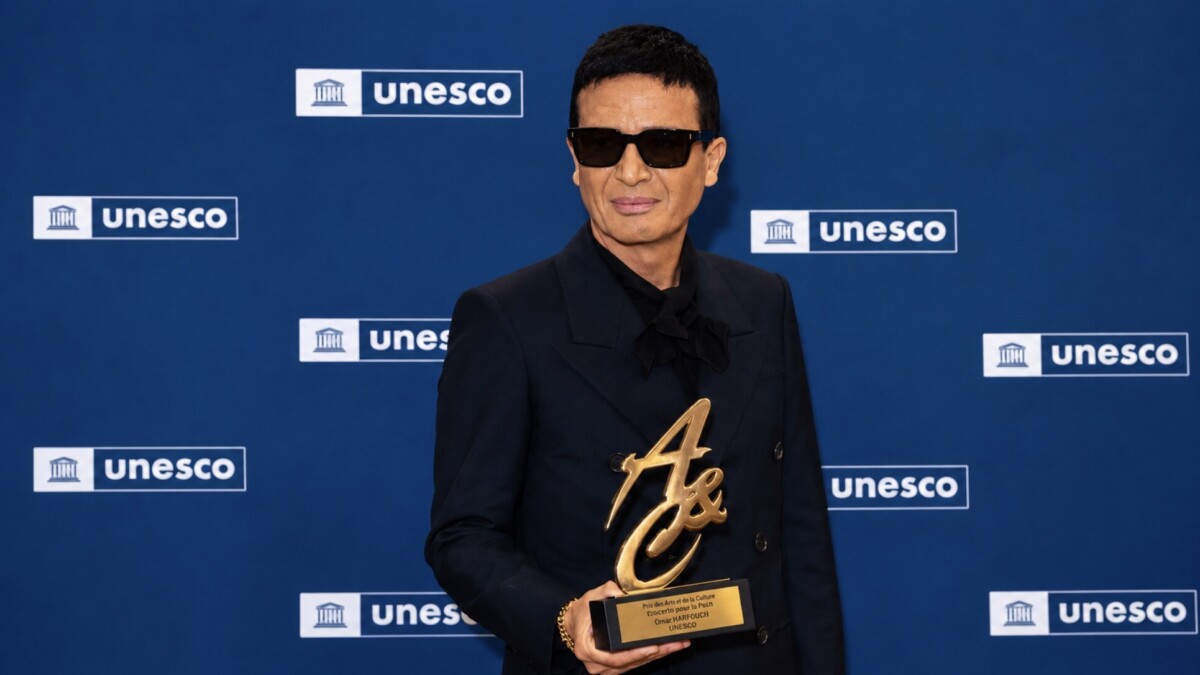
Pianist and composer Omar Harfouch received the Arts and Culture Prize in Paris on Thursday, November 26, for his "Concerto for Peace." Before an audience of over 1,200 people gathered at UNESCO, the artist also performed a selection of his work, accompanied by three musicians. This is further recognition for Harfouch, who for several years has dedicated music to fostering dialogue and understanding between peoples.
This marks a new milestone in Omar Harfouch's international career. On Thursday, November 26, in Paris, the pianist and composer was awarded the Arts and Culture Prize at a ceremony held at UNESCO. The award recognizes his "Concerto for Peace," an emblematic work in his repertoire, through which he defends a conviction deeply rooted in his artistic approach: that music can help bring people together, transcending borders, cultures, and differences.
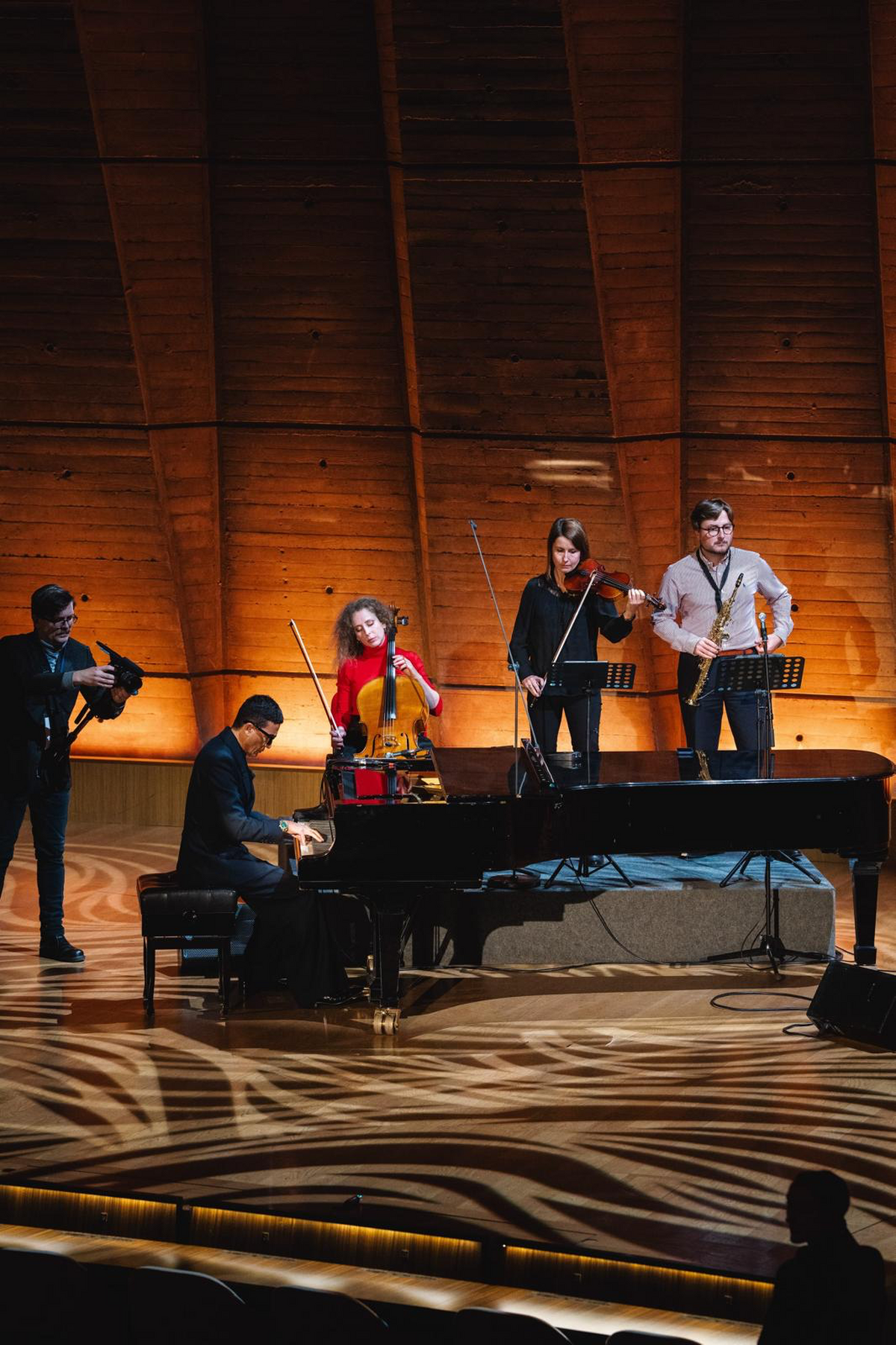
Before an audience of over 1,200 people, Omar Harfouch also took to the piano to perform part of his composition. He was accompanied by three other artists: violinist Gersende Mondani, cellist Divna Delmas, and saxophonist Victor Madrenes. Four instruments, four musical sensibilities, and a shared ambition: to convey, through the power of artistic creation, a message of peace and brotherhood.
At UNESCO, this recognition takes on its full meaning.
The setting chosen for this award carries a particularly symbolic dimension. Founded in 1945, in the aftermath of the Second World War, UNESCO was built around a single ambition: to promote peace through education, science, culture, and international cooperation. This philosophy aligns with that championed by Omar Harfouch in his compositions.
With his "Concerto for Peace," the pianist aims to make music a universal language, capable of transcending divisions and building bridges between people. This approach is not limited to the stage: it situates his artistic work within a broader reflection on dialogue, tolerance, and the role of culture in human relations.
Already presented on various international stages, this composition now occupies a central place in his career. The award received in Paris thus recognizes a work that combines musical expression with a personal commitment to peace.
Twelve days after receiving a papal blessing in Italy
This Parisian evening comes in a November that is particularly rich in symbolism for the composer. Twelve days earlier, on November 14, Omar Harfouch was in Brescia, Italy, as part of the Festival della Pace, where he received a personal apostolic blessing from Pope Francis, dated March 22, 2025, from the hands of Monsignor Angelo Vincenzo Zani.
The papal document included these words addressed to the musician: "So that, with a confident heart and a mind turned towards the future, he may always keep the flame of hope burning brightly in the world."
On this occasion, Bishop Angelo Vincenzo Zani also recalled the nickname that Pope Francis had given to Omar Harfouch: that of "pilgrim of peace." This expression is particularly evocative of the commitment claimed by the composer, whose music aims to convey a message that transcends national, cultural, or religious affiliations.
From Brescia to Paris, these two events, though different in nature, testify to the unique place that peace now occupies in his life. On the one hand, spiritual recognition through the papal blessing; on the other, an artistic distinction rewarding a musical creation embodying the same ideal.
Music as a universal language
This desire to use his art to serve human values runs through several of Omar Harfouch's compositions. The pianist notably dedicated a work to Pope Francis, entitled "Pope Francis." Another creation, "Save One Life," also reflects this approach, where music becomes a means of raising awareness, uniting people, and conveying a message of hope.
For the composer, art possesses this rare ability to touch consciences without requiring translation. Where words sometimes reach their limits, a melody can evoke a shared emotion and unite audiences that seemed to have nothing in common.
It was precisely this ambition that found a new echo on Thursday evening within the UNESCO premises. By bringing together the violin, cello, and saxophone around his piano, Omar Harfouch gave a new expression to his "Concerto for Peace," before an audience gathered to witness this celebration of artistic creation.
Beyond the prize itself, this evening represents a further step in the musician's international career. Following the papal recognition in Italy, this Parisian distinction reinforces the scope of his commitment and the place his concerto now occupies in his oeuvre.
For Omar Harfouch, music is not just an artistic performance: it is also a way to build bridges between peoples and to remind us that peace can also find its voice in art.