
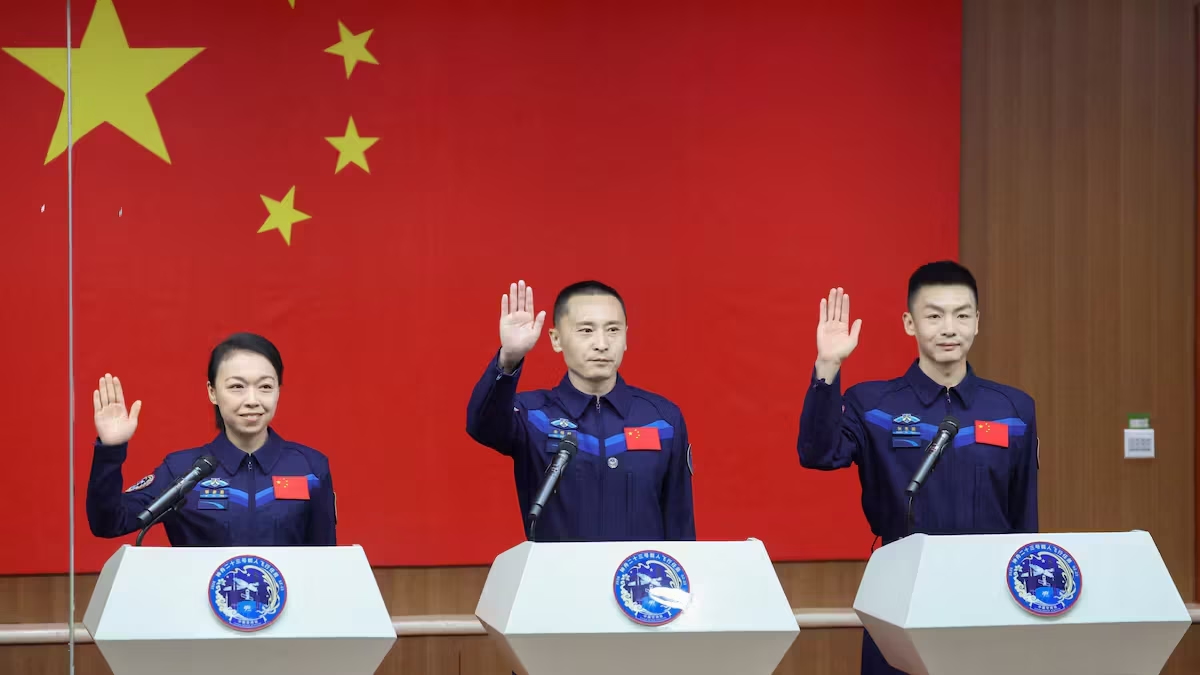
China is poised to take another major step in its space program with the launch of the Shenzhou-23 crewed mission, scheduled to lift off on Sunday for the Tiangong space station. For the first time, a Chinese astronaut will participate in a year-long mission.
This mission is part of Beijing's strategy to accelerate the development of its space capabilities ahead of its goal of sending astronauts to the Moon by 2030. The Chinese manned space program is under intense pressure to meet this ambitious timeline.
The Shenzhou-23 mission will transport three astronauts to the Tiangong space station. Among them is Lai Ka-ying, who became the first astronaut from Hong Kong to participate in a Chinese space mission.
The Shenzhou missions are a central pillar of China's manned space program. For several years, they have enabled the rotation of crews aboard Tiangong and the conducting of scientific experiments in orbit.
The extended stay planned for this new mission should notably allow Chinese researchers to study the effects of long-term exposure to space on the human body, a step considered essential before future manned lunar missions.
China is investing heavily in its space program to compete with the United States and assert its status as a major technological power. Beijing is multiplying its space projects, ranging from lunar exploration to the development of new orbital infrastructure.
The launch of Shenzhou-23 thus marks a symbolic and strategic step in the global space race, as China seeks to consolidate its place among the leading nations capable of conducting long-duration manned missions.




Community
Comments
Comments are open, but protected against spam. Initial posts and comments containing links undergo manual review.
Be the first to comment on this article.