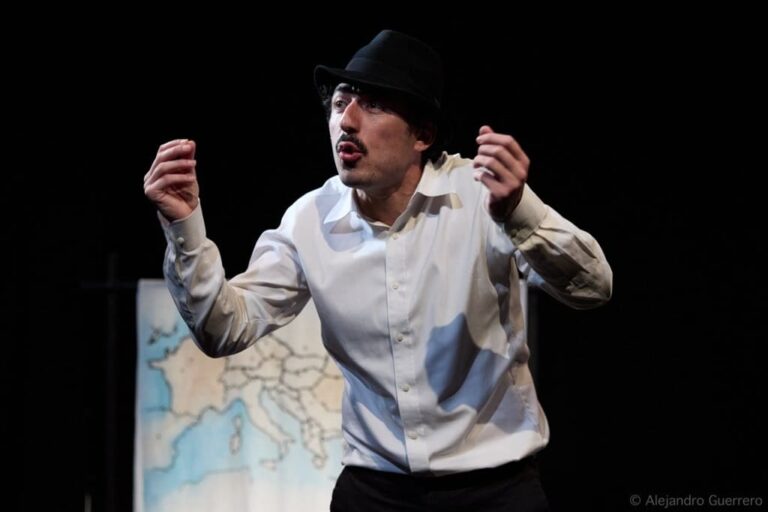
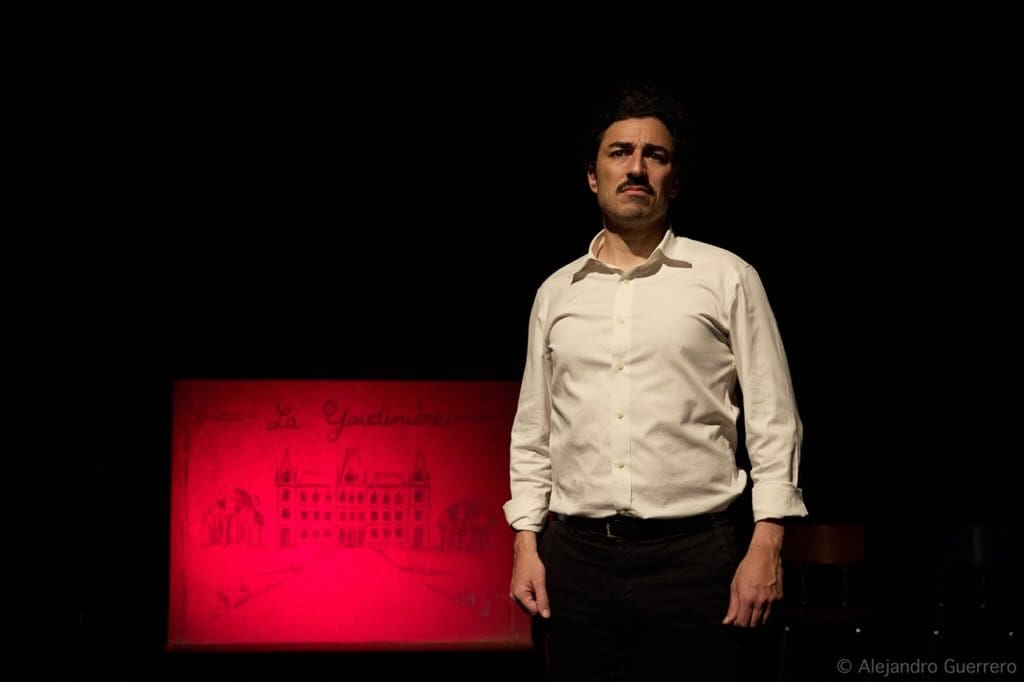
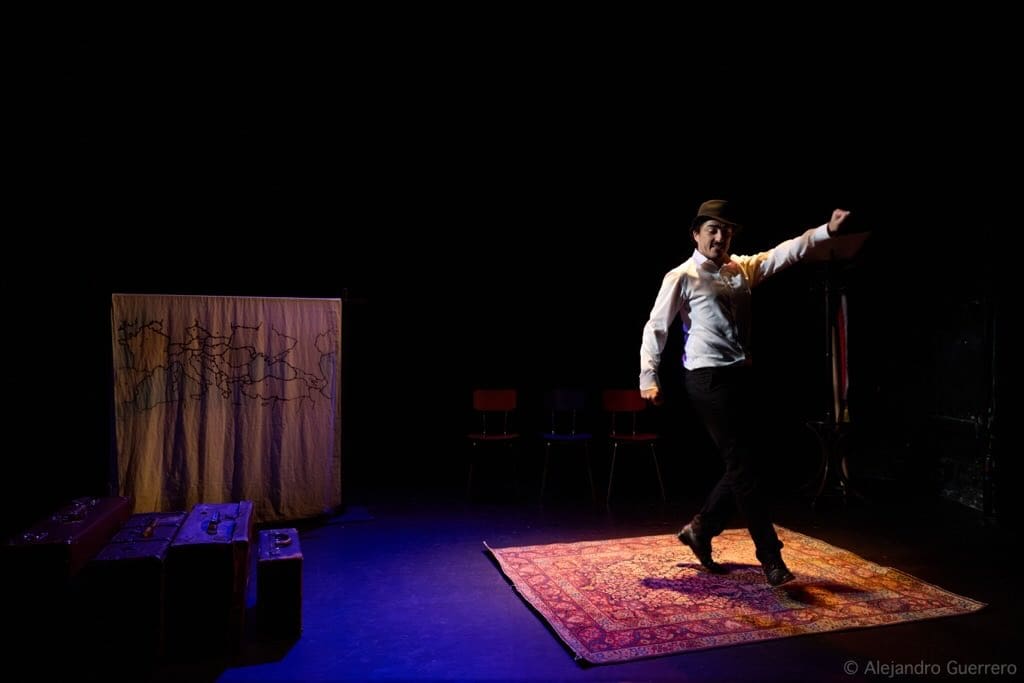
While waiting to head to Vaucluse in July for the Avignon OFF Festival , actor Xavier Kutalian is filling the Hebertot studio (Paris, 17th arrondissement) on Tuesdays and Wednesdays with a one-man show. Alone on stage, but not alone in his mind. He portrays a multitude of characters throughout a story that is as personal as it is moving.
Until May 28, 2025, in " The Ark and the Castle " in Paris, Xavier Kutalian, 41, tells the story of his family, who went from living in a Turkish orphanage to settling in an orphanage in France. A family of expatriates, they left Armenia at the time of the 1915 genocide, the first genocide of the 20th century.
He takes us on a painful journey, the echo of which still resonates powerfully today. You don't need to be Armenian to be sensitive to these themes: immigration, exile, integration, family, homeland, courage, love… Entrevue magazine had the opportunity to meet this man who became an actor later in life. “ I always wanted to be on stage, in the theater, but I realized it late ,” he smiles.
Thibaud Vézirian: How did you come up with the idea of creating a play around this family story?
Xavier Kutalian: When my grandparents passed away, I had a brainwave. As they moved, the story of Dicran and Maro jumped out at me. I started reading the memoirs of my grandfather's orphanage; it was a bit tedious but very enriching. He arrived in France because the orphanage where he lived in Turkey was looking for a solution for its survival. I was struck by the singularity of the story. An orphanage that has traveled is something else. And all these wonderful people left Turkey for France. I had written a play about my grandparents, but I was never able to stage it. This time, I decided to write an even bigger story. One that goes beyond my grandparents' lives. A story that is universal and at the same time very personal.
Immigration, exile, integration, the gaze of others, fear of foreigners... These are all themes addressed in the play that are extremely relevant today. How did you create the different characters?
These are my grandfather's memories, the analysis of the decisions of the orphanage's founder, and the description of many characters I encountered in the memoirs mentioned above. I then chose to bring a certain dramaturgy to it. We draw characters from reality and "augment" them. They all existed to a greater or lesser extent. I had the chance to meet the directors, Krikor Tavitian and his son Nubar, as well as the founder of the home, Miran Kharagheusian. They even saw the show. I used real events but I did not carry out any work as a historian or sociologist. However, people from the families of these young expatriates saw the play and they admitted to me that they had learned about themselves.
You started performing in 2024 and are currently making your big comeback on stage. Have things changed in the last year?
I gave more space to one character, Zaré, this very touching young man, a bit of an airhead. He had a lot of success last year, so I managed to include additional interventions, while respecting the plot of the show. He grows during the show, and the audience clearly appreciates it.
This story is bound to have a profound impact on French people of Armenian origin, whose people suffered in 1915 and again recently with the ethnic cleansing carried out by Azerbaijan. in Artsakh. What is the ambition of this piece?
I want to reach as many people as possible. It's certain that many French people of Armenian origin have already come to see the performance. We must not forget that this story is not so much about Armenians but rather about the difficulties of exile. A problem that is underestimated. The difficult uprooting. That's what I want to remind people. We tend to forget all that.
You seem very moved, very affected on stage, during certain specific moments... Is it difficult to play?
It's obviously a lot of pressure that's lifted. For the return of this play to the stage of the Hebertot studio, I was a little more emotional than usual. There was family there and also Xavier Lemaire, my director who always believed in me, it was special. The emotion comes as it comes, often towards the end of the show. It's quite physical, a one-man show. The relaxation is logical. The heart is the engine of emotions, not the other way around. You have to put yourself in a physical situation that will call out the body's emotions.
To keep going physically, do you have a ritual?
I walk a lot and have a physical ritual every morning: push-ups, sit-ups, core exercises. I also drink a lot of water. When I have time, I also play a little padel, a little soccer, and tennis.
Following you on stage for an hour and 1 minutes, we realize that this play has everything it takes to become a great film. Is that in the pipeline?
This wasn't the case at all at first. But many people in the arts and culture community think it lends itself enormously to it. So...
What can we wish you for the future?
To continue filling this studio with this piece. Then it's off to Avignon for the OFF festival, where I'll be playing at 14:50 p.m. Saturday, July 5th to Saturday, July 26th. It's also a special encounter with a theater-loving audience there. A good opportunity to showcase a show. The programmers come to see you; it's like their meeting place. So there's a good chance you'll go on tour.
Sources cited in the article festival-avignon.com · Instagram · studiohebertot.com