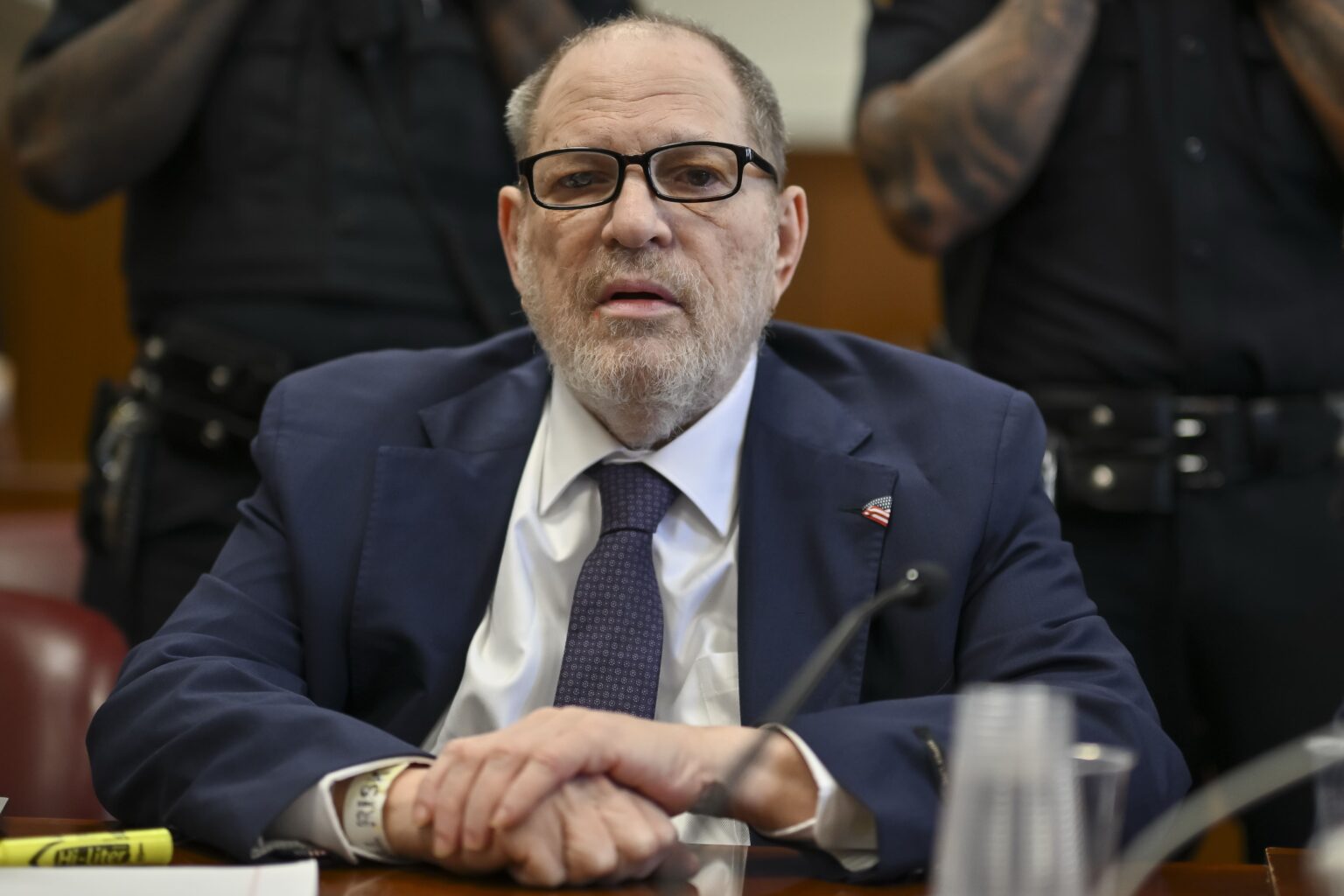
Depuis les murs de sa prison, Harvey Weinstein s’est exprimé pour la première fois face caméra, dans une interview diffusée sur la chaîne de la commentatrice conservatrice Candace Owens. À 73 ans, l’ancien magnat de Hollywood, reconnu coupable de multiples agressions sexuelles, tente de réécrire son histoire. Au fil de cette entrevue controversée, il clame son innocence, s’attaque frontalement à plusieurs de ses accusatrices, dont Gwyneth Paltrow, et évoque son passé de mari infidèle avec des accents de confession.
"I did not commit these crimes."
In this previously unreleased interview, Weinstein speaks with a mixture of denial, selective guilt, and resentment. "I hurt my family. I cheated on my wife. And it was a mistake, you know, a terrible mistake ," he says in an excerpt released in advance. "But I didn't commit those crimes. I swear it before God, before those watching me today, and before my family."
He claims that his adulterous behavior was linked to the pressure of his job: "The pressure of this job was my excuse to cheat. I wasn't a good boss. I had a short temper."
But it is his attacks on some of his most high-profile accusers that are already causing heated controversy.
A targeted attack on Gwyneth Paltrow
Harvey Weinstein has notably targeted actress Gwyneth Paltrow, one of the first public figures to denounce his actions. She recounted, notably to the New York Times in 2017, that Weinstein harassed her early in her career, when she was only 22 years old, on the set of the film Emma . He allegedly tried to lure her to his hotel room for a massage and touched her inappropriately.
Weinstein denies these accusations outright: "I never touched her ," he insists, while admitting to having made advances. He downplays the events, describing their relationship as "friendly," and accuses Paltrow of having "fabricated an abusive story."
These remarks immediately sparked outrage on social media. Lawyer Gloria Allred, who represented several plaintiffs in the Weinstein cases, reacted by denouncing "a pathetic attempt to rehabilitate an image definitively tarnished by the overwhelming evidence and testimonies."
Rose McGowan and the Financial Agreements
Weinstein also mentions actress Rose McGowan, who accused him of sexual assault at the 1997 Sundance Film Festival. She revealed to the New York Times that she had signed a confidentiality agreement after receiving $100.000. Weinstein confirms the payment but maintains that it was not an admission of guilt: "I gave her $100.000 so she wouldn't tell my wife. It was to avoid a marital scandal, not an admission of rape."
As for Ashley Judd, another figure in the #MeToo movement, he dismisses her accusations with a wave of his hand, calling them "ridiculous".
An interview in a heated legal context
This interview airs as Weinstein is currently facing a retrial in New York. In April 2024, the New York State Court of Appeals overturned his 2020 23-year prison sentence on procedural grounds, clearing the way for a new trial.
This new trial involves two major accusations: the sexual assault of former production assistant Miriam Haley in 2006 and the alleged rape of actress Jessica Mann in 2013. On May 8, a new voice was added to the proceedings: Kaja Sokola, a former Polish model, testified under oath that Weinstein allegedly sexually assaulted her multiple times when she was only 16 years old.
Meanwhile, he is already serving a 16-year sentence handed down in California in 2022 for the rape and sexual assault of another woman, known as "Jane Doe 1."
A calculated media strategy?
This first filmed interview with Weinstein, carefully orchestrated by Candace Owens, known for her anti-#MeToo stance, is part of a public rehabilitation strategy. But given the facts, multiple convictions, and dozens of women's testimonies, this media release is widely seen as a desperate move.
As his new trial proceeds, this interview risks working against him. As a legal analyst interviewed by CNN pointed out, "every word Weinstein says in front of a camera can now be used against him in the courtroom."
The weight of #MeToo still present
Eight years after the Weinstein scandal exploded, its impact continues to reverberate throughout the entertainment industry and beyond. The #MeToo movement has shifted power dynamics, sparked massive rethinking, and paved the way for freer speech.
But listening to Harvey Weinstein today, it's clear that the man still hasn't fully grasped the consequences of his actions. And for many victims and activists, this interview only serves to rekindle the pain...
Sources cited in the article The New York Times · CNN