A few weeks before the October elections, far-right Israeli ministers have multiplied provocations against Palestinians, between AI-generated videos and seizures of UN buildings. Meanwhile, strikes in Gaza have again hit civilians, and settler violence has spread in the West Bank.
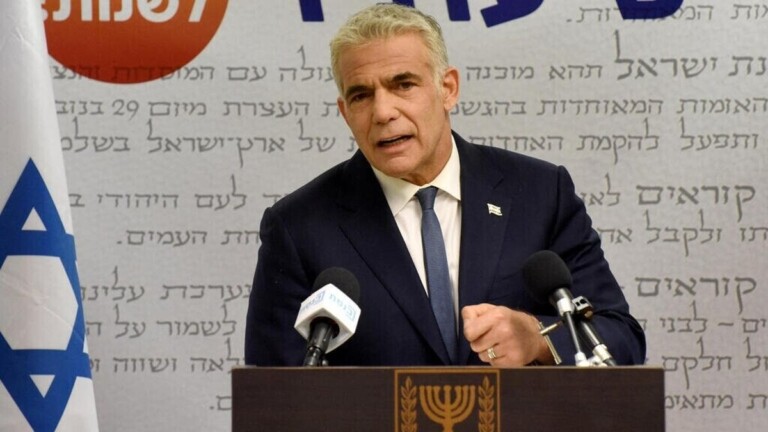
Finance Minister Bezalel Smotrich, whose face already adorns election billboards in the occupied West Bank, released an AI-generated advertisement warning that he would do in the Negev and Galilee (two regions with a large Palestinian population inside Israel) what he accomplished in the West Bank by building Jewish settlements there. The chosen slogan: “Ahmed is right to be afraid.”
National Security Minister Itamar Ben-Gvir responded with his own AI-generated video, showing obese Palestinian prisoners entering Israeli jails on a treadmill and emerging emaciated and in tears. He also published a video of himself verbally abusing Palestinian female prisoners before planting an Israeli flag on UNRWA facilities seized in occupied East Jerusalem.
These gestures are not disconnected from real politics. Each echoes concrete government actions taken this week, from the seizure of a UN building to increasing pressure from a segment of the right to launch a ground operation after the elections aimed at reoccupying Gaza City, rather than continuing Hamas disarmament.
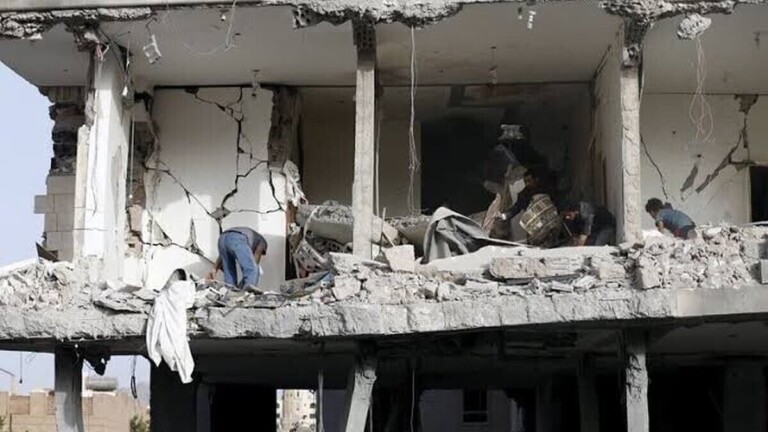
In Gaza, strikes returned to their usual scope after a brief lull linked to negotiations with the peace council appointed by Donald Trump. On August 28, a drone killed three members of the Abdin family while they were working their lands in al-Qarara. On August 30, a strike near a bakery west of Deir el-Balah killed Husam Osama Nasir and Tim Said Mahmoud Hamdan, aged three. On August 31, two Palestinians were killed in a strike targeting the entrance of a residential building near Gaza City’s municipal park. Electric bike delivery workers were also killed in separate strikes, and a quadcopter dropped a bomb on children collecting water in the historic Tuffah neighborhood.
The al-Aqsa Martyrs Hospital in Deir el-Balah was hit on August 29: a drone struck a medicine warehouse, injuring three people. Hospital officials reported a total exhaustion of cancer treatments after a strike damaged water tanks and laboratory equipment.
Israeli journalist Amir Bohbot reported in Walla News that the military command now considers a ground operation to reoccupy Gaza City as “inevitable.” The plan, presented by the head of the Southern Command, includes evacuating residents to new “humanitarian zones” and would be triggered after the October elections.
Gaza’s Ministry of Health recorded 32 additional deaths last week, bringing the toll since the October “ceasefire” to at least 1,320 people as of August 31, and the total since October 2023 to 73,456 deaths. According to the latest OCHA report, 58% of Gaza’s population faces “critical or catastrophic” housing conditions.
In the West Bank, settler violence covered dozens of incidents this week. In the village of al-Mughayyir, northeast of Ramallah, soldiers and masked settlers jointly conducted a raid on the evening of August 30: four residents were shot, the village’s only entrance was blocked while settlers besieged a house and loaded stolen goods onto a pickup truck.
In al-Karmel, south of Hebron, soldiers opened fire on August 27 on a vehicle carrying women returning from a wedding, injuring Sanaa Abu Aram, Doaa al-Hroush, and Lana al-Hroush, 14 years old. In Beita, south of Nablus, settlers attacked and ransacked homes on August 30. The Israeli NGO B’Tselem describes these acts as “routine,” committed “with the full support of Israeli authorities.” Two Palestinians were killed and another arrested during an Israeli raid on the city of Nablus on the night of August 30.
On the land front, Israel issued a military order seizing lands around al-Bireh, on the outskirts of Ramallah, to create a “security road” around the Psagot settlement, illegal under international law. This is one of 46 such orders issued since October 2023, according to the Commission for Resistance to Colonization and the Wall. The monitoring group Peace Now has also recorded at least 26 new outposts established in zone B alone over the past two and a half years, with more than 100 km² now under settler control in zones A and B combined.
On August 31, Israeli forces demolished two houses in Nablus and began large-scale demolitions in the al-Saqi area of Birzeit, north of Ramallah. The commission counted 80 demolition operations in July alone. Facing repeated violence in Qusra, Benjamin Netanyahu called the assailants a “handful of rioters,” without mentioning the absence of arrests among settlers who attacked the area.