

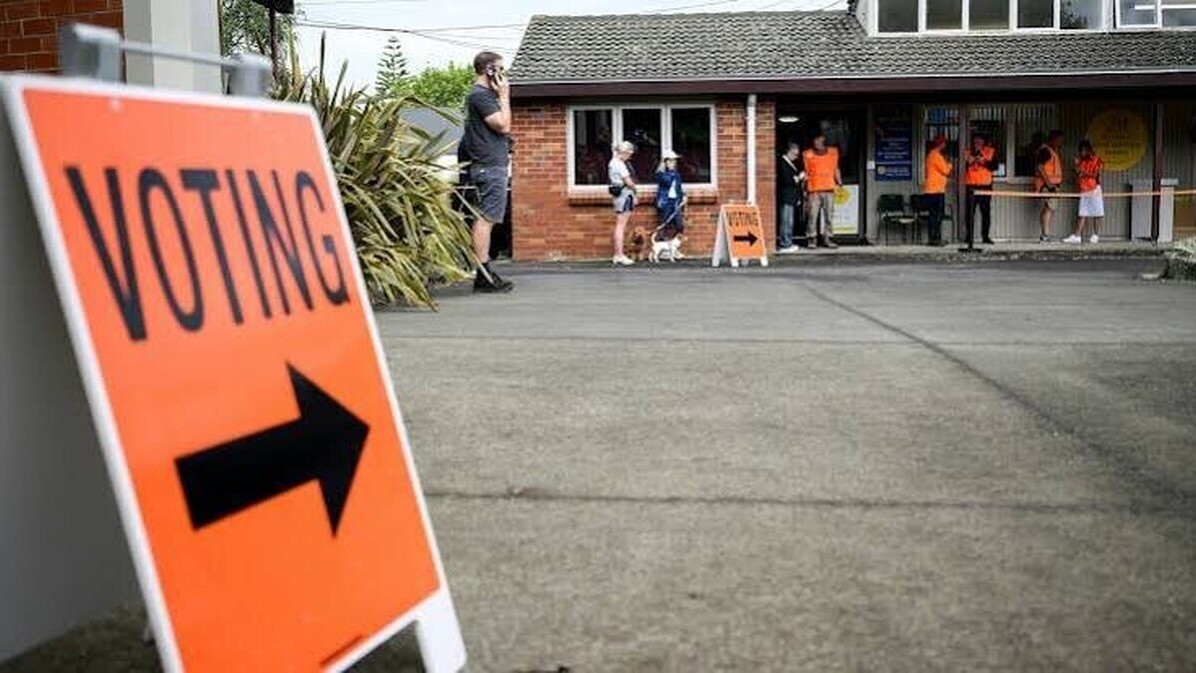
The counting of votes for the legislative elections began on Saturday, November 7, in New Zealand, following a particularly tight contest between the ruling right and the Labour opposition. Nearly 3.8 million voters were called to renew their Parliament amid a context marked by economic difficulties and rising living costs. The outgoing Prime Minister, Christopher Luxon, leader of the National Party, hopes to retain power after three years heading a conservative coalition. Opposing him, Chris Hipkins, former Prime Minister and leader of the Labour Party, is trying to bring his camp back to responsibility. The latest polls published before the vote placed the two main parties at very close levels, without allowing a clear parliamentary majority to emerge.
The election campaign largely focused on New Zealanders’ economic concerns. The persistence of high prices, difficulties in accessing housing, and rising unemployment weighed on the debates. Christopher Luxon notably promised not to introduce new taxes, defending the continuation of his economic policy and the stability of his government. Chris Hipkins, for his part, presented several measures aimed at easing household expenses and supporting purchasing power. The outgoing Prime Minister also had to face tensions within his own party, where two attempts to challenge his leadership failed during his term. This political instability, combined with a difficult economic situation, contributed to making the election outcome particularly unpredictable.
Small parties could decide the future majority
In this context, minority parties could play a decisive role in the composition of the next government. The New Zealand electoral system, based on mixed proportional representation, favors agreements between several parties when the main political forces do not have an absolute majority. The Opportunities Party (TOP), a centrist party led by Qiulae Wong, is attracting particular attention. Credited with more than 5% of voting intentions in some opinion polls, it could enter Parliament and influence negotiations. Its leader has declared herself willing to discuss with the major parties, even though Christopher Luxon has ruled out an alliance with her movement. The National Party’s traditional partners, ACT and New Zealand First, as well as the Greens and the Maori party, could also influence parliamentary balances.
The first counting data so far confirm the uncertainty surrounding the election. In a still very partial count, covering less than 2% of the results, the National Party received about 31.3% of the votes against 29.5% for Labour. However, these figures do not allow determination of the future majority, as several important constituencies remain to be counted. The Electoral Commission plans to publish most of the preliminary results on Saturday evening, while the official results, including special votes and those of voters residing abroad, are expected on November 27. If no bloc manages to gather a majority of seats, negotiations between parties will have to open to designate the next government. Christopher Luxon’s political future could thus depend as much on the election results as on agreements concluded in the coming days.










Respond to the article
Be the first to comment on this article.