

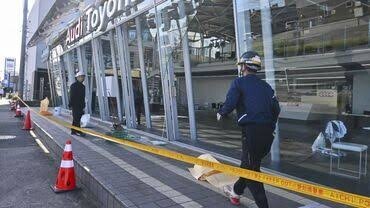
A magnitude 5.7 earthquake struck central Japan during the night from Saturday, November 7 to Sunday, November 8, injuring more than twenty people and causing material damage in several localities. The tremor occurred at 1:04 a.m. local time in the western part of Shizuoka Prefecture, about 200 kilometers from Tokyo. According to the Japan Meteorological Agency, its epicenter was located at a depth of approximately 40 kilometers. The tremors were felt in several prefectures in the central region, notably in Aichi, as well as in the Kyoto, Nara, and Gifu areas. No tsunami warning was issued, and no deaths were reported in the initial assessments.
Local authorities have recorded several dozen injured people, mainly due to falls or accidents occurring during the tremors. In Aichi Prefecture, rescue services reported sixteen injured, most of whom were slightly hurt. In Shizuoka Prefecture, several people required medical care, including a nonagenarian woman injured in the shoulder after falling from her bed. In Toyohashi, the windows of a car dealership were broken, while some shops suffered damage. Images broadcast by Japanese media show shards of glass on sidewalks and merchandise fallen from shelves. Authorities continue their inspections to assess the extent of the damage.
Rail Disruptions and Risk of Aftershocks
The earthquake also caused disruptions on the Japanese railway network. Several regional lines were temporarily suspended to allow technical teams to check the condition of the infrastructure. Shinkansen high-speed trains operated at reduced speeds in some affected areas, notably on the Tokaido line connecting Tokyo to Osaka. Delays were reported between Shizuoka and Gifu-Hashima. These precautionary measures are common in Japan, where transport networks have systems to detect tremors and automatically slow down or stop trains. Traffic was expected to gradually resume after safety inspections.
The Japan Meteorological Agency urged residents to remain vigilant in the coming days due to the risk of further significant tremors. Authorities specifically recommend caution regarding falling rocks and landslides, especially during heavy rainfall. Specialists are also monitoring the situation in the Nankai Trough, a subduction zone off southern Japan, where a major earthquake is feared in the long term. However, no particular changes were detected there after Sunday’s tremor. Located on the Pacific Ring of Fire, Japan experiences particularly intense seismic activity. This recent event underscores the importance of prevention systems, earthquake-resistant building standards, and resident preparedness for natural disasters.










Respond to the article
Be the first to comment on this article.