Oil markets, currently closed for the weekend, are expected to experience significant price fluctuations next week as the impact of strikes carried out by the United States and Israel on Middle East oil supply remains uncertain.
Contrasting scenarios depending on the extent of disruptions
Before the latest conflict with Iran, scenarios anticipated a rapid price increase followed by a decline if the attacks did not affect oil transportation or infrastructure, such as Iranian pipelines or the Kharg Island terminal. Conversely, a more pronounced and sustained price surge is expected if oil infrastructure or supply flows are interrupted, notably in case of disruption to tanker traffic in the Strait of Hormuz.
Prices already driven up by war fears
Oil prices have already risen due to concerns related to the conflict. Brent, the international benchmark, closed on Friday at a seven-month high of $72.87 per barrel.
The key role of Iranian exports to China
Iran exports about 1.6 million barrels of oil per day, mainly to China, where private refineries are less sensitive to U.S. sanctions that prevent Tehran from selling its oil on other markets. An interruption of these flows would push Chinese buyers to source elsewhere, which could increase upward pressure on global prices.
The Strait of Hormuz, a strategic point under watch
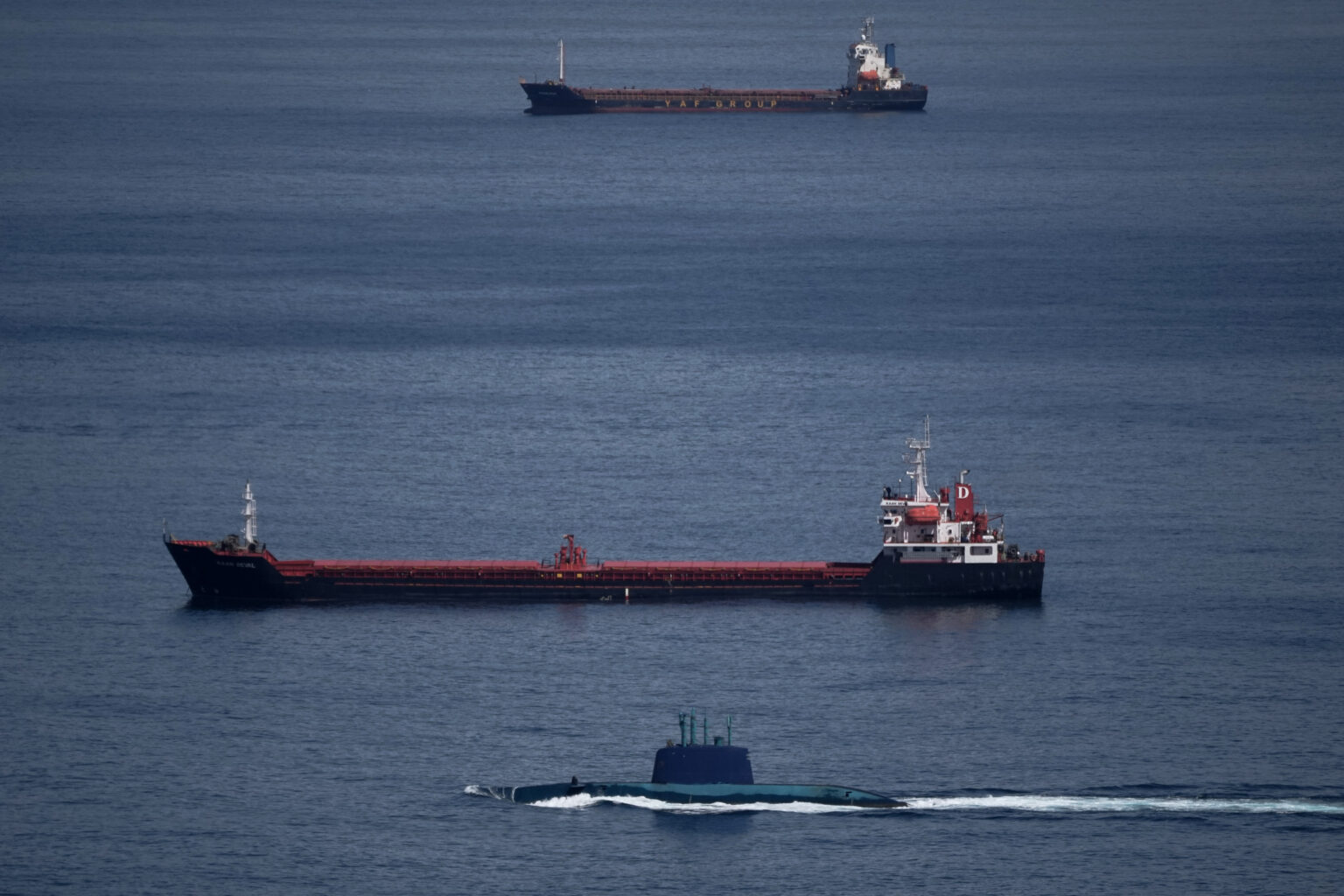
Another source of concern is the Strait of Hormuz, through which nearly 20% of the world’s oil supply transits daily. Major Middle Eastern exporters, such as Saudi Arabia, Iraq, and the United Arab Emirates, route most of their exports through this strategic passage. However, analysts believe Iran has no interest in attempting to close it, as such an action would penalize its own exports and its main client, China.
Possible increases even without full-scale war
According to Rystad Energy, in a pre-war scenario, limited strikes on Iran’s nuclear program and the Revolutionary Guards, without regime change or widespread conflict, could be enough to push prices up by $5 to $10 per barrel, solely due to fear.
An extreme scenario beyond $90 per barrel
In the event of an expanded conflict involving Iranian disruptions of tanker traffic, crude prices could exceed $90 per barrel. Gasoline prices in the United States could then be « well above » $3 per gallon, according to expert projections. Last week, the average gasoline price in the U.S. was $2.98 per gallon.