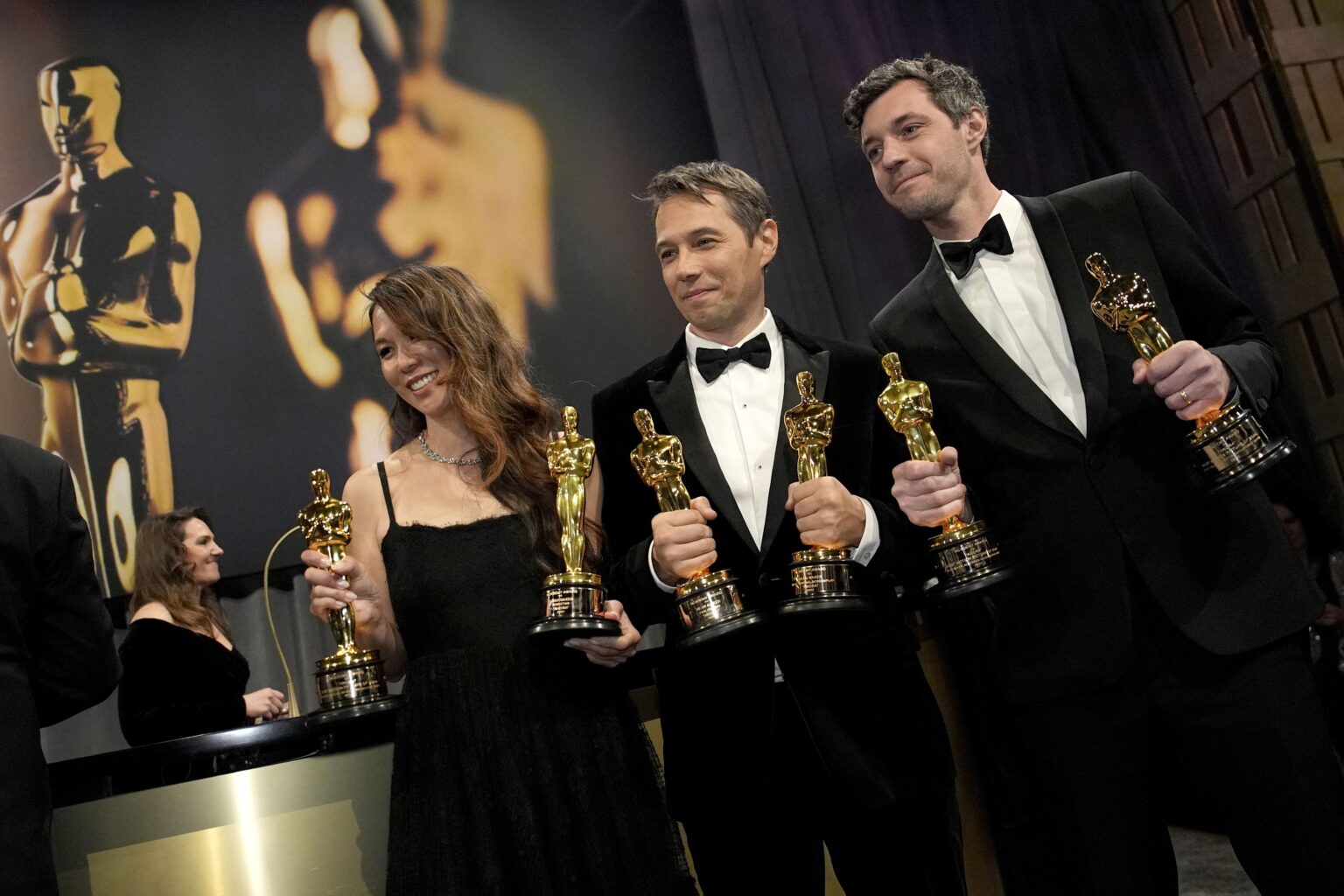
This is a decision that risks disrupting long-established habits among Oscar voters. The Academy of Motion Picture Arts and Sciences, the institution in charge of the prestigious Oscar ceremony, has announced a major reform: members will now have to prove that they have watched the films in competition in order to be able to vote in the corresponding categories.
An expected reform
For several years, the question of the legitimacy of Oscar votes has been a matter of debate in the film industry. While the Academy has over 10 members with diverse backgrounds (actors, directors, technicians, producers, etc.), many have criticized a tendency to vote without having seen all the nominated films, thus favoring the most high-profile works or those driven by major promotional campaigns.
In response to this recurring criticism and in the interest of transparency, the Academy is now implementing a viewing tracking system via its secure streaming platform, where the films in competition are made available. "We want to ensure that every vote reflects an informed judgment, based on actual viewing of the films," said Janet Yang, president of the Academy. "It's a matter of artistic integrity."
Technology at the service of integrity
Specifically, each member will be required to view the films in their entirety on the official platform or during accredited screenings. Digital tools will automatically record viewing time, preventing any circumvention of the system. This system will apply starting with the 98th ceremony, scheduled for 2026, and will primarily concern the most technical categories, often overlooked, such as editing, artistic direction, and sound mixing.
Mixed reactions
The measure has sparked mixed reactions in Hollywood. While many industry professionals welcome the initiative as a step toward greater fairness, some members, particularly among the veterans, denounce it as a form of surveillance or coercion. "It's a bit like Big Brother, isn't it? I watch movies my way, on DVD or at private screenings. Why should I have to prove anything?" complained one anonymous member to The Hollywood Reporter.
Conversely, others believe this reform is coming too late. "It's absurd that this isn't already the case. We're talking about the Oscars, not a popularity poll on social media," director Ava DuVernay commented on X.
Towards better recognition of independent films?
This change could have positive consequences for low-budget or less publicized films. Too often, these works are overlooked because they haven't been seen by a sufficient number of voters. By requiring members to broaden their horizons, the Academy could diversify its awards and better reflect the richness of world cinema. The decision is also part of a series of reforms initiated several years ago to make the Academy more inclusive, transparent, and representative.