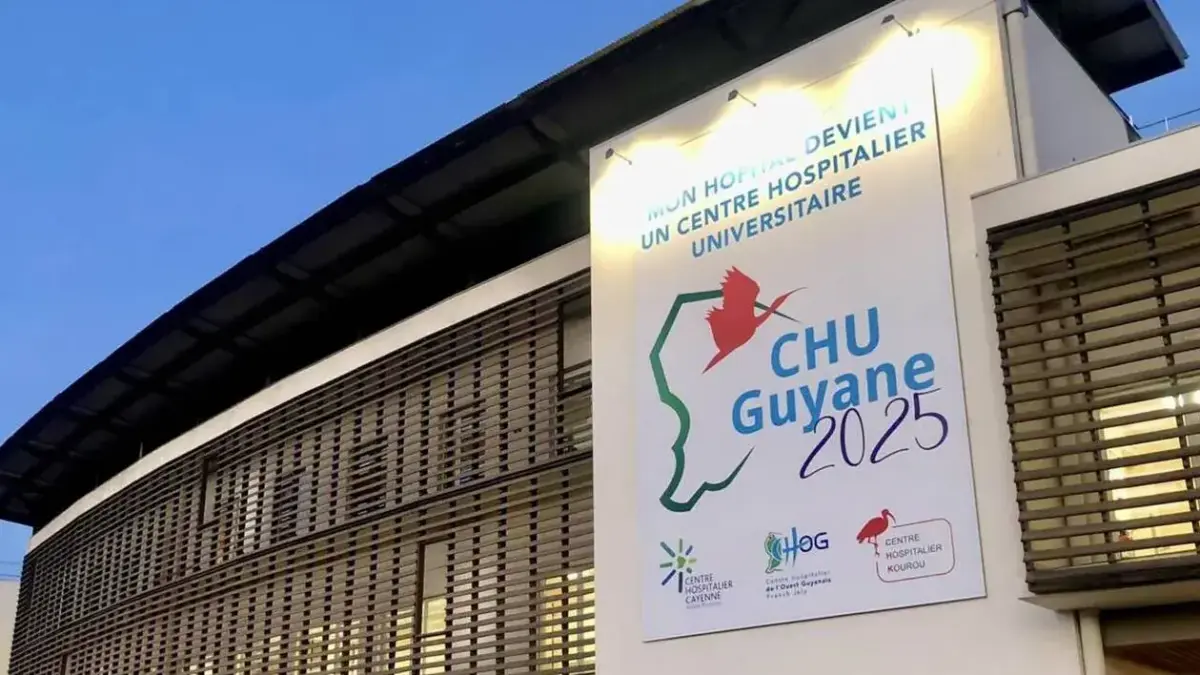
The University Hospital Center of French Guiana , at its Cayenne site, is experiencing another major water supply crisis. Since late Saturday, October 24, 2026, the facility has been suffering from successive interruptions that are disrupting the operation of several essential services, including neonatal intensive care, operating theaters, and delivery rooms. Healthcare workers are denouncing particularly worrying working conditions and are concerned about the potential consequences for patient safety. In response to the situation, the hospital administration activated a crisis unit on Sunday morning and implemented an emergency water supply plan. Firefighters are assisting in replenishing the hospital's reservoirs, while authorities have activated the regional operations center to coordinate the response. This latest outage comes after several similar incidents since the beginning of the year, raising questions about the reliability of the water supply infrastructure and the hospital's ability to guarantee continuity of care.
The alarm was raised by several healthcare professionals facing significant difficulties in their departments. A member of the neonatal intensive care staff described a particularly trying situation for the teams. According to their account given on Sunday, the water was cut off on Saturday between 18 p.m. and midnight, before being temporarily restored during the night. But on Sunday morning, at the start of the 8 a.m. shift, the taps were dry again. The professional explained that their colleagues had to work shifts in very difficult conditions, with limited opportunities to maintain standard hygiene procedures. The situation is particularly critical in units caring for premature newborns, whose immune systems are still fragile. The care provided in these units requires strict precautions to limit the risk of transmitting microorganisms. Staff members state that the small quantities of water distributed in some areas are insufficient to meet all the needs. Similar difficulties have been reported in operating rooms and delivery rooms. At the milk bank, where infant formula is prepared, a childcare assistant also expressed her concerns. While bottled mineral water is available for certain preparations, the lack of running water complicates the cleaning of equipment and the application of handwashing protocols. These accounts do not establish that contamination has occurred, but they reveal the difficulties faced by professionals in maintaining normal sanitary conditions. In a hospital, water is not only used for drinking. It is essential for cleaning premises, disinfection, preparing certain equipment, operating technical systems, and various medical activities. A prolonged interruption can therefore simultaneously affect numerous services, including those caring for the most vulnerable patients.
A crisis unit has been activated to maintain essential care.
Faced with the scale of the disruptions, the management of the University Hospital of French Guiana confirmed on Sunday, October 25, that it had activated emergency operations. A crisis team was convened at 10:00 a.m. to organize the continuity of care and allocate available resources. In a press release, the hospital reported successive interruptions in its water supply and specified that it had implemented a contingency plan. Bottled drinking water was distributed to patients and staff for their consumption needs. Services considered a priority, including intensive care, dialysis, sterilization, and laboratories, are to receive a specific supply of reverse osmosis water, essential for certain medical activities. Management also indicated that hemodialysis sessions scheduled for Monday, October 26, would proceed as planned. This announcement is crucial for the patients concerned, whose treatments cannot be interrupted without potential consequences for their health. Meanwhile, the hospital's two reserve tanks are being regularly replenished by the Departmental Fire and Rescue Service . Firefighters are playing a crucial role in the temporary securing of the facility. The regional operations center was activated on Sunday at 4:00 PM, bringing together representatives from the prefecture, the Cayenne city hall, the Regional Health Agency, the hospital administration, the Guyanese Water Company, and civil defense. This coordinated effort aims to identify the causes of the outages, mobilize available technical resources, and prioritize water distribution. Authorities must also determine the conditions for a lasting restoration of the water supply. At this stage, the information available does not allow for a precise date for when the entire site can be guaranteed to function normally. Hospital administration must therefore continue to adapt its operations to the actual water supply, paying particular attention to departments with the most critical health requirements.
This crisis comes amidst a backdrop of several water supply incidents since the beginning of the year. In February 2026, the Cayenne site experienced a major interruption, caused in particular by power outages that disrupted the operation of the Guyanese Water Company's facilities. Dialysis and surgical activities were especially affected. Firefighters had to intervene to replenish the hospital's reserves, including 20 and 25 cubic meter storage tanks. At the time, management mentioned the need to explore solutions to strengthen the site's self-sufficiency in the event of another network failure. The facility consumes approximately 300 cubic meters of water per day, a considerable volume that makes sustained supply through simple bottled water distribution or occasional deliveries difficult. For Christophe Bouriat, director of the Cayenne hospital, the recurrence of these incidents now raises questions about the management of drinking water supply in French Guiana. He noted that this was the third water outage affecting the hospital in 2026, emphasizing that patients were the primary victims of these disruptions. The possibility of malicious acts was also raised, although no specific responsibility could be established based on the available information. The UTG-SGDE union, currently engaged in a strike at the Guyanese Water Company, formally denied any involvement in the outages. Its representative, Alain Balum, stated that no union instructions had been given to cause such disruptions. It is therefore important to distinguish between the difficulties observed on the network, the hypotheses put forward regarding their origin, and the responsibilities that may be established later. Beyond the immediate emergency, this latest interruption highlights a structural issue for French Guiana: the need for sufficiently reliable infrastructure to ensure the continuous supply of water to healthcare facilities. Increasing storage capacity, securing electrical installations, and implementing more autonomous backup solutions are among the avenues being explored. For the staff at the University Hospital, however, the immediate priority remains restoring a stable water supply to ensure adequate hygiene and allow patients to continue receiving care without exposing them to additional risks. After several crises in just a few months, the issue is no longer simply restoring the network, but preventing further interruptions in a facility essential to the people of French Guiana.